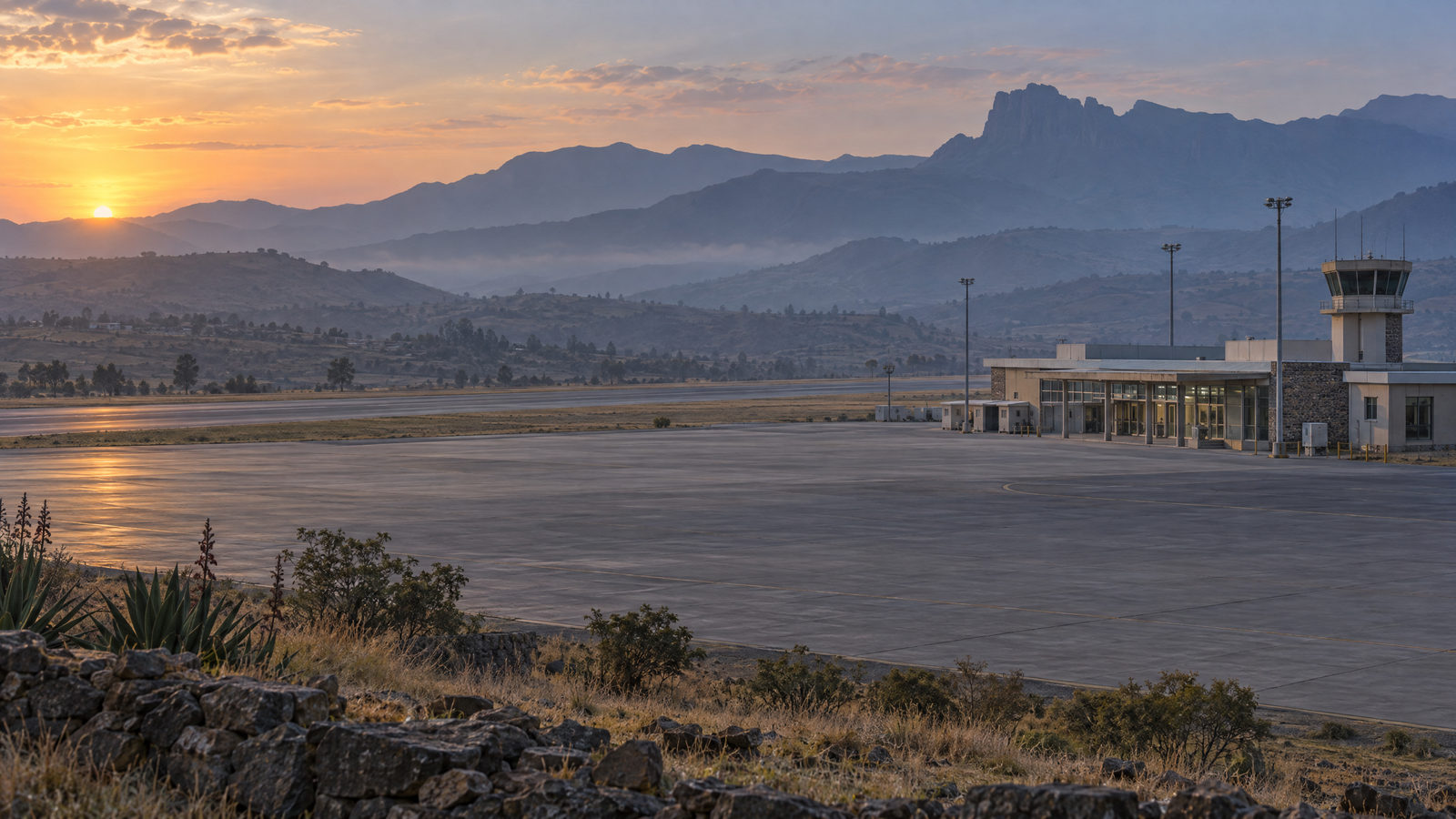

Ethiopian federal forces were reported on Saturday to have regained Alula Aba Nega Airport in Mekelle, the capital of the northern Tigray region. The reported change at the airport would be a significant reversal after opposition forces took it at the start of renewed fighting last month. It does not, however, establish who controls Mekelle as a whole, how the airport changed hands or whether the position will hold.
The picture rests in part on accounts from a person familiar with events in Mekelle, a humanitarian source and a resident who asked not to be identified for security reasons. The resident described hearing gunfire outside the city centre and seeing some fighters leave their posts. Those assertions could not be independently verified, while the Tigray People’s Liberation Front had not publicly addressed the reported change.
Separate accounts, but no settled picture
Further accounts from people in the city and an Ethiopian general who spoke without being named also placed federal forces at the airport. The timing of any change in control and the circumstances, including whether fighting took place at the airfield, remain unclear. Those accounts do not establish that government and allied forces are taking control of the regional capital.
Local people described opposition fighters and political leaders leaving the city, but federal forces had not yet been observed inside Mekelle. Access to the area is heavily restricted and communications have been disrupted, preventing independent confirmation of the wider claims.
Taken together, the reports provide substantial indication of a reported shift at the airport, rather than confirmation of a complete takeover of the city. They also leave unanswered questions about the security of civilians, public buildings and essential services. No official statement from either side had resolved those questions at the time of the reports.
Why the airfield matters
The airport is a key transport link for Mekelle and was one of three airfields reported seized by opposition forces on 23 September, as the latest fighting began. Commercial flights to Mekelle and two other Tigray cities were suspended after that earlier seizure. Regaining an airport could affect movement, supplies and the ability to restore air connections, but it is not in itself proof that transport services can resume safely or that normal access has been restored.
For people in the city, the immediate concern is not only which force holds a strategic site. It is whether communications, banking, health care, food access and other everyday services can function reliably. Earlier accounts from residents described disruption to communications, banking and essential services. Those reports underline the civilian stakes, but do not provide a full assessment of conditions across Mekelle.
A volatile conflict setting
The fighting is the most serious escalation in northern Ethiopia since the 2020–22 war between federal forces and the Tigray People’s Liberation Front. During that conflict, federal troops captured Mekelle early on before Tigrayan forces retook it months later. That history is a reminder that an early battlefield report, even if accurate at the time, does not settle the longer-term course of a conflict.
Renewed hostilities have also heightened regional tensions. The Ethiopian government has accused neighbouring countries of supporting the opposition alliance; those countries have denied the allegation. The United States called on Ethiopia and Eritrea to show restraint and return to dialogue. These diplomatic developments do not confirm events at the airport, but they show why a local change in control is being watched beyond Tigray.
What remains to be verified
The next reliable indicators will be clear statements from the parties, independently verifiable evidence of who is operating the airport, and whether civilians can move and obtain services safely. Any resumption of flights would require practical safety and operational arrangements, not simply a claim of control. Until there is better access and corroboration, the reported recapture should be treated as a material development with significant implications, but not as a settled account of Mekelle’s control or of the conflict’s direction.