
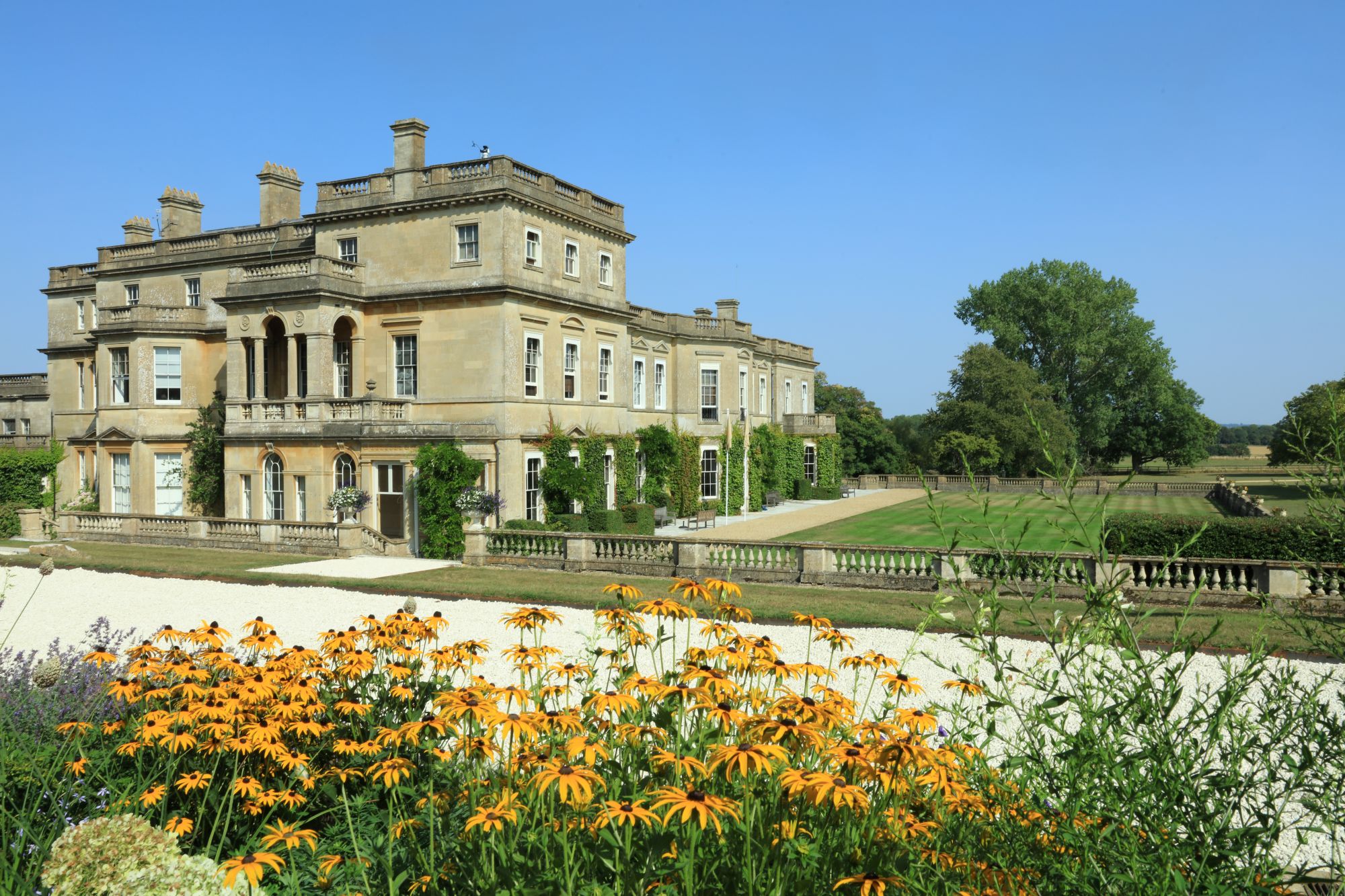

Forget Wimbledon. Around 100 miles west of the capital, a historic country estate is home to a racket sport so rare that only three playable courts are known to survive worldwide.
London may be home to Wimbledon, Queen’s and some of the most famous tennis courts in the world, but one of the country’s most unusual places to pick up a racket is hiding well beyond the capital’s usual sporting circuit.
Tucked away in the Wiltshire countryside at Hartham Park, just outside the market town of Corsham, is a historic Stické tennis court, built for a game that most people today have probably never even heard of.
And despite feeling like the sort of sporting curiosity you might expect to find behind ropes in a museum, the court is still in use and can be booked to play on.
For Londoners, it is surprisingly accessible. Corsham is roughly 100 miles west of the capital, with the drive taking around two hours depending on traffic. Those travelling by train can reach nearby Chippenham from London Paddington in around 70 minutes on some services, before completing the short onward journey towards Corsham and Hartham Park.
Only three Stické courts are known to remain playable worldwide, and one of them is just over 100 miles from London.
So, what exactly is Stické tennis?
At first glance, Stické looks vaguely familiar.
There is a net, rackets and two sides of a court, but that is roughly where the resemblance to a Saturday afternoon game at the local tennis club ends.
Stické is an indoor racket sport combining elements of lawn tennis, real tennis and rackets. It is played inside an enclosed court, with players able to make use of the surrounding walls as part of the game.
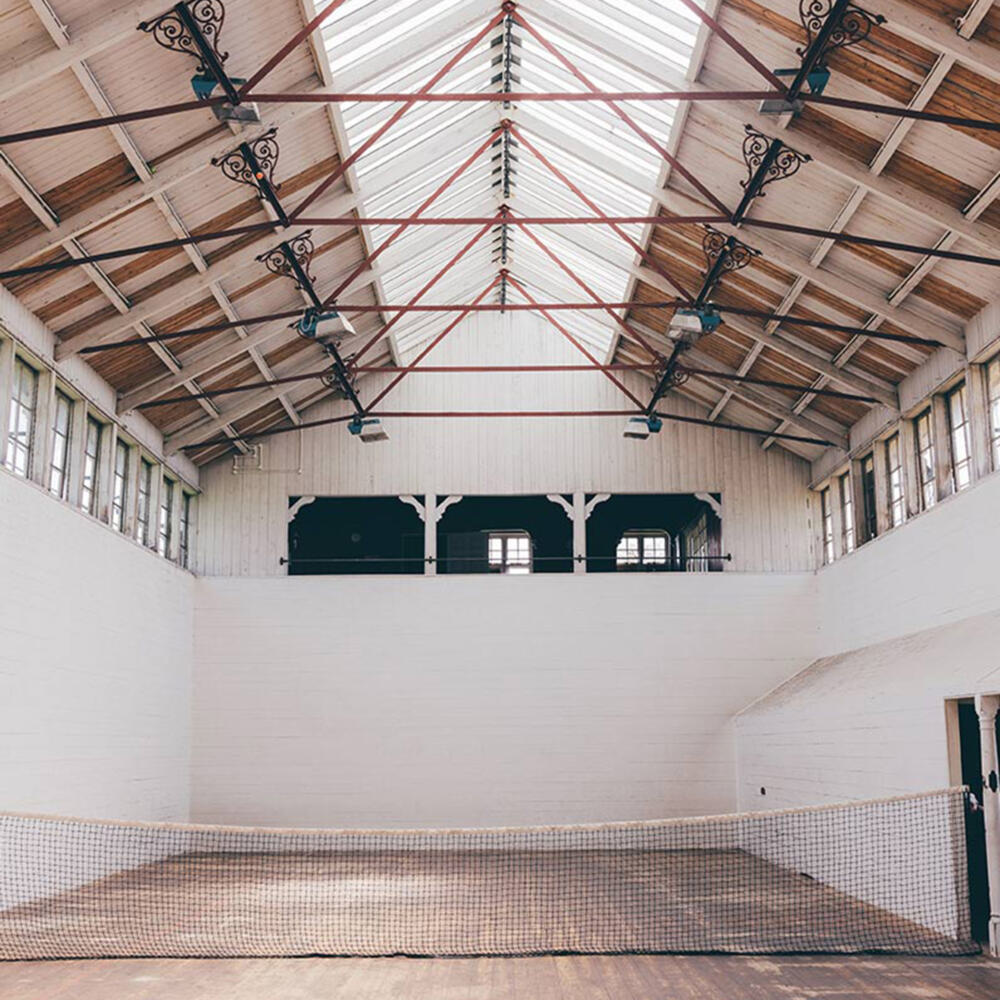
The historic Stické tennis court at Hartham Park Estate in Wiltshire, one of only three playable courts of its kind left in the world.
Players use a standard lawn tennis racket and softer balls, while the unusual proportions of the court give the sport its own distinctive character.
The game dates back to the late 19th century and was originally developed by the Royal Artillery.
According to the history recorded by Hartham Park, the Army wanted a game which offered similar exercise to rackets without the considerable cost of constructing a conventional rackets court.
From its military beginnings in the 1870s, Stické gradually escaped the barracks and found an unlikely second home on Britain’s grand country estates.
Historic England records that from the 1880s the sport became fashionable among affluent players, with purpose-built courts appearing at private estates around the country.
A tennis court built from artillery targets
Perhaps the strangest detail of the Hartham Park court is what it was built from.
Its floor and walls were constructed using nine-foot-square wooden artillery targets, a nod to the game’s military origins.
Those targets helped dictate the proportions of the finished playing space, creating a court measuring precisely 27 feet by 81 feet.
The result looks unlike a modern leisure centre court.
The long wooden playing surface is surrounded by high walls, large windows and a lofty roof structure, creating a space that feels somewhere between a Victorian sports hall and a forgotten wing of a country house.
The court’s floor and walls were made from nine-foot-square wooden artillery targets, creating its unusual 27ft by 81ft dimensions.
From country-house craze to near extinction
Stické’s moment in the spotlight did not last.
The sport spread through wealthy social circles during the late Victorian and Edwardian eras, with courts constructed at country houses and elsewhere across the British Empire.
But its popularity faded dramatically after the First World War.
Corsham Civic Society records that the disruption of the war effectively ended the period in which Stické was widely played, and few courts survived as the decades passed.
Today, Hartham Park says there are just three remaining playable Stické courts in the world.
Alongside the Wiltshire court is one at Knightshayes Court in Devon, while another survives at the former Viceregal Lodge complex in Shimla, India, although that court is now used for badminton.
That makes the building at Hartham Park an exceptionally rare survivor of a sport which was once sufficiently fashionable for wealthy estate owners to construct entire buildings around it.
The building is almost as rare as the sport
The court is significant for more than the game played inside it.
Hartham Park dates the building to 1904, while Historic England describes it as a covered Stické court built around the end of the 19th century for Sir John Dickson Poynder, who later became Lord Islington.
It was positioned in woodland on the edge of the estate’s pleasure grounds and given what Historic England describes as an unusually decorative rustic design.
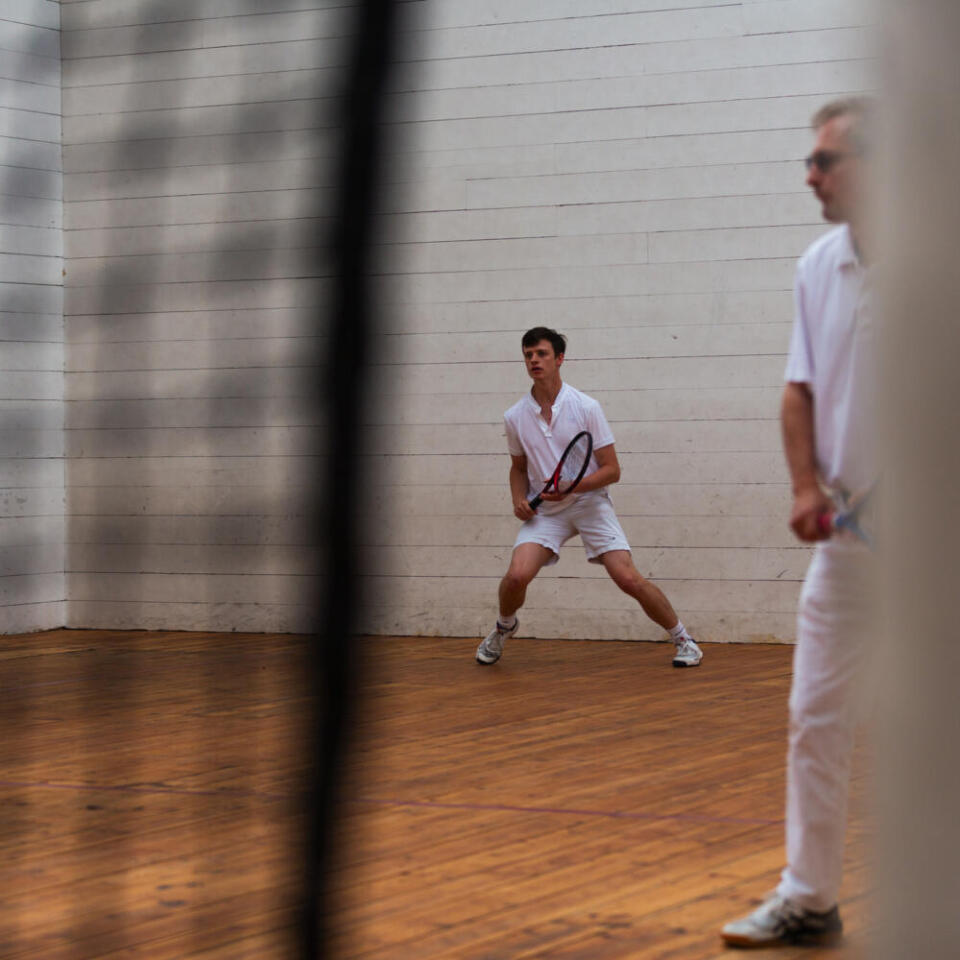
Players take part in a game on the rare Stické tennis court at Hartham Park Estate in Wiltshire, one of only three playable courts of its kind left in the world.
The organisation considers the building remarkably complete and particularly important to understanding the development of the sport.
It is now protected at Grade II*, a designation reserved for particularly important buildings of more than special interest.
To put that into perspective, only around 5.8 per cent of listed buildings in England are Grade II*.
Only around 5.8% of England’s listed buildings achieve Grade II status. This obscure tennis court is one of them.*
And you can actually play on it
Perhaps the most surprising part of the story is that Hartham’s court has not simply been preserved as an architectural curiosity.
Stické is still played there.
The estate maintains the court, while its website invites enquiries from people interested in booking it, meaning visitors can experience an almost vanished Victorian sport in one of the few places on Earth where it remains possible to do so.
There is no need to understand the game’s history before arriving, although anyone accustomed to ordinary tennis may need some time to get used to playing inside an enclosed court where the surroundings form part of the action.
For Londoners looking for something rather more unusual than another padel session, it makes for an unexpected sporting day trip.
A country escape within reach of the capital
The court sits within Hartham Park, a 50-acre estate centred around a Georgian country house near Corsham, Chippenham and Bath.
The main house dates from the late 18th century and was originally designed by architect James Wyatt. The estate’s history stretches much further back, with the site itself recorded in the Domesday Book.
It has had several lives since then.
During the Second World War, parts of Hartham Park were used to accommodate members of the Women’s Auxiliary Air Force connected with RAF Fighter Command. From the 1960s onwards, the estate increasingly became a commercial site and today operates as a business, events and hospitality venue.
Its location also means a visit can be folded into a wider Wiltshire or Bath trip rather than requiring a dedicated weekend away.
But the Stické court remains arguably its strangest attraction.
London has no shortage of historic sporting venues. Few, however, offer the chance to walk onto a court built more than a century ago and try a game that has all but disappeared from the rest of the world.
For anyone who thinks tennis starts and ends with Wimbledon, this peculiar Wiltshire survivor is proof that Britain’s racket-sport history is considerably stranger than it first appears.







