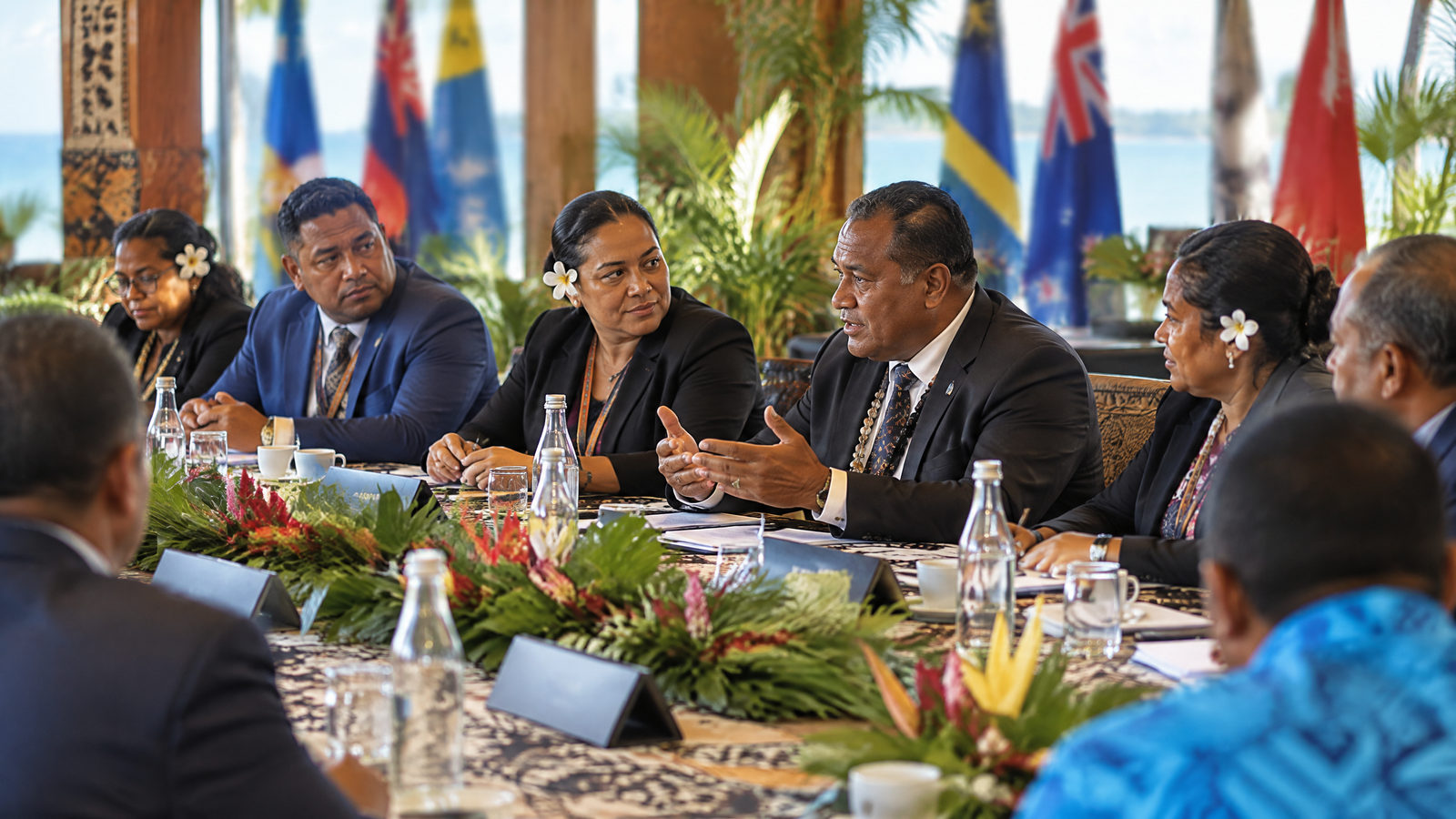

Pacific ministers meeting in Tonga have adopted a regional declaration on weather and climate services, WMO said.
They also backed a proposed Pacific Islands Meteorological Strategy for 2027–2036, the agency added.
Agreement in Tonga
The World Meteorological Organization (WMO) said ministers in Tonga adopted the Siu-i-Alaimoana-Ki-Likutapu Declaration and gave support to the proposed Pacific Islands Meteorological Strategy for 2027–2036. The declaration and the strategy were presented to ministers as complementary regional commitments intended to guide national and collective efforts on weather and climate services.
Focus areas of the strategy
The WMO described the strategy as focused on four priority areas: national weather services, multi-hazard early warnings, observations and climate services. Ministers were reported to have endorsed the approach of strengthening those services across the Pacific region, with an emphasis on coordination and planning over the decade covered by the strategy.
What the decisions mean
The declaration and the endorsed strategy set out policy direction rather than being operational projects. They represent agreed regional aims and guidance, intended to shape how national meteorological and hydrological services plan and prioritise activities in the coming years. The WMO framed the actions as commitments to strengthen services and improve regional coherence.
Regional planning, not infrastructure delivery
It is important to note that the Siu-i-Alaimoana-Ki-Likutapu Declaration and the Pacific Islands Meteorological Strategy for 2027–2036 are statements of intent and planning instruments. They do not themselves constitute the construction or direct delivery of new infrastructure. Any concrete investments, projects or implementation steps would be separate processes carried out later by national authorities, regional partners or implementing agencies.
Priority themes explained
The WMO set out the priority themes in general terms. Strengthening national weather services refers to improving the capacity of meteorological agencies in each country to issue weather forecasts and advisories. Multi-hazard early warnings relate to systems for alerting communities about a range of hazards. Observations concern the collection of meteorological and oceanographic data, and climate services relate to providing information that supports planning and adaptation.
Next steps and regional coordination
By backing the proposed strategy, ministers signalled support for a coordinated regional framework covering the ten-year period from 2027 to 2036. The WMO’s reporting indicates that the document is intended to guide future planning and cooperation among Pacific island states and territories, as well as organisations supporting meteorological and climate services in the region.
How this was presented
The WMO’s account of the meeting in Tonga records that ministers adopted the named declaration and backed the proposed strategy. The agency presented the package to ministers as a means of strengthening weather and climate services that are important for preparedness and planning across Pacific countries.
Scope for national decision-making
While the declaration and strategy set out regional priorities, national governments retain responsibility for deciding how to implement or resource activities within their territories. The WMO’s description frames the decisions taken in Tonga as regional commitments and planning tools rather than direct funding or implementation pledges.
Editors’ note: The facts in this report are based on the WMO’s account of the meeting in Tonga, which described the adoption of the Siu-i-Alaimoana-Ki-Likutapu Declaration and support for the proposed Pacific Islands Meteorological Strategy for 2027–2036. The strategy’s focuses were reported by the WMO as national weather services, multi-hazard early warnings, observations and climate services.