
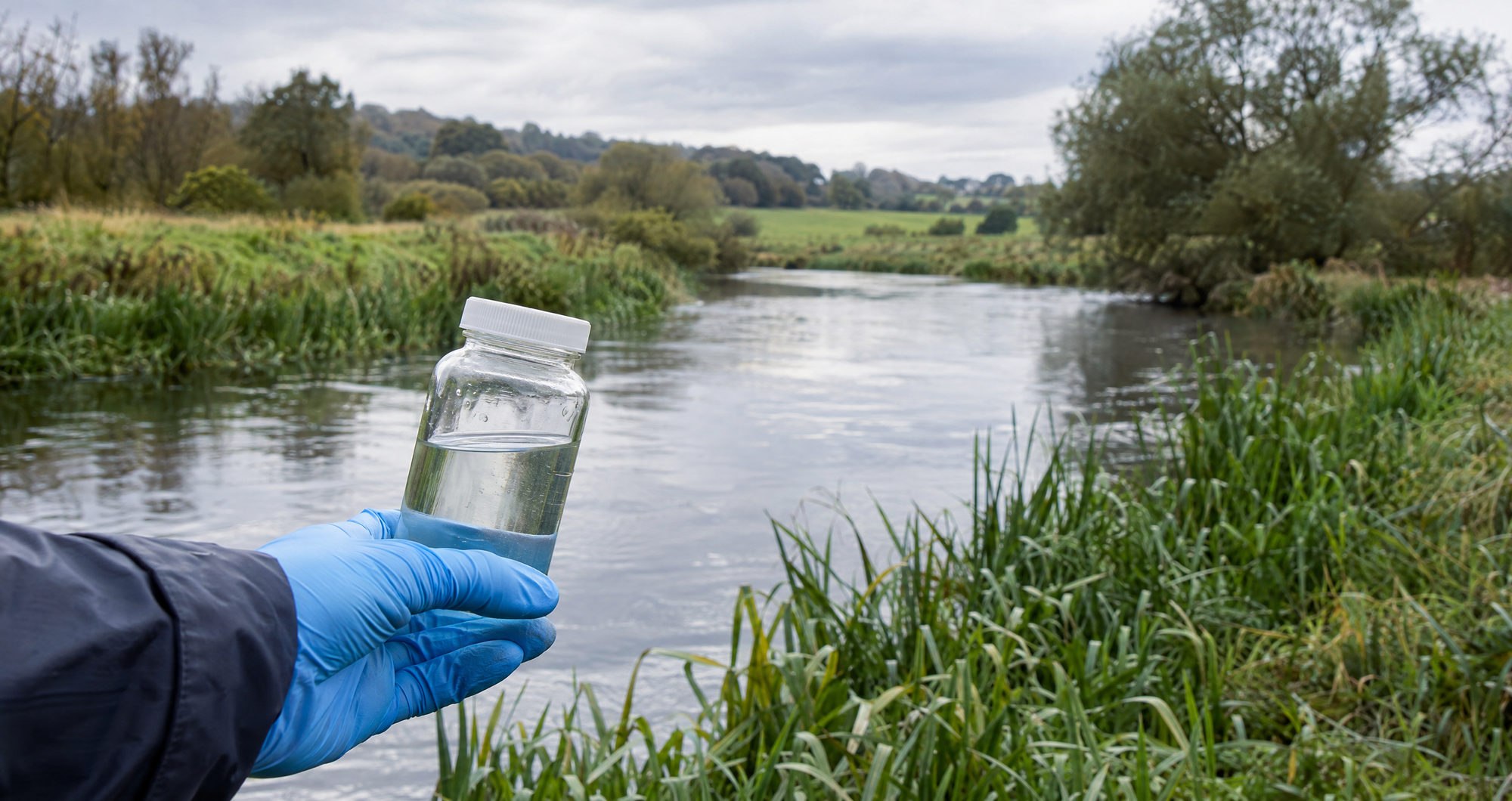

Concentrations of two long-lasting chemicals have fallen at monitored sites in English rivers over the past decade, but a new environmental assessment warns that the wider family of substances remains widespread.
Researchers estimated that concentrations of PFOS fell by about 30 per cent and PFOA by about 29 per cent at river monitoring sites between 2016 and 2025. In sampled freshwater fish, PFOS concentrations fell by approximately 49 per cent between 2016 and 2024.
The figures describe changes in concentration in monitoring data, not proof that the chemicals have disappeared from the environment. They also do not mean that every river, location or fish showed the same change.
What the monitoring shows
PFOS and PFOA belong to a large group of synthetic substances known as per- and polyfluoroalkyl substances, or PFAS. Many are commonly called “forever chemicals” because they break down very slowly. They have been used in products and industrial processes where resistance to water, oil, heat or chemicals is useful, including some firefighting foams and water-repellent materials.
The new assessment updates work published in 2021. Its authors say PFOS and PFOA are the two chemicals in their monitoring records with a long and extensive enough history to support a robust assessment of long-term trends. The river estimates come from statistical models that take account of differences between sites and seasonal patterns.
Those locations were drawn from several monitoring programmes, including sites selected for investigations or other specific purposes. The authors say this group of sites is likely to show higher pollutant concentrations than a separately designed river surveillance network. The headline estimates should therefore be understood as trends in the monitored data, rather than a measurement of every stretch of every river in England.
The fish finding relates specifically to PFOS in freshwater fish tissue. Fish were monitored at fewer locations than water, and the available data were more limited. The assessment says it could not establish a meaningful trend for PFOA in freshwater fish because a high proportion of measurements were below the laboratory reporting level.
Progress alongside persistence
The assessment says restrictions, changes in use and targeted regulatory action can reduce environmental concentrations of older PFAS. PFOS and PFOA have been subject to controls, although the study does not establish how much of the observed change is attributable to any one measure.
A falling concentration is different from a calculation of the total amount of a substance moving through a river. Water conditions can affect concentrations, and rivers can transport chemicals towards estuaries and coastal waters. The assessment says further work on the amounts carried through catchments would help researchers understand the drivers behind the observed patterns.
PFAS were detected widely across the types of environments and locations investigated. Their presence reflects historical use, some continuing uses and improved ability to detect them. Finding a substance does not, by itself, establish that environmental harm has occurred, and the assessment was not a formal national risk or compliance assessment.
The picture also varies across different waters. The authors say the longer river record provides the clearest evidence of declines in the two older chemicals. Trends are harder to interpret in coastal waters and estuaries, where the amount of available data and the effects of tides, sediments and changing salinity add uncertainty.
A broader group to track
Monitoring has expanded since the previous assessment. The regulator can now measure more than 60 PFAS in fresh water and 45 in fish and mussel tissue. The report says shorter monitoring records for many other substances are not yet sufficient to determine long-term trends comparable with those for PFOS and PFOA.
Some shorter-chain substances and potential precursor compounds feature prominently in recent monitoring. That does not establish that their concentrations are rising: the authors say longer records are needed to assess how their occurrence is changing over time. Different PFAS also behave differently; substances that move readily through water are not necessarily the same ones that accumulate most readily in wildlife.
The assessment identifies further gaps in understanding pollution in soils, sediments, air and marine environments, as well as uncertainty about long-term ecological effects and the effectiveness of clean-up technologies. No single analytical method currently identifies every PFAS present in the environment.
The findings are intended to inform continuing monitoring and decisions under a government plan published earlier this year. That plan includes work on sources, pathways and exposure, alongside the development of safer alternatives. A possible restriction on certain firefighting foams is among the areas for further work; the report does not announce that such a restriction has already been imposed.
The central finding is therefore mixed: concentrations of two closely monitored legacy chemicals have declined, while a much wider group remains present and more evidence is needed to understand where it comes from, how it moves and what further action may be effective.







