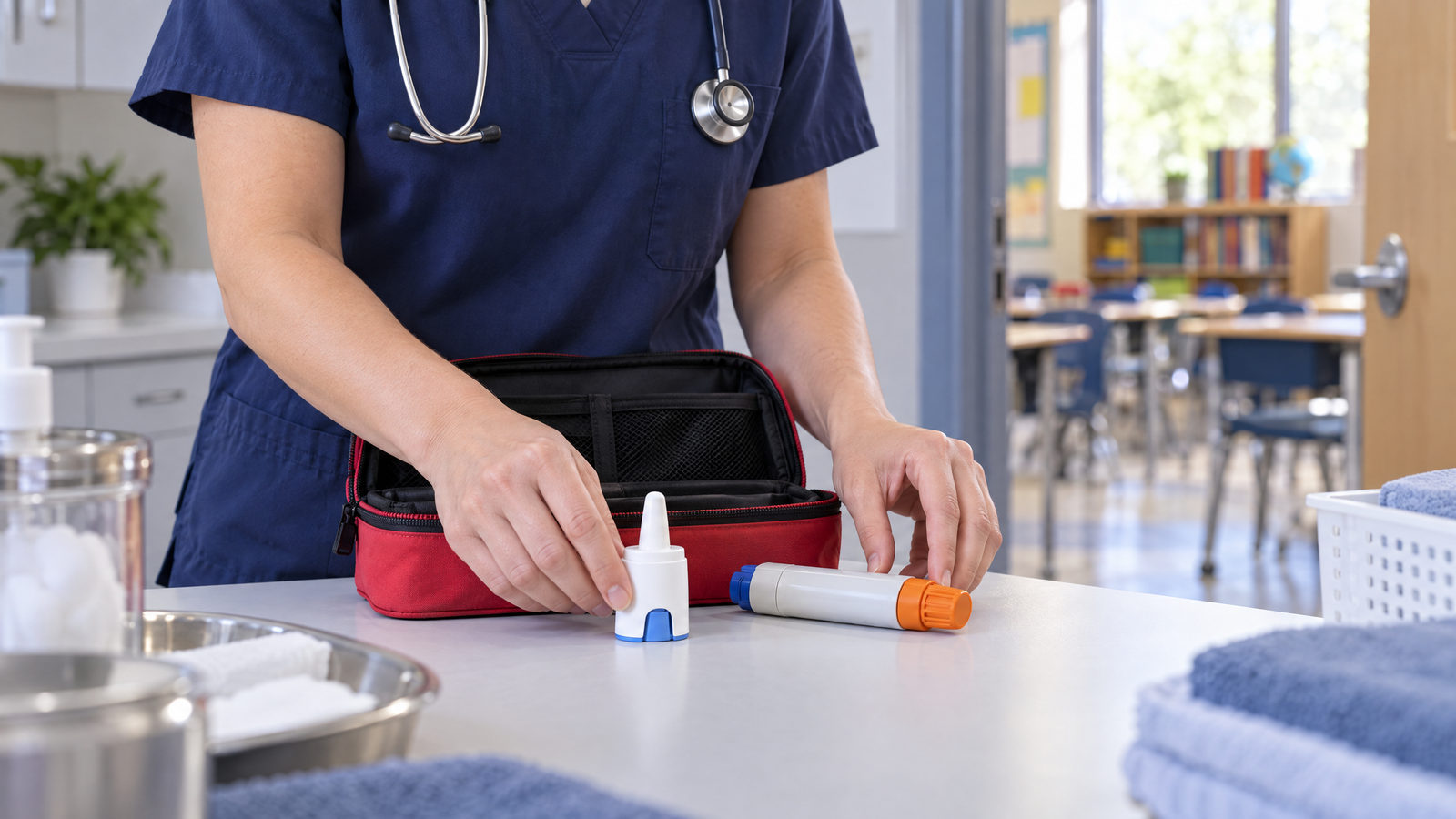

Schools across the United Kingdom could be allowed to keep spare adrenaline nasal sprays for emergencies under a new consultation launched by the Medicines and Healthcare products Regulatory Agency (MHRA). The proposal would extend an existing exemption that lets schools hold spare adrenaline auto-injectors, giving them a choice of sprays, injectors or both.
A proposal, not a change already in force
The consultation, conducted jointly with the Department of Health in Northern Ireland, opened on 19 October and is due to close on 14 December 2026. The MHRA is asking whether medicines legislation should be amended to include nasal sprays among the products schools may purchase without a prescription for a named pupil and keep in reserve.
At present, the school-stock arrangement covers adrenaline auto-injectors. The proposed change would amend the Human Medicines Regulations 2012. It would apply to schools in England, Scotland, Wales and Northern Ireland, while guidance for schools is handled by the relevant administrations. The consultation also asks how the arrangement would work in practice and what effects it could have on families, schools and healthcare providers.
No school would be required to buy a nasal spray or to keep both types of device. A school could decide which product or products to stock, and it would not be directed to a particular brand. The spare supply is intended as a backup for an emergency, not a replacement for medication prescribed to an individual child.
Safeguards would remain
The proposed rules retain key limits on when school-held adrenaline could be used. It would be for a pupil at that school who is known to be at risk of anaphylaxis, a severe allergic reaction that can progress rapidly. Administration would remain restricted to school personnel trained to use the product held by the school.
The consultation document also describes safeguards and practical arrangements that guidance would continue to address. Pupils should bring their own prescribed medicine. Schools should keep a list of pupils who may need the spare supply, track stock and expiry dates, and follow storage instructions. Consent from a parent or carer is recommended as good practice, although the consultation says it would not be a condition written into the legislation.
If the proposal proceeds, a pupil prescribed one type of adrenaline product could receive the other type held by the school in an emergency. That would also apply if the pupil had not responded to their own prescribed adrenaline. Staff would still need appropriate training and clear product-specific instructions; the proposed flexibility is not a claim that every device is interchangeable in every circumstance outside this school emergency framework.
Why the issue is being considered
The regulator says around 8 per cent of children and young people in the UK have a food allergy, and that around one in five serious allergic reactions to food happens in a school setting. Those figures describe the scale of food allergy and the school context; they are not a count of school anaphylaxis emergencies. Anaphylaxis can be life-threatening, and prompt access to adrenaline is important.
The consultation follows the authorisation of a non-injectable adrenaline nasal spray in the UK. The consultation document says the product is authorised in two strengths, with use depending on age and weight. A nasal device may offer an alternative to a needle-based injector for some patients, but decisions about an individual’s prescribed treatment remain a matter for their healthcare professional.
Schools in England have also recently acquired new allergy-safety responsibilities under the first phase of Benedict’s Law, including requirements around allergy policies and preparation. The nasal-spray consultation is a separate proposed extension to the medicines rules on spare emergency stock; it does not itself create a new requirement for schools to purchase or administer a particular product.
Responses will shape the next step
Teachers, school leaders, parents and carers, healthcare professionals, pupils and others with an interest in allergy safety are invited to respond before the consultation closes. The questions cover the proposed legal change and how schools might manage product choice, staff training and implementation.
After responses are considered, the government will decide whether to take forward the legislative amendment. Until then, schools remain within the existing rules for spare auto-injectors. The central question is whether adding nasal sprays can provide useful flexibility without weakening the safeguards that govern emergency adrenaline in a school setting.