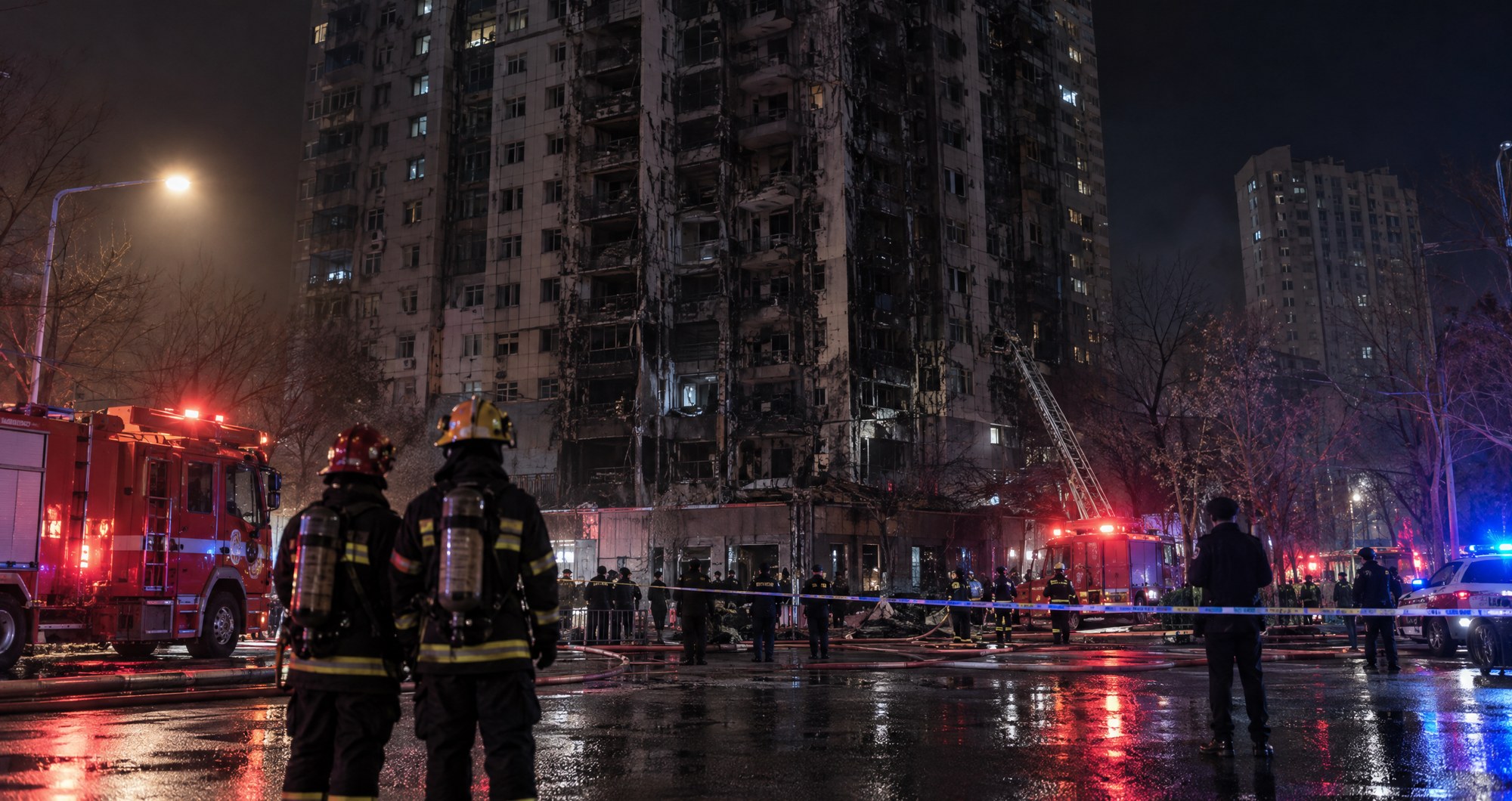

A fire at a high-rise apartment building in central Taiyuan, northern China, has killed 14 people and sent 38 to hospital, renewing questions about residential fire safety a year after the country began a campaign to tackle hazards in tall buildings. The reported death toll rose from five late on Sunday to 14 on Monday morning.
The blaze began at about 4.59pm local time on Sunday 8 November, equivalent to 08.59 GMT, in the Liuxiang subdistrict of Yingze district. Taiyuan is the capital of Shanxi province. The casualty figures have not been independently verified on the ground.
The cause remains under investigation. No details have been disclosed about the building’s ownership, its age or its fire-safety record, leaving important questions unanswered about the circumstances of the blaze and the protections available to those inside.
Death toll rises after rescue operation
Flames were extinguished by about 7pm, roughly two hours after the fire began. Search and rescue work was completed by 8.30pm. The operation therefore continued after the flames had been put out, with the final reported death toll emerging the following morning.
Thirty-eight people were taken to hospital. The supplied figures do not establish whether those who later died were among that group, and no breakdown of the condition of the surviving casualties has been disclosed. It is therefore not possible to give a confirmed total for those still receiving treatment.
Five deaths were initially confirmed late on Sunday. By Monday morning, the reported toll had reached 14, making the Taiyuan fire one of the deadliest residential blazes in China this year. The increase underlines the distinction between the first casualty count and the later assessment following the emergency response.
Local authorities said post-incident arrangements had been activated. They did not disclose further details in the information available, including what those arrangements involved. The immediate account establishes the timing of the response and the reported casualties, but not how the fire developed inside the building.
Building safety record remains undisclosed
The investigation will need to establish the cause of the fire. For now, there is no confirmed explanation for how it started, and no disclosed account of the factors that allowed it to spread. Any claim that a particular fault or safety breach caused the deaths would be premature.
The absence of information about the building’s age and fire-safety record also limits conclusions about its condition before the blaze. Although ageing residential towers are a wider concern in Chinese cities, the age of this particular block has not been made public.
Subdivided flats and obstructed escape routes are persistent fire-safety problems in China’s urban residential buildings. Neither has been established as a factor in Taiyuan. Those wider concerns provide context for scrutiny of the disaster, but do not explain what happened in this building.
Nor has the building’s ownership been disclosed. That leaves unresolved which organisation or individuals were responsible for the property. The information available does not establish whether the block had previously been inspected, whether hazards had been identified or whether any remedial work had been required.
Fatal fires follow national safety campaign
China launched a campaign against high-rise fire hazards in November 2025 after a blaze in Hong Kong killed 168 people. The Taiyuan disaster comes roughly a year after that campaign began, putting renewed attention on the practical results of efforts to reduce risks in residential towers.
Other fatal fires followed the launch of the campaign. A fire at a residential building in Guangdong killed 12 people in December, while a shoe factory fire in eastern China killed at least 28 in July 2026. The factory blaze involved a different type of premises, rather than a residential high-rise.
Those incidents show the continuing human cost of fires, but they do not establish a shared cause. The available facts do not link the Taiyuan blaze to the earlier disasters or show whether measures introduced through the high-rise campaign had been applied to the building.
Investigation must establish what happened
The next substantive development will be the findings of the investigation and any further information released about the casualties and the building. No timetable for those findings has been disclosed. The cause, safety history and responsibility for the property remain central unanswered questions.
For now, the confirmed scope of the public account is limited: a Sunday afternoon fire, an emergency operation lasting into the evening and a reported death toll that rose sharply by Monday. Establishing whether safety failures contributed to the deaths will require evidence that has not yet been made public.