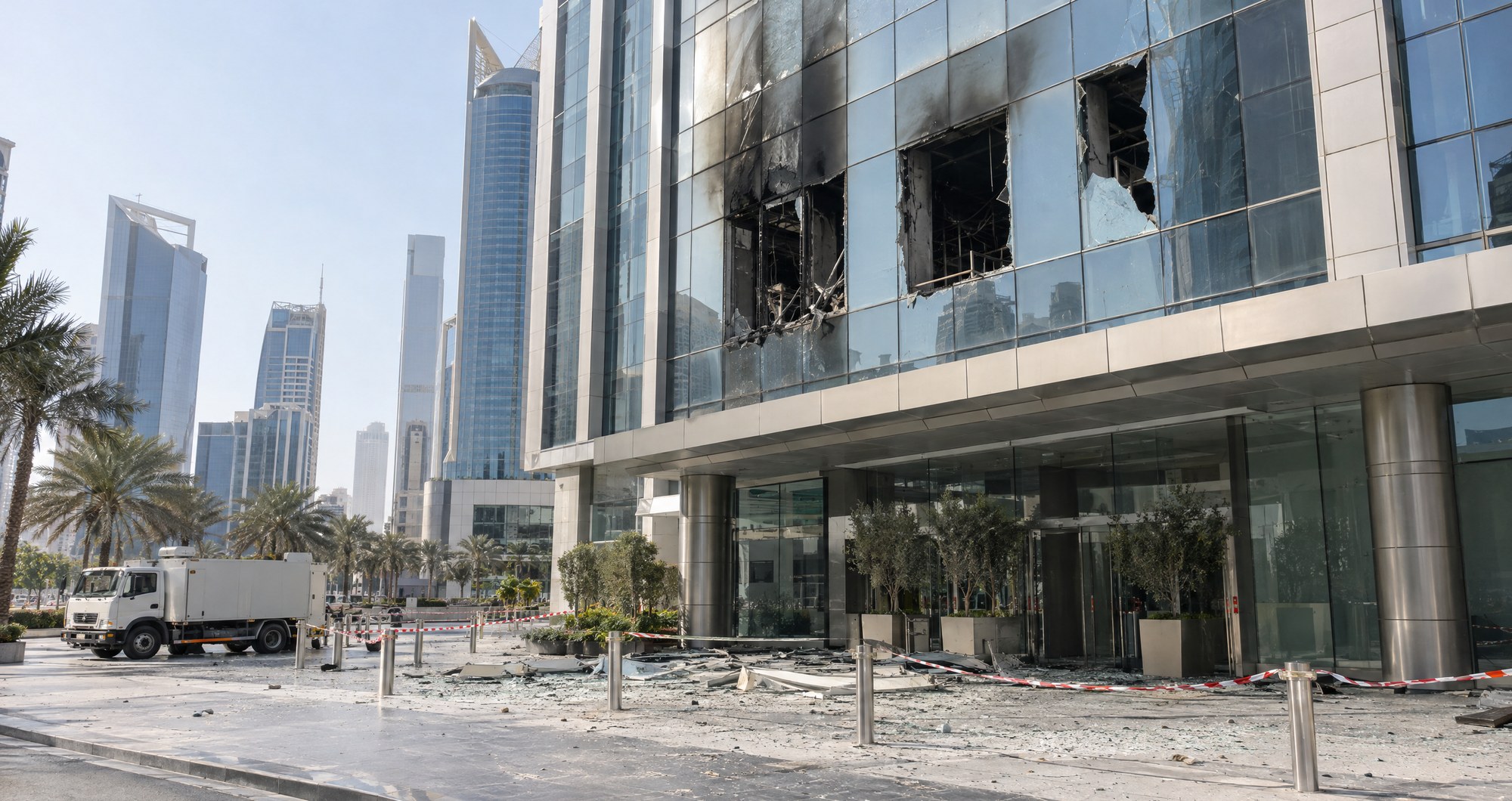

Falling debris from intercepted missiles damaged an Aramco building in Riyadh’s King Abdullah Financial District early on Sunday, bringing the effects of the attack into the Saudi capital’s financial centre. Saudi air defences intercepted missiles aimed at Riyadh and the Eastern Province, according to the Saudi-led coalition. The Saudi energy ministry said there were no casualties at the oil company’s facility.
The damage on 8 November was described by witnesses and the ministry as the result of falling debris. That distinction is important: the Saudi account describes missiles being destroyed before reaching their targets, rather than a direct missile strike on the Aramco building. The extent of the damage has not been established.
The Houthis claimed responsibility for operations against targets in Saudi Arabia. Their military spokesman, Yahya Saree, said the group had hit the financial district and other locations, describing the attacks as retaliation for recent strikes on a village and a market in Yemen. His account of successful strikes has not been independently verified.
Interceptions over Riyadh and the Eastern Province
Major-General Turki al-Maliki, spokesman for the Saudi-led coalition, said Saudi defences had destroyed missiles launched towards the capital and the east of the country. The confirmed Saudi account therefore covers two areas, although the damage identified in the supplied information was to the Aramco building in Riyadh.
The precise number and breakdown of the intercepted missiles remain uncertain. The available figures differ, and there is no single verified total establishing how many ballistic or cruise missiles were destroyed. Al-Maliki’s confirmation of interceptions should not be read as confirmation of every detail of the Houthi account.
The energy ministry’s statement that there were no casualties applies specifically to the Aramco facility. It does not establish a casualty total for every location mentioned by the Houthis. Nor is there verified information confirming damage at Riyadh airport, other Aramco facilities or Saudi military positions.
The incident nevertheless shows that an interception can leave a threat on the ground. In this case, the ministry and witnesses attributed damage to debris falling on a building belonging to the state oil company. The successful destruction of incoming missiles did not prevent all damage in the capital.
Houthis claim six operations against Saudi targets
Saree said the Houthis had mounted six operations against Aramco facilities, Riyadh airport and Saudi military positions. That is a claim about the scope of the group’s actions, not a verified count of missiles intercepted or targets struck. The Saudi statements establish interceptions and debris damage, but do not substantiate all six claimed operations.
The spokesman linked the attacks to recent strikes on a Yemeni village and market. The details of those strikes, including their timing, casualties and responsibility, are not established in the supplied information. The stated retaliatory motive is therefore the Houthis’ explanation, rather than an independently confirmed account of the sequence of events.
The coalition said it destroyed two launchpads in Yemen’s Saada province after the attacks. That statement describes a further military action following the missile launches, but does not establish whether those launchpads were used in the operations Saree described. No further verified details of damage or casualties from that action were provided.
The attacks and the coalition’s subsequent action extend the immediate episode beyond Riyadh and the Eastern Province. They connect launches towards Saudi territory with a military response inside Yemen, while leaving important questions about the scale and results of both sides’ operations unanswered.
Energy concerns and an earlier security warning
The involvement of an Aramco asset gives the incident an energy dimension, but damage to a company building is not evidence of an interruption to oil production or supplies. No disruption to output, exports or company operations has been established. Any assessment of a supply threat must distinguish the confirmed building damage from unverified claims about other facilities.
The US Embassy in Saudi Arabia had issued a security alert on Saturday, 7 November, warning of Houthi attacks on civilian airports and critical infrastructure. The alert preceded Sunday’s interceptions. It provides a relevant security backdrop, but does not by itself confirm that any airport or other infrastructure was hit.
Syria’s foreign ministry condemned the attack and expressed solidarity with Riyadh. The immediate unresolved issues are the extent of the damage to the Aramco building, the precise missile count and whether any of the other claimed targets were affected. The established outcome remains narrower than the Houthi claims: Saudi interceptions, debris damage at an Aramco facility and no casualties there, according to the energy ministry.