

Transport for London has appointed a consultancy team led by WSP to develop the technical case for the West London Orbital, the proposed 18.5km London Overground route that would link Hounslow in the south with Hendon in the north.
The work, supported by Costain and Fereday Pollard, will cover timetabling, demand forecasting, stakeholder engagement and the business case and funding strategy for a scheme that TfL estimates could cost up to £900m. It runs alongside a public consultation that opened on 23 September and closes on 18 November.
The route and what it would reuse
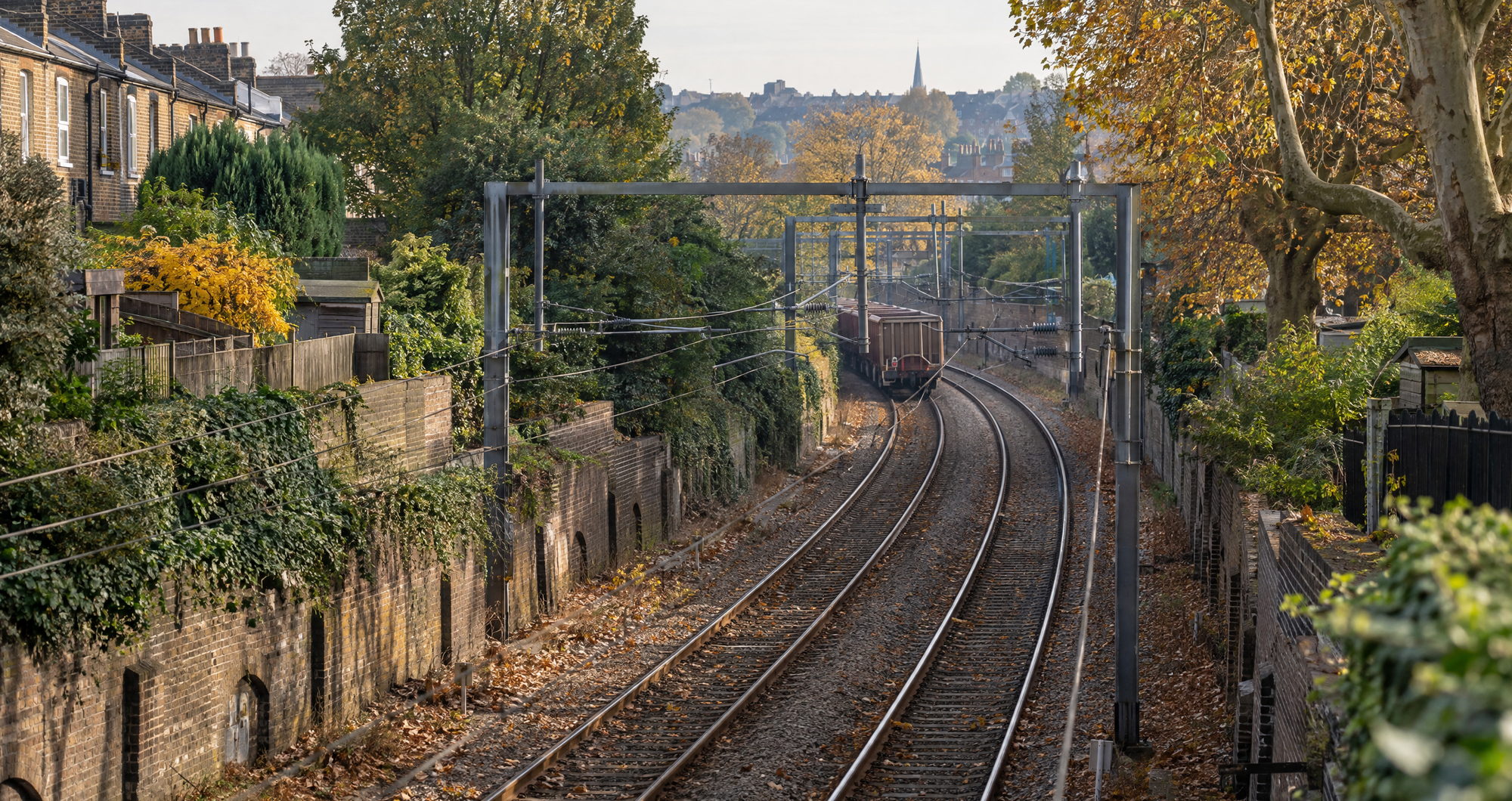
The line would run through Brentford, Acton, Old Oak Common and Brent Cross, largely on existing freight corridors that carry little passenger traffic. Four new stations are proposed at Neasden, Old Oak Common Lane, Harlesden and Lionel Road, with new platforms at Hendon and Brent Cross West.
Reusing freight lines is attractive because it avoids the cost and disruption of tunneling through dense west London suburbs. It also brings complications. Freight paths would have to be protected or renegotiated, and the junctions where the new service crosses existing main lines are among the busiest on the national network.
TfL claims the route could support more than 25,000 homes, create around 11,500 jobs and remove 650,000 car journeys a year by giving orbital journeys an alternative to the radial lines into central London.
Why west London needs orbital links
West London’s economy is organised around corridors that run east to west, while its transport network is organised around lines that run into the centre. Journeys between places such as Hounslow, Ealing, Wembley and Hendon often require a trip into zone one and back out, or a slow bus journey across the suburbs.
The case for orbital rail has been made for years, and the West London Orbital has advanced further than most proposals because it relies on track that already exists. Old Oak Common, where HS2 and the Elizabeth line will meet, adds a new reason to build it: the station will be the largest interchange in the country, and the orbital would connect it to suburbs that currently have no direct link.
The consultancy appointment does not commit anyone to construction. The next stage is to turn the concept into a timetable that can actually be operated, a demand forecast that can be defended, and a funding case that central government and the boroughs along the route will accept.
The money question
At up to £900m, the scheme sits in the awkward middle of transport investment. It is too large for the boroughs or the Mayor to fund alone, and too small to compete automatically for the national large projects budget. TfL has been candid that the business case will need a mixture of sources, potentially including developer contributions from the housing sites the line would unlock.
The consultation has also raised concerns about the loss of freight capacity, construction disruption at the new stations and the effect on local roads during works. Residents along the route have asked whether the service would run early enough and late enough to be useful for shift workers, who are among the heaviest users of orbital bus routes.
If the business case holds, the scheme would become the most advanced addition to the Overground since the network was created, and a template for reusing freight corridors elsewhere. If it does not, the capital will have spent several years and a consultancy contract on a line that never leaves the drawing board.
The Mayor’s transport strategy treats orbital connectivity as one of the biggest gaps in the network. The appointment of a delivery-minded consortium, rather than a pure engineering study, suggests TfL now wants to know whether the line can be built and paid for, not simply whether it is a good idea.







