
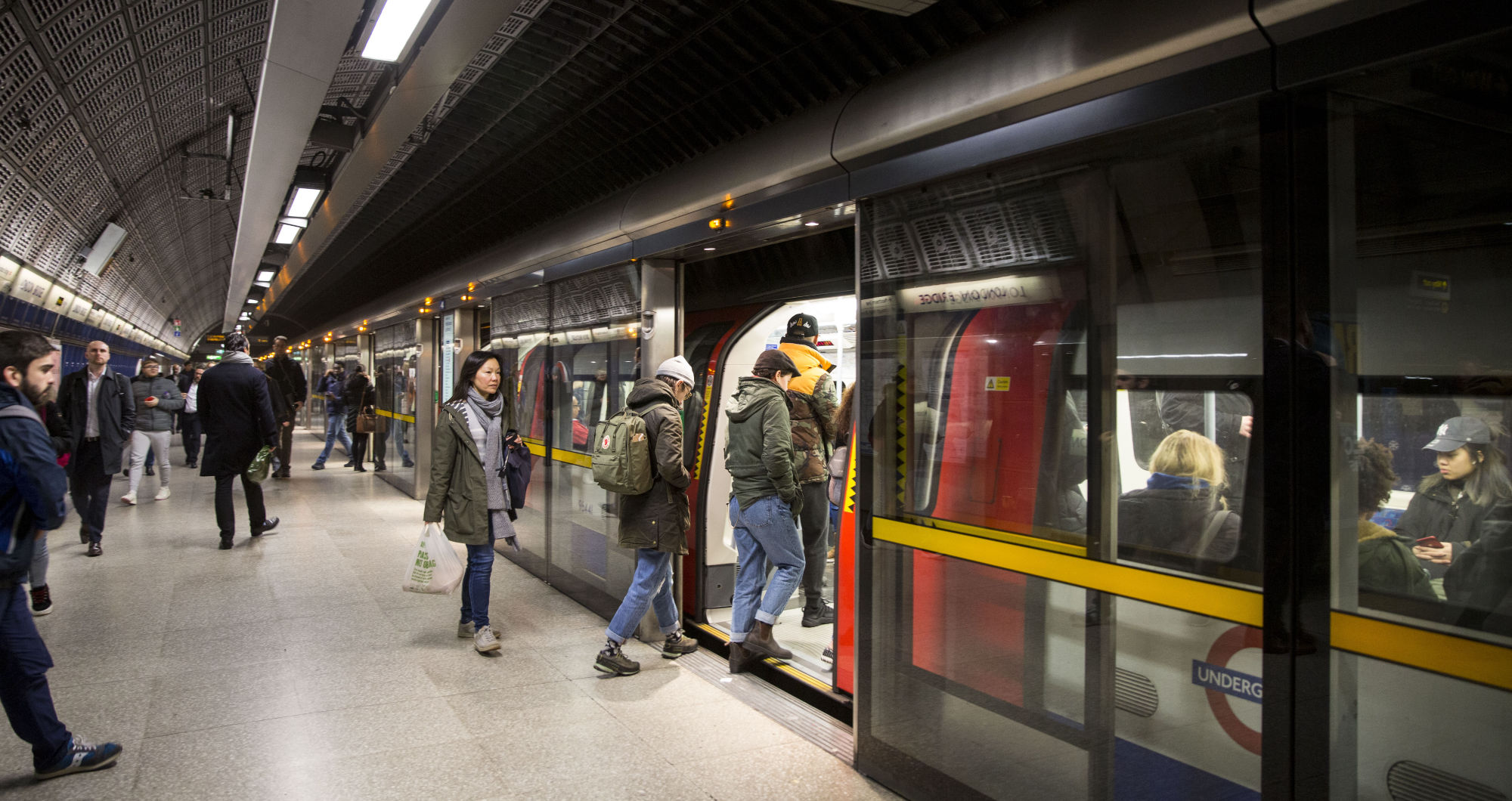

Transport for London (TfL) is hosting awareness events with immersive virtual reality demonstrations at stations throughout National Hate Crime Awareness Week (NHCAW, 10-17 October 2026), and funding more active bystander sessions with the national charity Protection Approaches to help customers to safely intervene as active bystanders in the event of a hate crime.
Whilst the risk of being a victim of crime on the London transport network remains low, with 14.2 crimes per million passenger journeys, data shows 2,396 hate crime offences were recorded on the network between January and August 2026, a 36 per cent increase on the same period the previous year. Several external factors have driven this rise, including improved reporting of offences and international events.
Throughout National Hate Crime Awareness Week, TfL will host awareness stands at stations including Euston, Finsbury Park and Stratford, with virtual reality headsets that display the perspective of a bystander of a hate crime and show the viewer how they can safely intervene and support those who are targeted.
TfL is also partnering with Protection Approaches, a charity dedicated to preventing identity-based violence, to fund a series of free online active bystander training sessions throughout autumn and winter. Participants will be guided through different scenarios of hate crime and how to intervene.
Two powerful anti-hate crime campaigns also continue this year. The first targets perpetrators, highlighting the likelihood of being caught and convicted with real case studies. The second offers customers practical advice on effective bystander intervention, encouraging them to ‘Act Like a Friend’. This year TfL is expanding the campaign to embed the ‘Act Like a Friend’ technique as a recognised ‘social code’ for public transport users.
Kaya Comer-Schwartz, Deputy Mayor for Policing and Crime, said:
“Everyone should feel safe and be safe when travelling in London. Hate crime and harassment have no place on our transport network or anywhere in our city, and we are determined to tackle and prevent these awful crimes.
“City Hall is leading from the front and Sadiq has invested £17m to tackle hate crime. TfL’s campaign is helping Londoners recognise hate crime, support those who experience it, and safely challenge hateful narratives. We remain committed to working closely with our communities, TfL and the police as we build a safer London for everyone.”
Siwan Hayward, Director of Security Policing & Enforcement at TfL, said:
“We want to reassure all Londoners that we take everybody’s safety and security seriously. We will not stand for hate crime of any form on our network, whether it’s against our customers or staff. We benefit from regular engagement with community groups to listen to their experiences, and work with our policing partners and charities to deliver effective solutions to prevent and tackle hate crime on London’s transport network. The station awareness events, and free active bystander online training sessions are valuable opportunities for providing practical advice to our customers, so that even more customers feel confident and comfortable to intervene in the event of a hate crime.”
A previous participant in Protection Approaches’ active bystander training, said:
“Before this session, I had wanted to be an active bystander in various scenarios, but I did not know how to approach the situation without escalating it or putting myself in danger. This session was delivered in such an engaging and interactive way, with clear guidance and a supportive environment that encouraged open discussion, where we could build on and challenge ideas in a constructive way. Now, I feel that I could approach a wide range of situations and be an effective active bystander. I know when engaging would help and when it would be safe for me to do so.”
The number of recorded hate crime offences is likely an underestimate as many incidents go unreported. TfL is working to minimise barriers in reporting crime through public awareness campaigns and improvements to the reporting process to make it safer, clearer and more accessible.
A safe and secure transport network is a key component of the Mayor’s Transport Strategy. Several measures have been introduced, including the establishment of a dedicated taskforce for Hate Crime and Ending Violence Against Women and Girls. The Taskforce brings together experts and people with lived experience to co-create evidence-based, sustainable solutions with TfL, transport operators and the British Transport and Metropolitan Police.
TfL is committed to consulting and reassuring community groups that have raised concerns over their safety on the network, incorporating their feedback into meaningful, evidence-based interventions. TfL and police patrols have been deployed at transport hubs near to synagogues, mosques, faith-based schools as well as at locations and routes with reported incidents.
TfL is also working to improve public safety infrastructure: along with an extensive CCTV network across stations, trains and buses, and all staff are equipped with body-worn video cameras. The transport network is patrolled by over 2,000 police and community support officers and 500 TfL Enforcement Officers to maintain safety and security.







