
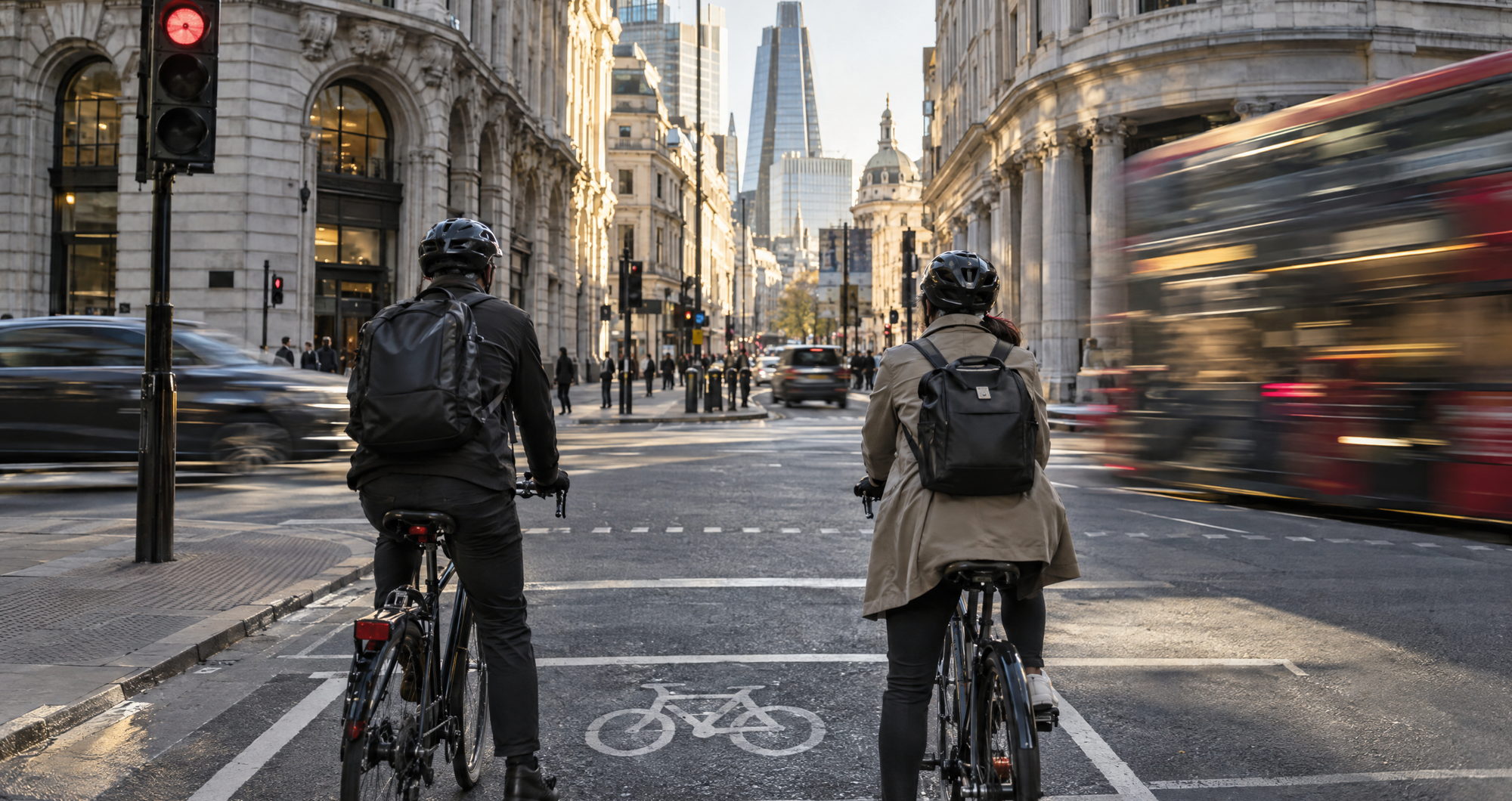

Transport for London has opened public feedback on proposals to reshape Monument junction in the City of London, where 18 collisions were recorded between February 2023 and February 2026. The plans would change how cyclists and pedestrians move through the junction, adding separation from motor traffic and new crossing arrangements.
Of the collisions recorded within the scheme area, 17 involved cyclists or pedestrians and eight caused serious injuries. TfL says that record makes the junction a priority for safety investment. The proposed changes would also support the Mayor’s Vision Zero ambition for road safety.
The consultation remains open until 24 November 2026. The scheme is still at the proposal stage, so the changes to cycle lanes, crossings and street access should not be treated as agreed works. Londoners can give their views on the arrangements being put forward.
Changes for cyclists
The cycling proposals combine lanes separated from motor traffic by wands with changes to the way riders wait and set off at traffic signals. Advance stop lines and early-release signals are proposed on every arm of the junction, alongside a large cycle gate on King William Street northbound.
Wands are upright separators used to mark a boundary between a cycle lane and the adjoining traffic lane. Here, they form part of a proposal to give cyclists space separated from motor vehicles as they approach or pass through the junction.
Advance stop lines provide a waiting area for cyclists ahead of other traffic at signals. Early-release signals allow cyclists to begin moving before motor traffic receives a green light. The proposal to include these measures on every arm would make them a feature across the junction rather than at a single approach.
The northbound cycle gate on King William Street is another part of the proposed layout. Together, the cycling measures address both the space available to riders and their movement through the signal-controlled junction. They are being presented for public feedback alongside the pedestrian changes, rather than as a separate, confirmed scheme.
New crossing arrangements
For pedestrians, TfL proposes new signalised crossings at Cannon Street and King William Street North. These would add controlled crossing points to the junction’s layout, with signals governing when people can cross and when traffic can proceed.
The Gracechurch Street crossing would also change. Pedestrians would be able to cross the street in a single movement instead of waiting on a central island. That is a practical distinction for people walking through the area: the proposed arrangement removes the intermediate wait from that crossing.
At Eastcheap, the existing crossing would be moved and widened. Fish Street Hill would be pedestrianised, making the treatment of that street another substantial element of the proposals. These changes would alter both the crossing points and the space available for walking around the junction.
The pedestrian proposals sit alongside the cycling measures within the same scheme area. The collision figures cover that area as a whole and show how frequently people walking or cycling were involved. They do not establish that any particular proposed measure would have prevented an individual collision.
Feedback before decisions
The safety record is central to TfL’s case for investment. Serious injuries were recorded in eight of the collisions during the period covered by the figures, while cyclists or pedestrians were involved in 17 of the total 18. Those figures provide the context for the proposed redesign.
For people who use Monument junction, the consultation offers an opportunity to consider the changes together: separated cycling space, different signal arrangements, new and altered pedestrian crossings, and pedestrianisation of Fish Street Hill. Each remains a proposal on which feedback is being sought.
Public feedback is open until 24 November 2026. The next step for Londoners wishing to respond is to submit their views during that consultation period. Whether the layout proceeds as proposed remains to be determined; for now, the practical changes described by TfL are plans rather than a new junction arrangement already in place.







