
There was a time when the kitchen had one job – preparing meals. Today, it’s so much more than a place to cook. It’s the backdrop to family life.
It’s where the morning begins over breakfast, shopping is unpacked after a busy day, friends gather over coffee, and families come together in the evening. For many households, it’s also where bills are paid, phones are charged, and plans are made for the week ahead.
As the role of the kitchen continues to evolve, homeowners are asking more of the space than ever before. According to Mario Michael, Owner of Kitchen Makeovers in North London, the key isn’t necessarily creating a bigger kitchen, but one that’s designed around the way a family actually lives.
One room, countless roles
Modern kitchens are expected to do far more than they were ever designed for. Cooking, eating, entertaining and everyday organisation often happen all at once, meaning different activities can quickly compete for the same space.
Rather than thinking about cupboards and appliances first, Mario recommends considering how the room is used throughout the day. Understanding where meals are prepared, where shopping is unpacked or where post naturally lands can help create practical zones that make daily routines feel more organised.
Try this: Spend a week paying attention to where clutter naturally builds up. If shopping bags always end up by the back door, create a dedicated unpacking area nearby. If post regularly lands on the worktop, introduce a slim drawer organiser or wall-mounted letter holder. Designing around your existing habits is often more effective than trying to change them.
“One of the biggest mistakes people make is designing a kitchen around how it looks rather than how they actually live,” explains Mario. “If you find yourself walking across the room five times just to make a cup of tea, the layout probably isn’t working hard enough. A few small changes to where things are stored can make everyday life noticeably easier.”
Designing around people, not just the layout
A well-designed kitchen should support the people using it, rather than expecting everyone to adapt to the room. Creating dedicated areas for food preparation, dining and organisation helps each activity have its own place without the space feeling overcrowded.
Clever storage, thoughtfully positioned worktops and layouts that allow people to move around comfortably can make even busy family kitchens feel calmer. The goal isn’t to separate family life, but to make it easier for everyone to enjoy the room together.
Try this: Aim to leave at least one uninterrupted stretch of worktop free at all times. Whether it’s for making packed lunches, helping with homework or rolling out pastry, a clear workspace makes the kitchen instantly more functional without costing a penny.
Making space for every member of the family
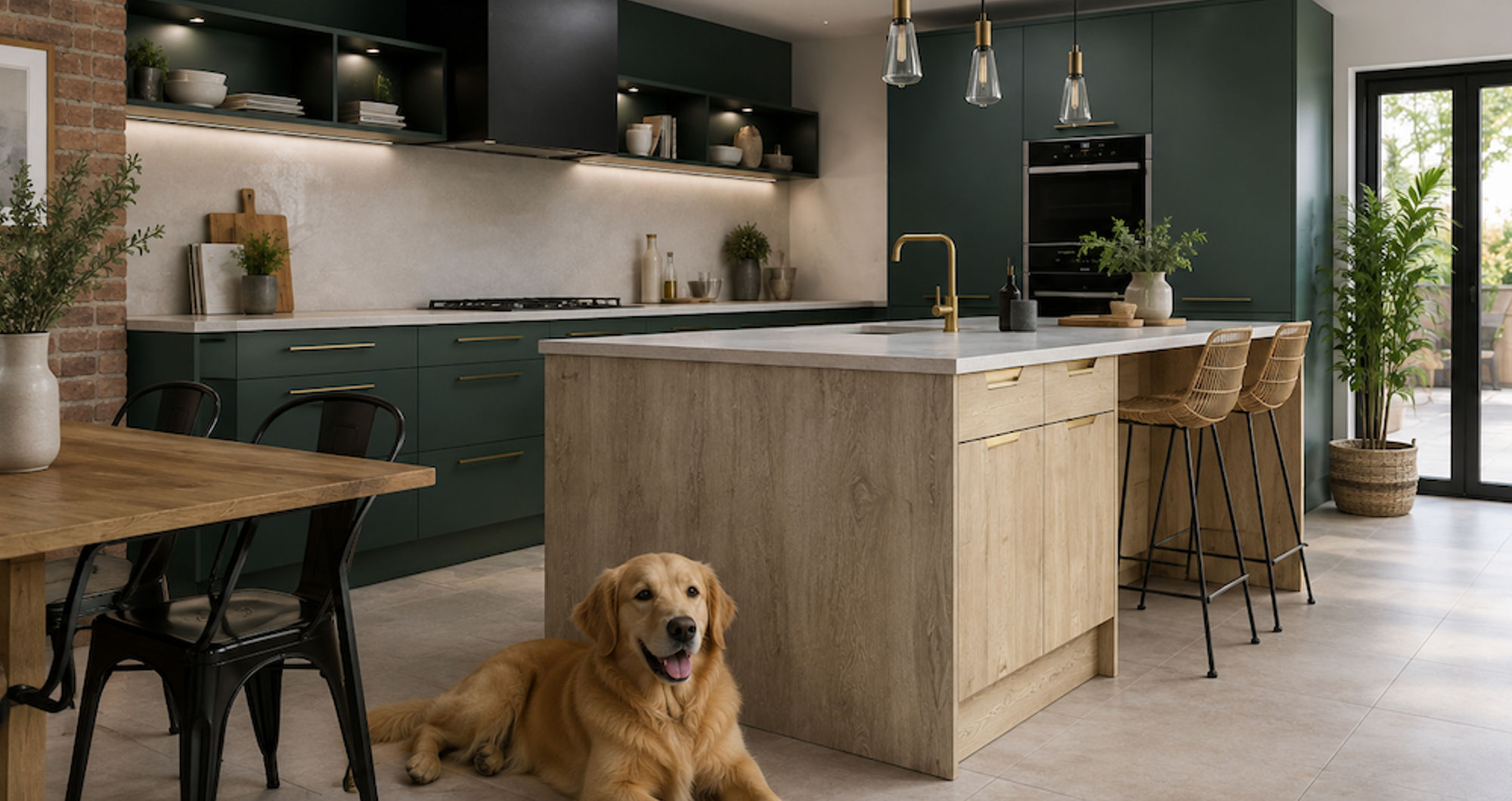
It’s easy to think about adults and children when planning a kitchen, but pets are just as much a part of family life. Whether it’s creating a dedicated spot for food and water bowls, somewhere to store leads and treats or simply ensuring there’s a quiet place to rest away from busy walkways, considering pets as part of the design helps the kitchen work better for the whole household.
Try this: If you’re renovating, consider incorporating a pull-out drawer for bowls or a dedicated cupboard. Keeping pet essentials together helps avoid clutter while ensuring they’re easy to access without becoming a trip hazard.
A kitchen that grows with you
Children grow taller and older, family routines change, and the way we use our homes naturally evolves over time.
Designing a kitchen with flexibility in mind means it can continue to meet changing needs without requiring major alterations. Adaptable storage, multifunctional spaces and layouts that can support different stages of family life all help create a kitchen that’s built for the long term.
Try this: Choose adjustable shelving inside cupboards wherever possible. It’s a simple feature that allows storage to evolve from baby bottles and lunchboxes to large serving dishes and small appliances without replacing the cabinetry later.
So whether you want to cook up a storm, chill out with friends or get your kids to concentrate on their homework, you can make it all happen in the heart of your home with clever kitchen design.
To find out more about Kitchen Makeovers, please visit the website.