
Considering Matt Haig’s novel alongside the current protests sweeping through Albania, it is impossible to ignore the eerie similarities. How can it be that a fictional piece of prose, released in 2024, is coming to fruition in 2026?
The Life Impossible
As a prolific reader of Matt Haig’s oeuvre – with The Midnight Library withstanding the test of time as my favourite ever read – it was only natural that I read his contemporary novel The Life Impossible.
Released in 2024, the book follows the life of Grace Winters, whose mundane life as a retired maths teacher is upended when she becomes the unlikely inheritor of a house in Ibiza, left to her by a former colleague. Grace strives to uncover what happened to Christina, unpicking the various layers of intrigue that surround her supposed death at sea.
It is here that Haig introduces the usual fantasy flair that has come to typify his writing; Grace learns that Christina was a psychic and, whilst she initially dismisses this as pure lunacy, she soon comes to possess the same skills. The cause of such a transformation? An interaction with La Presencia, this underwater force of life that is described in the novel as an inexplicable beam of light.
Much like The Midnight Library, which brings forth a deeper meaning of the futility of questioning one’s life choices, The Life Impossible operates on a similar level. Grace’s quest to uncover what happened to Christina leads her to a more profound tension that runs through Ibiza; Christina had been protesting against a luxury development project that threatened Es Vedrà’s ecosystem. The project had the backing of Sofía Torres, a politician who was coerced into renouncing her previous environmental campaigning.
Is this starting to sound familiar? An environmentally disruptive capitalist venture given the green light by officials, in spite of well-known risks? Politicians embroiled in scandal for granting special permits for otherwise forbidden areas? Averting our attention to Albania, we find an ominously similar scenario playing out right now.
The ‘Flamingo Revolution’
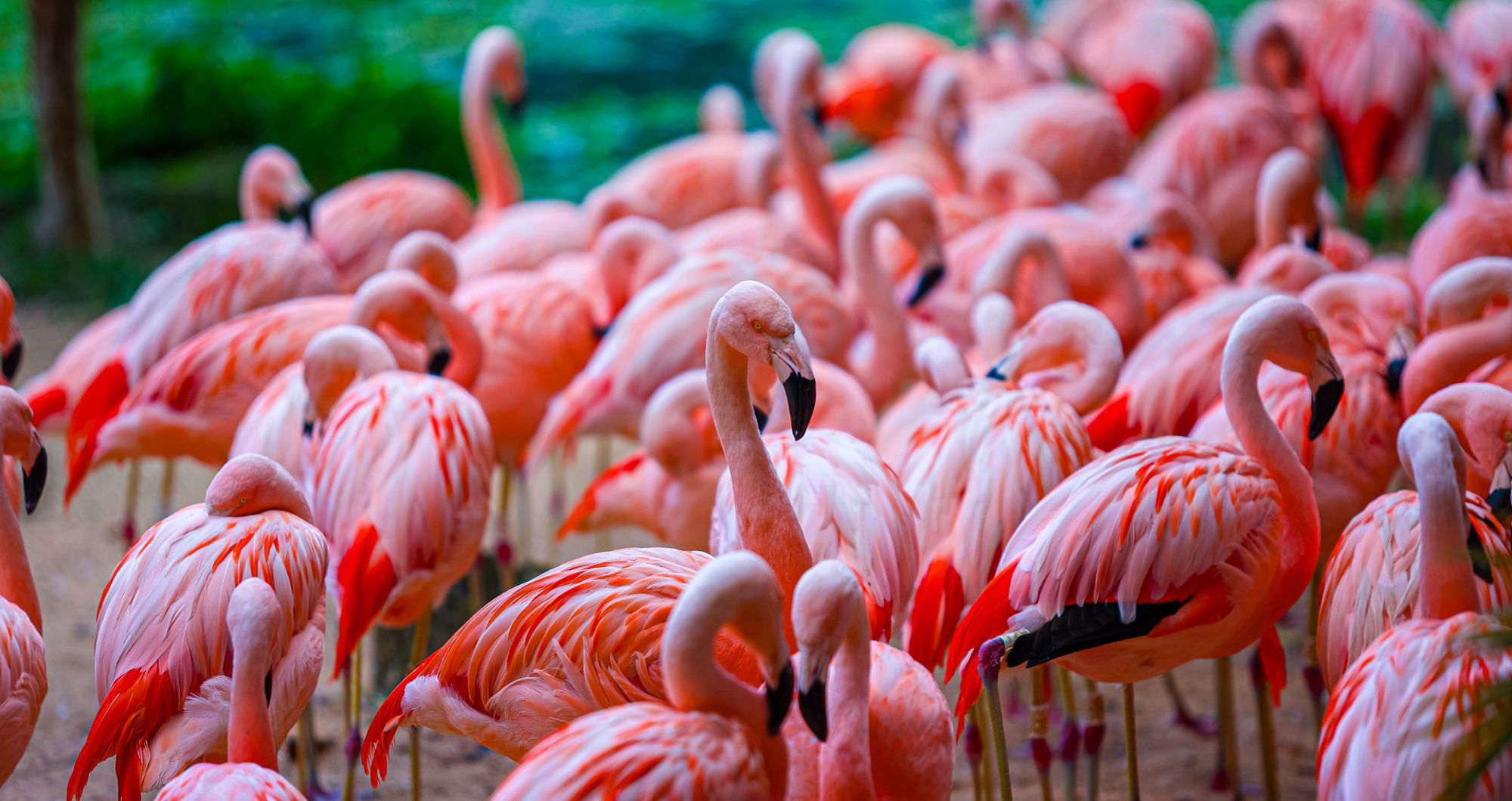
Thousands have taken to the streets of Albania to protest against the potential development of a luxury resort near Narta Lagoon, a protected area home to a vast flamingo population.
The resort is the brainchild of international investors, including Jared Kushner, a man who happens to be US President Donald Trump’s son-in-law. In spite of conservationists’ fears, the government has approved a ‘special investor’ status for the project.
Since May 2026, Albanians have taken to the streets to protest against the project. One protestor carried a placard affirming that ‘Albania is not for sale’, while another read ‘Hands off Narta.’ Originating as a protest grounded in environmental concerns, principally regarding unfettered foreign investment, the mood has quickly soured across the country.
The government’s dismissal of environmental concerns has amplified existing tensions in Albania, with reproach now directed at the government’s supposed lack of transparency. Kushner’s Affinity Partners have allegedly been in talks regarding the project since 2024.
Whilst Albania’s Prime Minister Edi Rama has repeatedly stressed the advantages to be derived from this project, including job opportunities for local communities, the Flamingo Revolution remain steadfast in its opposition. The protest has continued uninterrupted for over 60 days, becoming the largest civic protest in Albania since the fall of communism.
So, what are the productive parallels that can be drawn?
When I read The Life Impossible at the start of this year, I distinctly remember feeling unconvinced by the excessively fantastical elements in the novel’s conclusion. Animals of all shapes and sizes descend onto the shores of the beach to defeat the evil capitalist in a stupefying climax to the ongoing protests. A somewhat ‘impossible’ image to truly visualise. And, I believed at the time, an overly optimistic conclusion to what was an unequivocal threat to the livelihood of the community.
And yet, isn’t this optimism precisely the message Haig wished for us to extract from the novel? In the face of unrestrained capitalist ventures, the novel reorients power back into the hands of the community. In Albania, the beginnings of a similar reclamation of control could be materialising.
Haig’s novel is steeped in fantasy and magic, but in Albania we are witnessing the pure power of human collaboration. As Haig seems to have predicted in 2024, investors will continually seek to extract profit from previously undisturbed landscapes. But they don’t always have to succeed. The Flamingo Revolution is a striking testament to this.
Feature image by Pexels