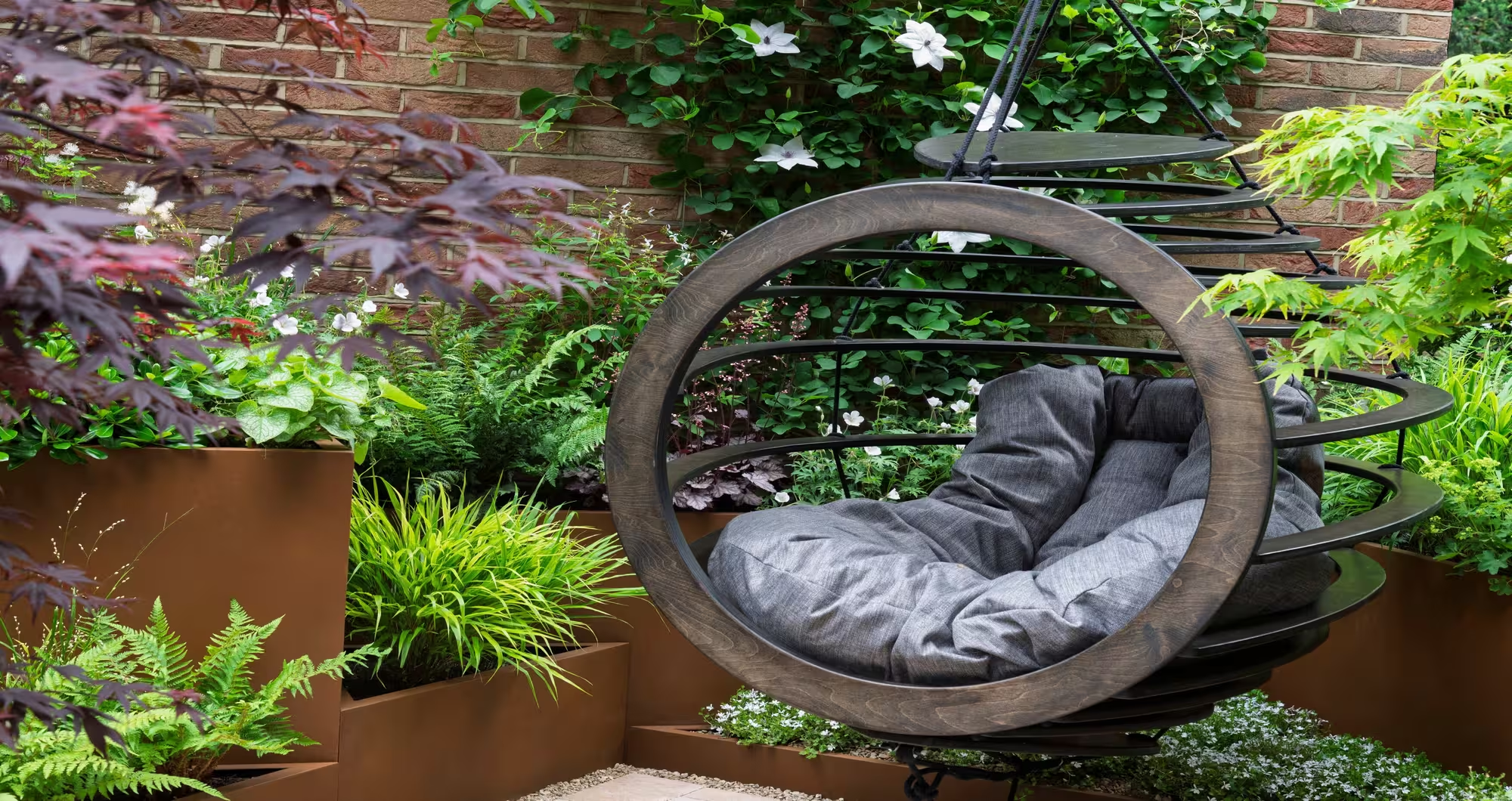

London gives you a great deal. Culture, energy, the best restaurant scene in the country, the Northern line at rush hour. What it tends not to give you, unless you’ve remortgaged to an alarming degree, is a garden.
What most Londoners do have, however, is a balcony. Or a flat roof. Or a narrow south-facing terrace barely wide enough to stand in sideways. Or a concrete backyard shared with the other three flats in the building. Or a windowsill. These are the growing spaces of zone 2, and they are, contrary to everything you might assume, more than enough.
This is a guide for the London gardener — the one growing in containers twelve floors up in Canary Wharf, or on a Victorian terrace in Peckham with a yard the size of a car parking space, or in a mansion block in Kensington with a fourth-floor balcony and grand ambitions. The principles are the same wherever you are. Space is a constraint, not a sentence.
London Is Actually a Brilliant Place to Garden
Here’s something that surprises a lot of people: London has its own microclimate, and it works substantially in your favour as a gardener.
The urban heat island effect — the phenomenon by which dense urban areas retain heat absorbed by buildings, roads, and pavements — means that central London runs consistently 2–4°C warmer than the surrounding countryside. In gardening terms, that’s significant. Plants that would struggle in Kent or Essex thrive in Hackney. Mediterranean species like Agapanthus, Trachelospermum, Salvia, and even Musa basjoo (the hardy banana) that gardeners in more rural parts of the country coddle and protect through winter are virtually bombproof in SW1.
London also benefits from slightly lower rainfall than much of the UK — around 600mm annually, compared to the UK average of roughly 885mm. That might sound like bad news for plants, but for balcony and container gardeners, it actually reduces the risk of waterlogging, which is the silent killer of more potted plants than drought ever manages to be.
Add to this the fact that urban air quality has improved dramatically over the past decade — particulate pollution notwithstanding, the days of sooty deposits killing everything on a window ledge are long gone — and you have a city that, meteorologically and climatologically speaking, is a genuinely good place to grow things.
The Container Mindset
Gardening in London almost always means gardening in containers, and this requires a slightly different way of thinking to conventional in-ground gardening.
In a border, plant roots can travel. They go where they need to go — following moisture, following nutrients, finding their own equilibrium. In a container, the plant is entirely dependent on you. The nutrient supply is finite, the water retention is limited, and the roots will eventually fill the pot and run out of room. This sounds demanding, but it’s actually quite straightforward once you understand the three non-negotiables: the right compost, consistent watering, and regular feeding.
Compost matters enormously. Do not be tempted by the cheapest bag on the shelf. For containers, a good-quality peat-free multi-purpose compost mixed with approximately 20–25% perlite (the white granular material that improves drainage and aeration) gives plants a far better root environment and reduces the risk of waterlogging. Add slow-release fertiliser granules at planting time to provide a baseline of nutrients through the season.
Watering in London’s summers is non-negotiable. Containers dry out quickly — particularly in the exposed, often windy conditions of a high-rise balcony or rooftop terrace. In hot spells, large containers may need watering daily. Investing in a self-watering system — anything from simple drip irrigation connected to a timer to a wick-fed self-watering planter — is genuinely transformative for anyone who commutes or travels regularly. Water-retaining granules mixed into compost also help bridge the gaps.
Feed fortnightly from May to September. Once slow-release fertiliser is exhausted (usually after about 8–10 weeks), a liquid feed every two weeks keeps flowering plants performing at their best. A general-purpose liquid fertiliser works for foliage and mixed displays; switch to a high-potash feed like tomato food for flowering and fruiting plants to encourage blooms rather than excessive leafy growth.
Dealing With the Specific Challenges of London Balconies
Every London balcony has its own particular personality, and usually its own particular challenges. Here’s how to navigate the most common ones.
Wind
The higher up you are, the more brutal the wind can be. Wind desiccates plants rapidly, snaps stems, shreds large leaves, and can turn a carefully arranged container display into chaos within a single August storm.
The answer is twofold: choose wind-tolerant plants, and create windbreaks. Grasses are exceptional in windy conditions — they move gracefully rather than suffering. Sedums, Sempervivums, Lavender, Agastache, and most Mediterranean herbs handle exposure well. Avoid large-leaved plants like Fatsia japonica in very exposed spots; the leaves tatter unattractively, and the plant becomes stressed.
For windbreaks, a trellis panel with climbing plants is both functional and beautiful. Trachelospermum jasminoides (star jasmine) is a particularly good choice — evergreen, fragrant in summer, and remarkably tolerant of exposed positions once established.
Weight Restrictions
Balcony weight limits are a real and serious consideration, and worth checking with your building management before you start hauling 60-litre bags of compost up four flights of stairs.
The heaviest element in any container display is invariably the compost. Switching to a lightweight compost mix incorporating perlite, vermiculite, or a specialist lightweight growing medium significantly reduces the load per pot. Choose fibreglass, resin, or high-quality plastic containers over terracotta or stone for elevated positions — they’re lighter, frost-proof, and have improved so dramatically in appearance that distinguishing them from the real thing at a glance is increasingly difficult.
Shade From Surrounding Buildings
Many London balconies and yards receive less direct sun than expected, overshadowed by neighbouring buildings, walls, or extensions. If yours gets fewer than four hours of direct sunlight daily, focus on shade-tolerant plants: ferns, hostas, Heucheras, Astilbe, Hydrangea, and climbing Hydrangea petiolaris for walls. For food growing in shade, leafy vegetables — spinach, kale, lettuce, rocket — will outperform fruiting crops.
What to Grow: A London Balcony Hit List
Agapanthus are tailor-made for London’s warm urban climate. Their architectural strap-like foliage and stunning blue or white flower globes in July and August look spectacular in large containers, and they are significantly more reliably hardy in zone 2 than in rural gardens.
Salvia nemorosa and its varieties — compact, long-flowering, adored by bees, and perfectly happy in a sunny south-facing position. ‘Caradonna’ and ‘Ostfriesland’ are both excellent, producing deep violet spikes from May right through to October if deadheaded regularly.
Tomatoes and chillies respond exceptionally well to London’s summer warmth. A south-facing balcony with a wall behind it creates a heat trap that produces genuinely excellent crops. ‘Sungold’ cherry tomatoes are the consistent favourite — reliably productive, extraordinarily sweet, and manageable in a 30-litre container.
Herbs are perhaps the single most practical thing a London gardener can grow. Rosemary, thyme, oregano, and sage are Mediterranean plants that actively prefer the free-draining conditions of a container in a sunny position to the heavy clay soils of many London gardens. A windowsill of thriving herbs is more useful to a city cook than almost any other gardening investment.
Hardy ferns and hostas for shadier positions — Dryopteris, Polystichum, Asplenium scolopendrium — provide lush, structural greenery that earns its keep across most of the year and requires almost no maintenance beyond an annual tidy.
Climbers for walls and balcony railings — Clematis (particularly the compact Patio Clematis series), sweet peas for a fragrant summer display, and the ever-reliable Trachelospermum jasminoides for year-round evergreen cover with bonus summer fragrance.
Styling Your London Balcony: Making a Small Space Feel Generous
A well-styled balcony is one of the more transformative things you can do to a London flat, particularly if outdoor space is precious. A few principles that make a consistent difference:
Go tall – Vertical interest — climbers on trellis, tall grasses, slim obelisks with sweet peas — draws the eye upward and makes the space feel larger. A balcony planted only at ground level looks flat and small; one with layers of height feels almost roomlike.
Use large containers, not lots of small ones – Six small pots look cluttered and are harder to maintain. Two or three large statement containers have far more visual impact, dry out less quickly, and give plants genuine room to perform.
Edit ruthlessly – The best balcony gardens have a coherent palette — two or three colours, a consistent container material, a sense of considered curation. The temptation to buy one of everything at the garden centre is understandable but almost always works against the final effect.
Add lighting – Solar festoon lights strung along a balcony railing extend the usefulness of the space well into the evening and transform it from a daytime feature into something genuinely special for summer entertaining.
For balcony furniture specifically, Dobbies Garden Centres offer a well-edited online range that includes compact bistro sets, foldaway dining furniture, and space-conscious lounge pieces that work brilliantly in smaller London outdoor spaces — and ordering online means no hauling flatpack boxes across the city on the Overground: browse the full garden furniture range at Dobbies here.
The London Garden Mindset
There’s a particular kind of creativity that comes from constraint. The best London balcony gardens aren’t successful despite their limitations — they’re successful because of them. The small space forces intentionality. Every plant earns its place. Every pot is considered. The result is often something more thoughtfully designed, more carefully maintained, and more genuinely enjoyable than a sprawling suburban garden that’s too large to think about properly.
London doesn’t owe you a garden. But if you work with what it gives you — the warmth, the light on a south-facing wall, the half-metre of railing that’s perfect for a window box, the rooftop that nobody’s ever done anything with — you might find you’ve got something rather good.
You just have to start treating it like the opportunity it is.