
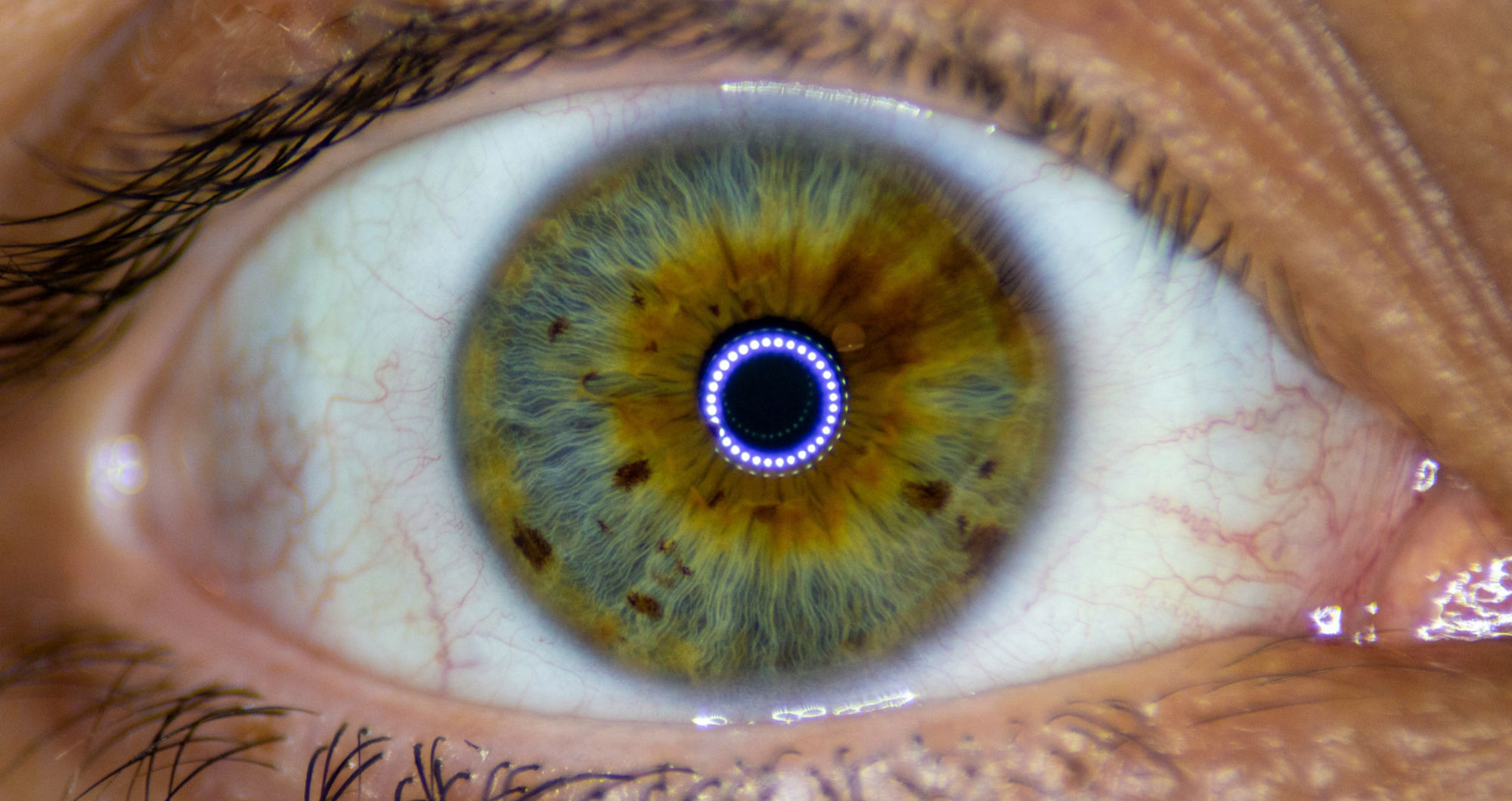

For decades, Mason Challinor, 49, lived in a world that never quite came into focus. A software consultant from Hertfordshire and a devoted father, he had learned to navigate life through layers of compromise: varifocals for driving, specialist lenses for screens, magnifying glasses for detail, and prescription sunglasses strapped to his head for anything involving water. Seeing wasn’t effortless it was strategic.
“I didn’t realise how much effort I was putting into seeing,” Mason admits. “Until I suddenly didn’t have to anymore.”
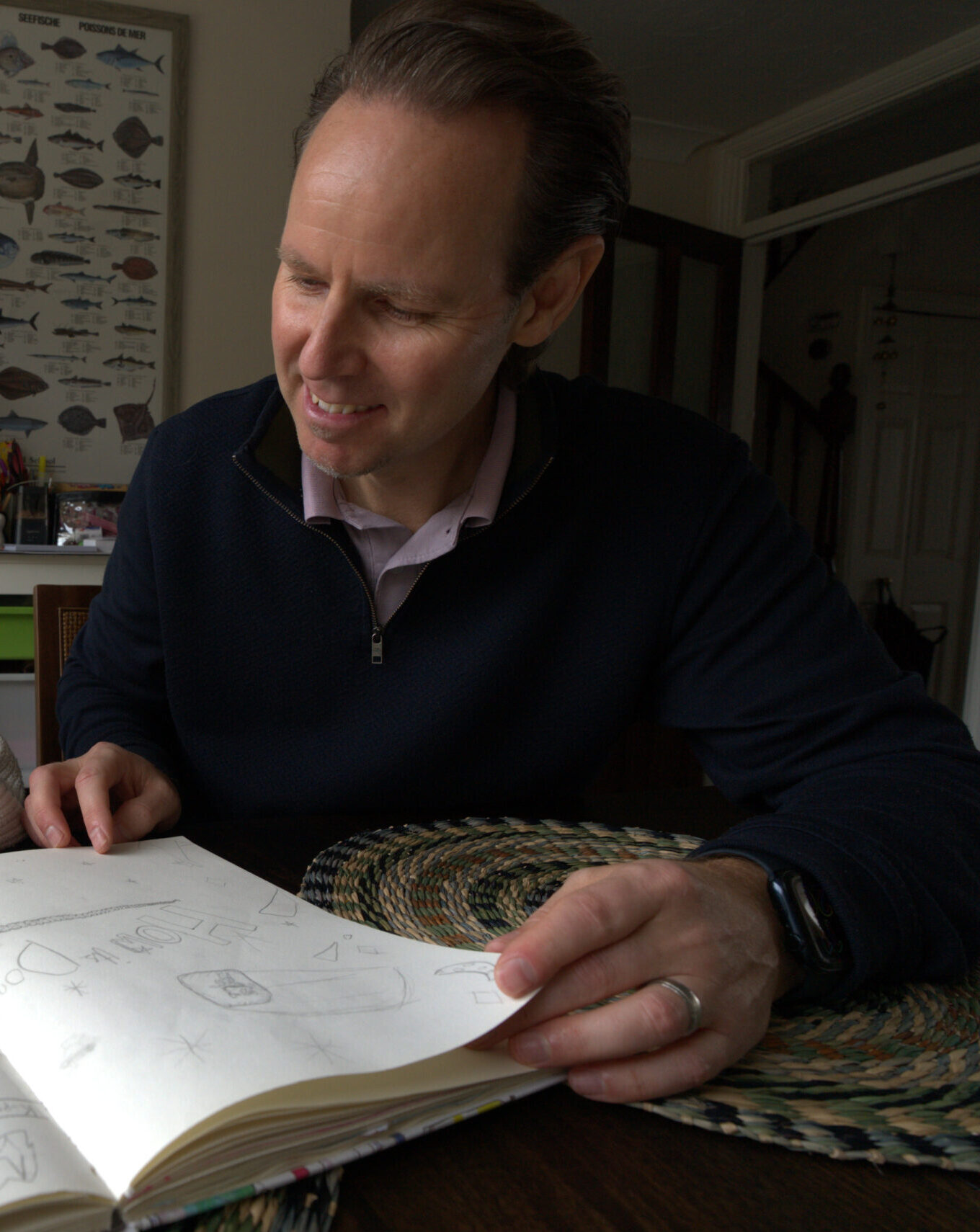
Mason after she can finally see his daughter’s face
Seeing Life Clearly Again
Mason’s struggle with vision began quietly in childhood.
Astigmatism in one eye meant the other to compensate, and for years he simply carried on. But eyesight rarely stands still. By his early thirties, his near vision had faded. By his mid-thirties, distance vision followed. What began as a minor inconvenience slowly became a daily obstacle.
First came varifocals. Then multiple pairs of glasses. Then the constant switching — reading glasses, driving glasses, prescription sunglasses, a small ritual repeated dozens of times a day.
Ordinary routines became unexpectedly complicated. Showering and shaving meant fogged lenses and blurred mirrors. Reading his phone in bed required careful positioning. Even simple tasks demanded planning.
The frustrations extended beyond the home.
Activities Mason’s love of snowboarding, swimming and water sports became difficult and, at times, risky.
“If you can’t read the display on an e-foil, you can end up stranded at sea,” he says. “That’s not hypothetical. That’s dangerous.”
Beneath the inconvenience lay a deeper concern he rarely voiced.
“If I woke up in the night and something was wrong, I wouldn’t be able to see properly without scrambling for glasses. As a father, that made me feel less capable. Less secure.”
It wasn’t just about eyesight. It was about confidence.
Weighing His Options
For years, Mason considered laser eye surgery.
Procedures such as LASIK and LASEK reshape the cornea to improve focus and are widely used. But Mason’s situation was more complex. His vision had gradually deteriorated over decades, and laser treatment would not address age-related changes in the eye’s natural lens.
Even if successful, the outcome might not have addressed all of his visual needs over time.
“Laser surgery wasn’t going to give me the clarity I needed long-term,” he says. “I wanted a solution that would better suit the stage of life I’m in.”
Eventually, he learned about lens replacement surgery, also known as refractive lens exchange.
Unlike laser procedures, the operation removes the eye’s natural lens, which stiffens and loses flexibility with age and replaces it with an artificial intraocular lens designed to improve focus at different distances.
For Mason, it felt like an option worth exploring, though not one he took lightly, as he was aware that lens replacement surgery wasn’t suitable for everyone
“You can’t ask for your natural lenses back,” he says. “That’s not a small decision. I had to think carefully about it.”
Mason also knew that his vision could continue to change over time and that individual outcomes vary.
The Decision
After research and consultations, Mason decided to proceed with lens replacement surgery under the care of consultant ophthalmic surgeon Mfazo Hove at Blue Fin Vision.
He says the deciding factor was feeling fully informed about the potential risks and benefits, and clear about what the procedure could and could not achieve.
“I came with questions. A lot of them,” Mason recalls. “I needed to understand exactly what would change and what wouldn’t.”
He was also advised that, like any surgery, lens replacement carries potential risks, including infection, inflammation, glare or halos around lights, and the possibility of needing further treatment and that recovery can involve temporary dryness, light sensitivity or fluctuating vision while the eyes heal and the brain adapts.
The Day of Surgery
Surgery day was daunting.
Mason admits he has never been comfortable with medical procedures and has a tendency to faint. Extra precautions were taken, including having an anaesthetist present, something he found reassuring.
The procedure itself was relatively quick. Through tiny incisions, his natural lenses were removed and replaced with artificial intraocular lenses. Each eye took around 20 to 30 minutes and was painless.
“I was so focused on keeping my eyes still that I barely noticed anything else,” Mason says.
A Moment of Clarity
The true impact came the following morning.
Sitting with his daughter as she watched her favourite animated film, Mason noticed something extraordinary.
“I could see her eyelashes. Her eyes. Tiny details I didn’t realise I’d been missing,” he says. “That was incredibly emotional.”
In the days after surgery, while his eyes adjusted, she held his hand as they travelled home in the dark.
“She was my guide,” he says quietly. “That says everything.”
Life Now
Today, Mason describes his vision as significantly improved compared to before surgery.
He no longer relies on multiple pairs of glasses throughout the day and finds everyday tasks simpler, like reading his phone, shaving, swimming and travelling.
“It’s taken a weight off my life,” he says.
“It’s confidence. Relief from constant adjustment. Relief from fear.”
For Mason, the change has been meaningful.
It is about reconnecting with everyday life, the small details that make up the moments that matter most.
“And being able to see my daughter’s face properly,” he says, “that’s everything.”







