
If you look at the vending industry in the US, it is mostly a game of scale—how many rows of soda and chips can you fit in a breakroom? But across the pond, the UK is running a completely different playbook. They have moved past the “snack box” phase and turned vending into what they now call “Automated Retail.”
For US business owners, the UK’s growth—projected to hit nearly $3.5 billion by 2035—is not just an interesting stat. It is a preview of where the American market is likely headed as labour costs rise and consumer habits shift. If you are still thinking about vending as a way to sell 50-cent candy bars, you are looking at a version of the industry that is already dying.
Beyond the $1.50 Transaction
The biggest thing American operators can learn from the UK is the move toward high-value items. In London or Manchester, it is common to see machines dispensing high-end skincare, electronics, or even freshly baked pizza. They are not just selling “treats”; they are solving immediate needs with high-margin products.
The UK’s Automatic Vending Association (AVA) reports that the industry is increasingly diversifying into non-food sectors. By moving into “micro-boutiques,” British operators are getting better returns on foot traffic than they ever did selling granola bars. For a US owner, the lesson is that your “per-slot” revenue does not have to be capped at two dollars. When you stop thinking about the machine as a snack dispenser and start thinking of it as a 24/7 automated storefront, the math changes. You can stock items that cost $20, $50, or even $100. The overhead stays the same, but the profit per square foot skyrockets.
The Cashless Standard
The US is still surprisingly reliant on bill validators, but in the UK, cashless is essentially the law of the land. About 77% of UK vending transactions are now tap-to-pay. This is not just a convenience for the customer; it is a massive data play for the owner.
When every transaction is digital, you get “dynamic pricing” capabilities. Much like Uber’s surge pricing, UK operators can adjust costs based on demand, time of day, or even weather conditions. If you are still counting quarters in a bucket, you are missing out on the ability to nudge your margins up by 10% or 15% based on real-time data. Cashless also means you don’t have to worry about the security risks of keeping physical money in a machine, nor do you have to pay a driver to spend half their day counting coins.
Smart Inventory and “The Invisible Employee”
The UK has embraced IoT (Internet of Things) tech at a level that makes traditional US “route driving” look ancient. British machines are often equipped with sensors that talk directly to the warehouse. Instead of a driver showing up to a half-full machine to “see what is missing,” the system tells them exactly what to pack before they leave.
This shift toward “smart” machines is a global trend, as noted by market researchers at Mordor Intelligence. It effectively turns the machine into a 24/7 employee that does its own inventory and reporting. For a business owner, this means fewer wasted trips, lower fuel costs, and machines that are never “out of stock” on their best-sellers. In an era where gas and labour are the two biggest expenses for a vending route, this kind of efficiency is the difference between a struggling business and a highly profitable one.
The “Wellness” Pivot and Specialty Tech
Post-pandemic, the UK has seen a surge in “Wellness Vending.” This goes beyond just adding a “baked” version of a chip. We are seeing machines that stock PPE, hygiene products, and pharmacy-grade health items in gyms, transit hubs, and office lobbies.
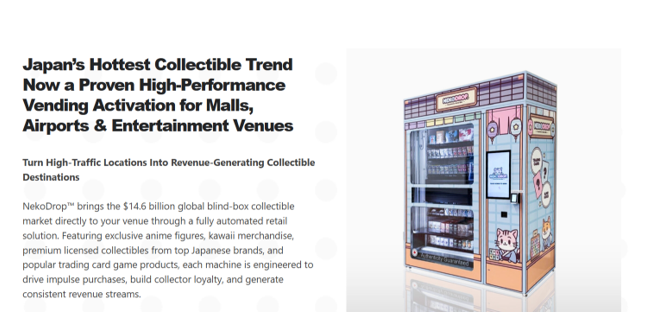
The strategy here is about “Social Context.” Instead of putting a machine where people are bored, they put them where people have a specific, urgent problem. This is where we see the rise of niche technology. For example, some operators are looking at specialised systems like NekoDrop vending machines to handle specific product types that require different dispensing mechanisms or branding.
In the States, the National Automatic Merchandising Association (NAMA) has started documenting a similar shift toward micro-markets, but the UK is currently leading the way in integrating these “service-based” machines into public infrastructure. They have realised that people will pay a premium for a product they need right now, whether that is a phone charger at a train station or a pack of vitamins at the gym.
The Data Advantage
What the UK operators have realised is that a vending machine is actually a data collection point. Every time someone taps a card, you learn something about your customer. You learn what time they buy, what they buy together, and what they ignore.
American business owners often treat vending as a “set it and forget it” business. You fill the machine, you come back in a week, and you take the money. But if you treat it like a retail store, you realise you can optimise your “shelves” constantly. If a certain brand of protein bar isn’t moving on Tuesdays but flies off the shelf on Fridays, you can adjust your stock to match that rhythm. This level of granular management is only possible when you move away from the “dumb box” model and toward the “smart retail” model.
Overcoming the “Stigma” of Vending
One of the biggest hurdles in the US is the perception of vending. Most people associate it with old machines that eat your dollar or dispense stale sandwiches. The UK has fought this by investing in the “look and feel” of the machines. Modern British machines use high-definition touchscreens, clear glass, and bright LED lighting. They look like high-end kiosks, not something you’d find in the back of a dusty garage.
When the machine looks premium, you can sell premium products. You can’t sell a $30 pair of earbuds out of a machine that looks like it was built in 1994. By upgrading the hardware, UK operators have unlocked entirely new demographics of customers who previously wouldn’t have even looked at a vending machine.
What This Means for Your Business
If you are running a vending operation in the US, the UK is effectively your five-year forecast. The transition from “vending” to “automated retail” is the only way to stay ahead of inflation and labor shortages.
The path forward is simple: stop thinking about the machine as a container for snacks and start thinking of it as a high-tech storefront. If you can ditch the coins, embrace real-time telemetry, and stock products that people actually value (not just crave), you are no longer just a “vending guy”—you are a tech-enabled retailer.
The opportunity is there. The technology exists. The only thing missing for most US operators is the willingness to stop selling chips and start selling solutions. The UK has shown that when you treat the industry with a little more ambition, the rewards are massive.