
A Japanese chipmaking-equipment company expects fiscal-year operating income to rise by 87.1% to JPY 1.169 trillion, with demand linked to artificial intelligence investment supporting its outlook. The forecast points to record sales and profit, but remains an estimate rather than a completed financial result.
The company projects net sales of JPY 3.7 trillion for fiscal 2027, an increase of 51.4%. Its estimates put operating-income growth ahead of sales growth, setting out expectations for a substantial expansion in both measures. Whether those expectations are met will depend on conditions through the end of the financial year.
The outlook was announced on 30 October alongside a share-repurchase facility worth up to JPY 150 billion. The company has authorised the purchase of up to 25 million shares during a period running from 1 November to 31 March. Those limits define the scope of the facility, not purchases already made.
AI investment supports demand outlook
The company’s assessment is that demand for chipmaking equipment remains strong as investment in AI continues. Management said customer interest remained strong and that there were no present signs of a slowdown. Those comments describe the position at the time of the announcement, rather than guaranteeing that demand will remain unchanged.
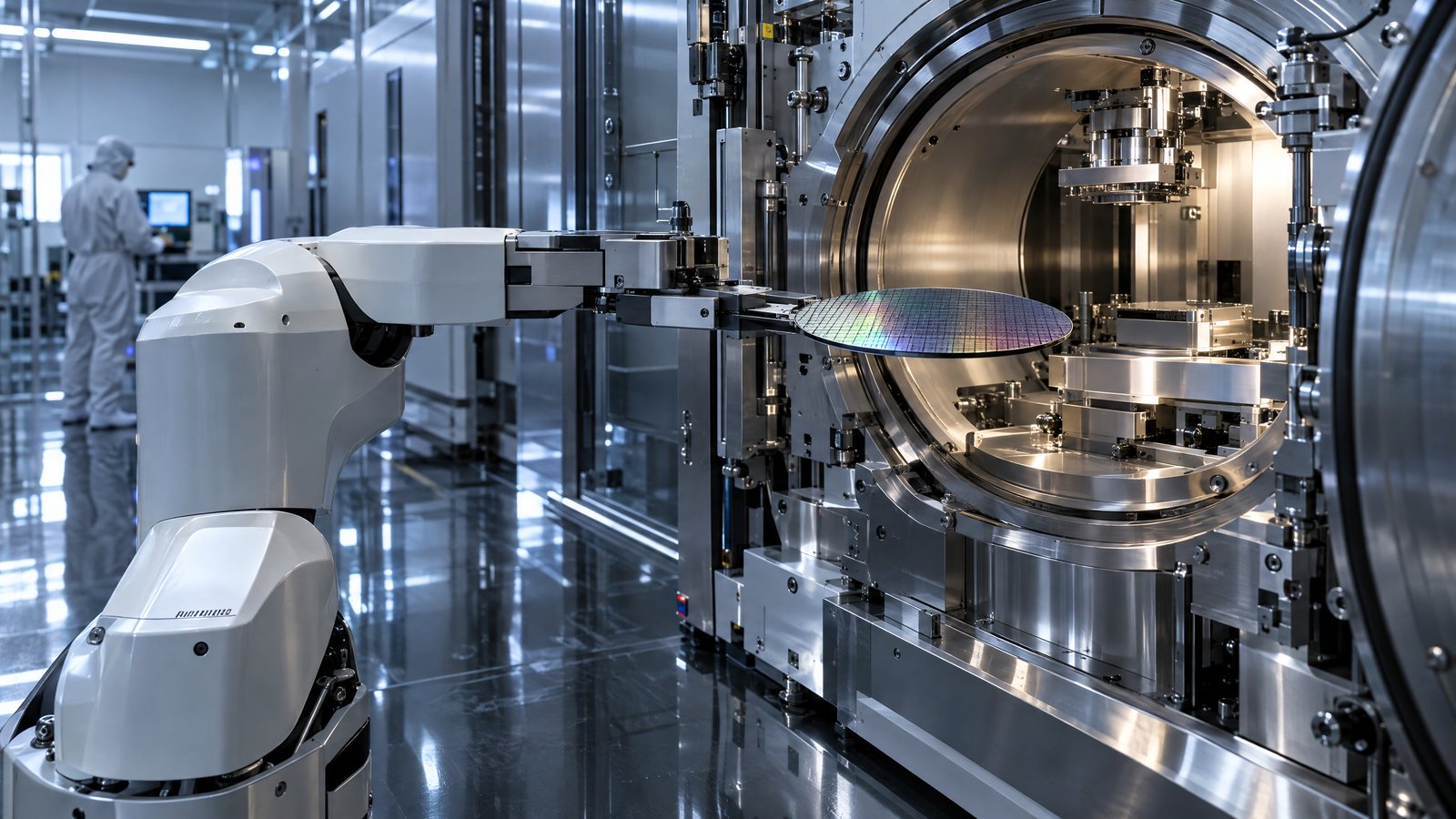
Chipmaking equipment is part of the industrial capacity needed to produce semiconductors. The link to AI investment therefore concerns demand for the machinery used in chip production, rather than sales of AI services themselves. The company’s outlook reflects its expectations for that equipment market over the fiscal year.
The positive assessment sits alongside wider investor concerns about the returns on spending on AI infrastructure. These are distinct issues: equipment demand can be strong at the point of an announcement while questions remain about the eventual financial returns from the investment behind it. The forecast does not settle those questions.
Nor does the absence of current slowdown signs rule out a change before fiscal year-end. The company is projecting record performance, but the figures remain forward-looking. Sustained customer interest supports its assessment; it is not the same as confirmation that the full-year sales and operating-income targets have already been achieved.
Record estimates, not final results
The JPY 1.169 trillion figure relates specifically to operating income. It should not be read as a net-profit figure or as money already earned during the full fiscal year. Likewise, the JPY 3.7 trillion sales estimate sets out the company’s expected annual revenue, rather than a final total.
The projected increases also measure different aspects of the outlook. Sales are expected to rise by 51.4%, while operating income is forecast to rise by 87.1%. The faster expected growth in operating income is part of the forecast; it does not, on its own, establish why the two measures are projected to grow at different rates.
The description of record-high sales and profit applies to the forecast levels. It signals the scale of the company’s expectations, without converting those expectations into an achieved record. That distinction matters while there is still time for market conditions to change before the financial year closes.
The buyback announcement is similarly bounded. Authorisation for up to 25 million shares and up to JPY 150 billion does not establish that either ceiling will be reached. The announced timetable identifies the permitted repurchase period, while the eventual amount purchased remains separate from the facility’s maximum size.