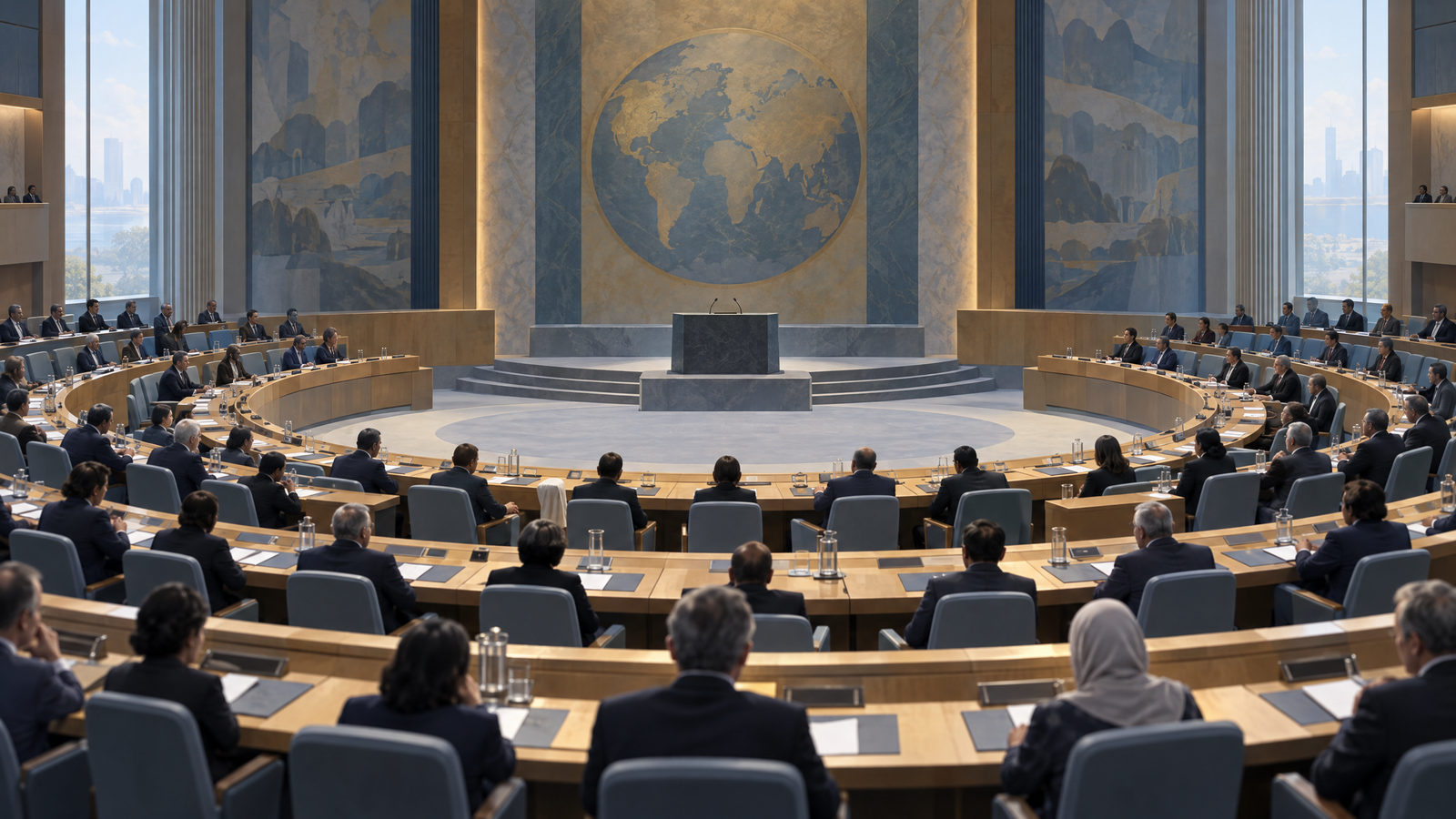

The UN General Assembly has examined China and Russia’s veto of a Security Council proposal to extend expert monitoring connected to sanctions on Iran. The 1 October discussion was a procedurally distinct follow-up to the Council vote on 17 September, rather than a new decision on sanctions.
The proposal that failed in the Security Council had been drafted by the United States and would have extended the mandate of the Panel of Experts that assists the 1737 Iran Sanctions Committee. Eleven Council members voted in favour, China and Russia voted against, and Pakistan and Somalia abstained. Because the two opposing votes came from permanent members, the draft was not adopted.
That result concerns the continuation of the panel’s mandate, not the creation, removal or automatic alteration of a sanctions regime. The experts are intended to provide technical, independent reporting and advice on implementation to the committee and the Council; they do not themselves impose penalties. The Assembly did not vote to restore the panel, adopt sanctions or overturn the Council’s veto.
A debate required after a veto
The meeting was held under the Assembly’s veto initiative, a process created in 2022 that calls for the wider membership to meet within 10 working days after a Security Council veto. It gives Member States a public forum to explain and challenge positions, but it does not displace the Council’s decision-making rules or remove a permanent member’s veto.
General Assembly President Khalilur Rahman said a summary of the discussion would be sent to the Security Council. That transmission is the immediate procedural next step. It places the Assembly’s debate formally back before the Council, but it is not a substitute for a fresh Council decision and does not revive the panel’s mandate on its own.
Competing legal positions remain unresolved
The debate exposed a wider dispute over the status of earlier UN measures relating to Iran’s nuclear programme. The United States, several European governments and the European Union argue that the snapback process under the 2015 nuclear agreement restored earlier Council measures, making the committee and panel relevant again. Russia and China reject that interpretation, maintaining that the earlier framework and its bodies are no longer in force.
Those are opposing positions put forward by governments, not a legal issue settled by the Assembly debate. The meeting created no agreed conclusion on the validity of snapback, the status of the committee or the future of the monitoring arrangement. It did, however, make the disagreement part of an open record involving the wider UN membership.
Why the distinction matters
A panel of experts is a source of specialist assessment, not an enforcement body. Without a renewed mandate, the Council lacks that particular channel for evidence-based reporting under the proposed arrangement. Member States may still gather information and take positions of their own, but any new UN panel or renewal would require a further authorised process.
During the Assembly discussion, the United States said it would pursue an independent, multilateral body to monitor compliance. That was a stated intention, not an arrangement created by the General Assembly, and no new body was established at the meeting.
The significance of the follow-up is therefore procedural as well as political. It shows how the Assembly’s veto initiative can require a public accounting after a blocked Council measure, while also demonstrating its limits. The panel has not been renewed, and the underlying disagreement over Iran-related UN measures remains for Member States and the Security Council to address through later diplomacy and, if proposed, further formal action.