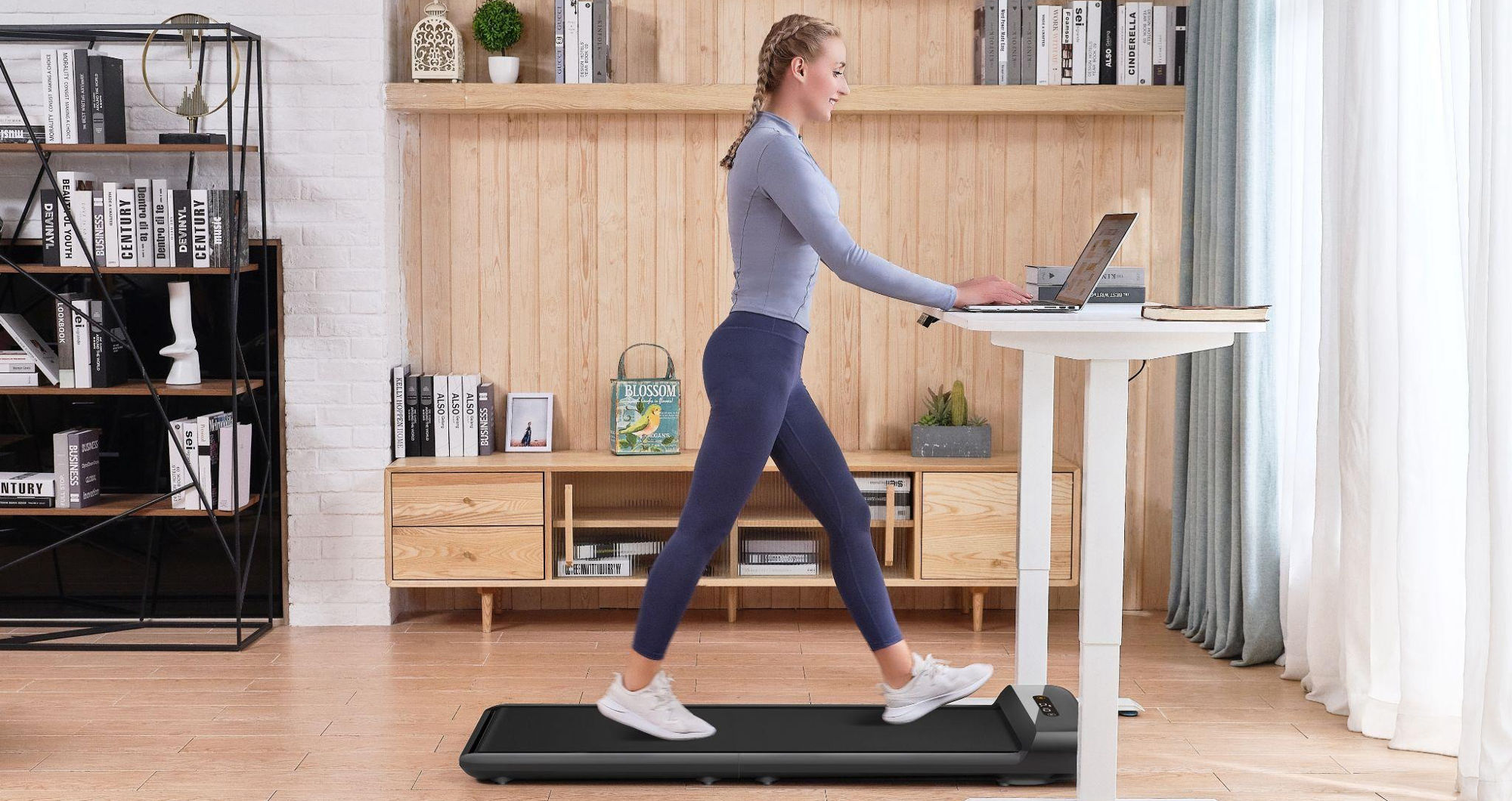

A walking pad is usually the better choice for small spaces if your main goal is daily walking, under-desk movement, or light cardio. It takes up less room, stores more easily, and is usually quieter than a traditional treadmill. A treadmill is better if you want to jog, run, use incline, or follow more intense cardio workouts.
Walking Pad vs Treadmill: Quick Comparison
| Factor | Walking Pad | Treadmill |
| Best For | Daily steps, desk walking, light cardio | Walking, jogging, running, intervals |
| Space Needed | Small footprint | Larger workout zone |
| Storage | Slides under furniture or folds compactly | Some fold, but stay bulkier |
| Speed Range | Best for walking and brisk walking | Better for walking, jogging, and running |
| Noise Level | Usually quieter | Louder, especially when running |
| Main Limitation | Not ideal for serious running | Needs more space and clearance |
Size and Storage
Size is the biggest difference. A walking pad is usually slimmer because it does not have a large console or fixed handrail frame. Many models can slide under a sofa, bed, or desk when not in use, which makes them easier to keep in a bedroom, apartment, or shared living room.
A treadmill needs more permanent space. Even foldable models usually take up more room than a walking pad, especially when open for use.
Speed and Workout Range
Walking pads are mainly designed for walking. They work well for light cardio, daily steps, and under-desk use. Some models support faster walking or light jogging, but most are not built for serious running.
Treadmills offer more workout range. You can walk, jog, run, do intervals, or use incline if the model supports it. That makes a treadmill more versatile, but also larger and heavier.
Noise Level
Noise matters in small homes. Walking pads are usually quieter because they are used at lower speeds and create less foot impact. This makes them easier to use during work calls or in apartments.
Treadmills can be noisier, especially when running. A mat can reduce vibration, but a treadmill still needs more consideration in shared spaces.
Why Walking Pads Work Better in Small Spaces
Easier to Store Under Furniture
A walking pad is the easier choice when storage is limited. Its main advantage is that it can disappear after use. Many models are thin enough to store under furniture or stand against a wall.
This makes a foldable walking pad practical for people who do not want exercise equipment sitting in the middle of the room all day. If the machine is easy to pull out and put away, it is more likely to become part of your routine.
Better for Home Offices and Apartments
Walking pads fit naturally into home offices. They pair well with standing desks and let you walk slowly while reading emails, joining listening-heavy meetings, or reviewing documents. The goal is not intense exercise while working. It is to reduce long sitting time and add low-intensity movement.
In apartments, walking pads also make sense because they do not require a large workout zone. A bedroom corner, office space, or living room area can be enough.
Quieter for Shared Living Spaces
A walking pad usually runs at lower speeds, so it creates less impact noise than running on a treadmill. This makes it more suitable for upstairs rooms, shared homes, and work-from-home routines.
Noise still depends on the model, floor type, and walking pace. A floor mat can help protect the floor and reduce vibration.
When a Treadmill Is Still the Better Choice
Better for Running and Intense Cardio
A walking pad is convenient, but it is not always the right tool for higher-intensity workouts. If you want to run, train for races, do sprint intervals, or use incline, a treadmill is usually the better choice.
A compact treadmill can still work in a smaller home if you have enough clearance and choose a foldable design. It gives you more speed, stronger stability, and a wider workout range than a walking-only pad.
More Stable for Longer Workouts
Treadmills are usually heavier and have a wider, longer belt. That extra size can be a drawback in a small room, but it improves stability during jogging and running. Handrails and a larger deck can also make users feel more secure.
More Features for Training Progress
Many treadmills include features that walking pads may not have, such as incline, preset programs, larger displays, and higher top speeds. These features may not matter for simple daily walking, but they help users who want structured training.
How Much Space Do You Need?
| Machine Type | Example Size | Best Space Setup | Storage Notes |
| Walking Pad | Around 57 × 20 in unfolded | Bedroom, office, living room, under-desk area | Can often slide under furniture or store flat |
| Foldable Treadmill | Around 56 × 28 in unfolded | Larger bedroom, spare room, garage, small gym corner | Folds smaller, but still needs open workout clearance |
Walking Pad Space Requirements
A walking pad does not need much permanent space. For example, the WalkingPad C2 foldable walking treadmill measures about 56.9 × 20.4 inches when unfolded and folds down to about 32.5 × 20.4 × 5.4 inches for storage. That means it can work in a home office, bedroom, or living room as long as you have a clear strip of floor slightly longer than the machine.
For comfortable use, plan for at least 6 feet of floor length and about 3 feet of width. This gives you space for the walking pad itself plus a little room to step on and off safely. If you want to use it under a desk, measure the desk height too. Your knees should not hit the desktop, and your screen should stay at a comfortable eye level.
Treadmill Space Requirements
A compact treadmill needs more usable space because it is wider, taller, and usually used at higher speeds. The WalkingPad X214, for example, measures about 55.8 × 27.9 × 40 inches when unfolded and folds to about 40 × 28 × 8.6 inches for storage. The machine itself may not look much longer than a walking pad, but the extra height, wider frame, and running use case mean you need more clearance around it.
For treadmill use, plan for roughly 7 to 8 feet of floor length and at least 4 feet of width. You should also leave open space behind the belt so you have room to step off safely. This is especially important if you plan to jog or run. A treadmill may technically fit in a room, but if the back of the machine is too close to a wall or furniture, it can feel cramped and unsafe during real workouts.
Which One Fits Your Lifestyle Better?
Choose a Walking Pad for Daily Steps
Choose a walking pad if your goal is to move more during the day. It is best for light cardio, under-desk walking, and low-impact movement.
It is also a strong choice if you live in a small apartment or do not want a large fitness machine in view all the time. For consistency, easy storage often matters more than advanced features.
Choose a Treadmill for Running Goals
Choose a treadmill if your goal is running, jogging, intervals, or higher calorie burn. A treadmill gives you more speed and stability, which matters when workouts become more intense.
It is also better if multiple people in your home want different workout styles. One person can walk, another can jog, and another can run.
Choose a Foldable Model for Flexible Storage
A foldable design can bridge the gap between storage and workout performance. If you want treadmill capability but cannot dedicate a full room to fitness equipment, a foldable model is worth considering.
For users who need more speed than a walking pad but still care about saving space, a compact foldable treadmill can be a better fit than a full-size running treadmill.
What to Check Before Buying
Folded Size and Storage Method
Do not only check the open size. Look at the folded dimensions and where the machine can realistically go after use. Under-bed storage, upright storage, and transport wheels can make daily use much easier.
Speed Range
Match the speed range to your goal. Desk walking does not require high speed. Brisk walking needs more range. Jogging and running require a treadmill built for faster movement and better stability.
Weight Capacity
Choose a machine with a weight capacity comfortably above your body weight. This helps protect the frame, belt, and motor over time.
Noise Level and Motor Type
For small homes, a quiet motor matters. Brushless motors often run more smoothly and quietly. If you live in an apartment, a floor mat can also help reduce vibration.
Final Thoughts
For most small spaces, a walking pad is the better choice. It is compact, easier to store, quieter, and simple to use during daily routines. It works especially well for home offices, apartments, and people who want to increase steps without setting up a full gym.
A treadmill is better if you want running, incline, interval training, or a more complete cardio machine. It takes more space, but it also gives you more workout range. The best choice is the machine that fits both your home and the way you will actually exercise.
Frequently Asked Questions
Is a walking pad better than a treadmill for small spaces?
Yes, in most cases. A walking pad is usually better for small spaces because it is slimmer, lighter, and easier to store — WalkingPad models, for example, are built to fold down small enough to slide under a bed, sofa, or desk. A treadmill can still work in a smaller home, but it needs more clearance around it even when folded.
Can you run on a walking pad?
Most walking pads are designed for walking, not running. The belt is shorter and the motor is tuned for lower speeds, so trying to run on one can feel cramped and less stable than on a proper treadmill. Regular running usually requires a treadmill with a longer belt, a stronger motor, and sturdier handrails for balance at speed.
How much room do you need for a treadmill?
You need more than just the machine’s footprint. Plan for roughly 7 to 8 feet of floor length and at least 4 feet of width, which accounts for the treadmill itself plus clearance on the sides and open space behind the belt in case you need to step off quickly. Even foldable treadmills need this same open area whenever they’re in use.
Are walking pads quieter than treadmills?
Usually, yes. Walking pads tend to run at lower speeds and create less impact noise underfoot, which makes them easier to use during calls or in shared living spaces. Treadmills can get noticeably louder once you move into jogging or running speeds, and a floor mat only reduces vibration, not the motor and footstep noise itself.
Can a walking pad replace a treadmill?
A walking pad can replace a treadmill if your goal is daily walking, light cardio, or under-desk movement, since that covers most of what a treadmill is used for at slower speeds anyway. It is not a full replacement for running or incline training, though brands like WalkingPad make 2-in-1 models that narrow that gap by switching between walking and running in the same machine.