
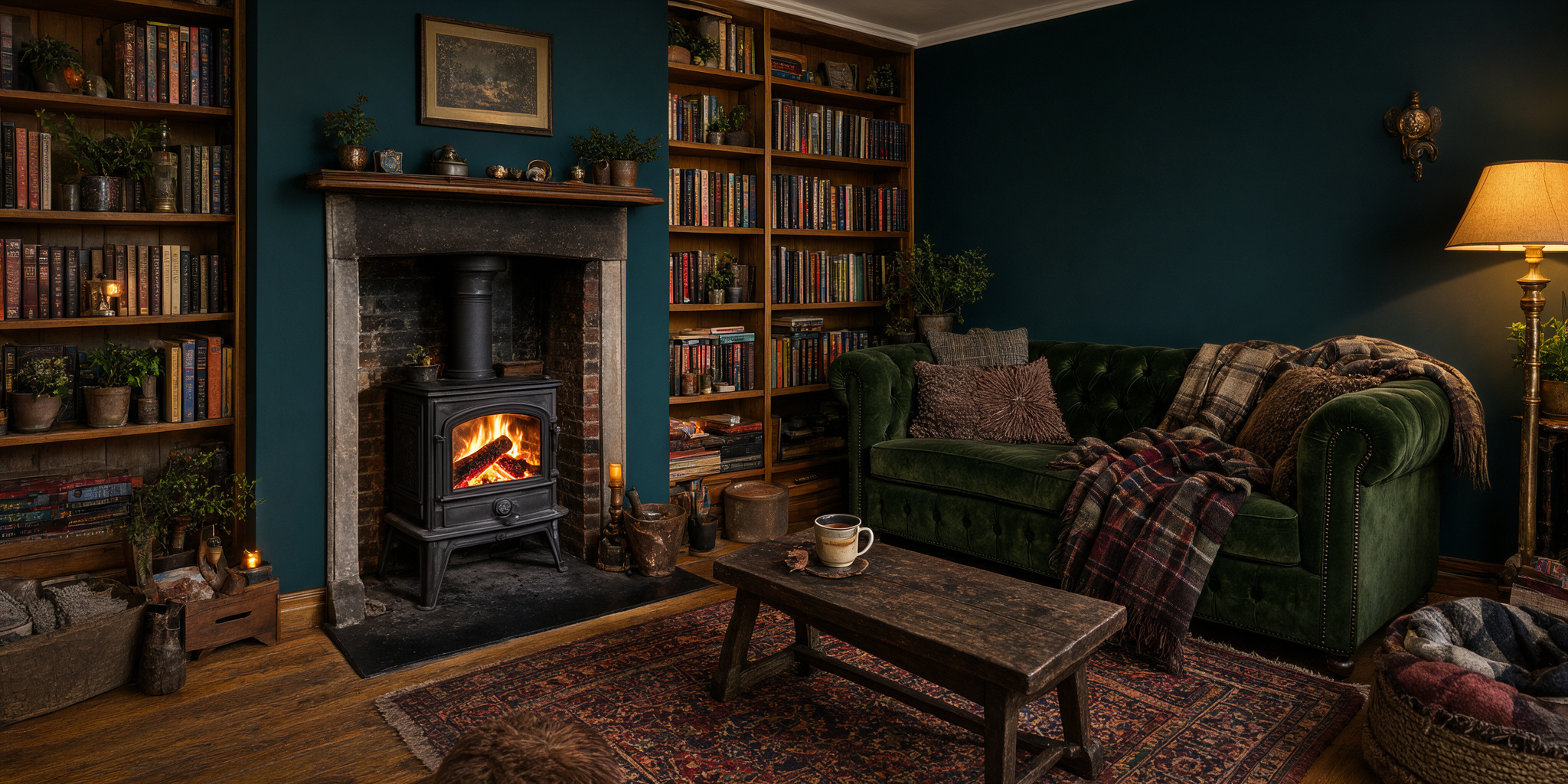

A small living room is not a problem to be solved. It is a space with its own logic, and once that logic is understood, it can be made to feel generous rather than cramped. The trick lies not in knocking down walls or buying smaller furniture, but in understanding how the eye and the body perceive space.
Size is fixed. Spaciousness is not.
The Perception Gap
Two living rooms of identical dimensions can feel entirely different. One feels airy and relaxed, the other tight and oppressive. The difference rarely lies in the floor plan. It lies in light, colour, layout, and the way the room invites movement.
Understanding this is the first step. A small room can be made to feel larger than it is, and a large room can be made to feel smaller. The variables are within your control.
Let There Be Light
Nothing expands a room like daylight.
Keep window treatments minimal. Heavy curtains, valances, and pelmets consume light and visual space. Roman blinds, roller blinds, or simple linen curtains that stack back tightly allow the window to do its work.
Mirrors are the next most effective tool. A well-placed mirror reflects light and view, doubling the apparent depth of a room. Position one opposite a window, or where it reflects something worth seeing.
Artificial light matters too. A single ceiling light flattens a room and creates shadows. Layered lighting—table lamps, floor lamps, wall lights—creates pools of light at different heights, making the room feel deeper and more interesting.
Colour and Continuity
Colour is the quietest way to change how a room feels.
Pale, warm neutrals reflect light and make walls recede. A single colour carried across walls, ceiling, and trim blurs the boundaries of the room, making it feel taller and more cohesive. Painting the ceiling the same colour as the walls is a particularly effective trick in small spaces.
Contrast, used sparingly, adds depth. A darker floor anchors the room, while a lighter ceiling lifts it. A feature wall can work, but it should be the wall that draws the eye outward rather than the one that closes the room in.
Furniture That Works With the Room
Small living rooms fail when furniture is chosen for style alone. They succeed when every piece earns its place.
Choose furniture with visible legs. Pieces that sit on legs allow the floor to continue beneath them, making the room feel less cluttered. A sofa on legs occupies less visual space than one that sits heavily on the floor.
Scale matters. Oversized furniture overwhelms a small room, but undersized furniture makes it feel like a doll’s house. Measure carefully and choose pieces that fit the proportions of the room.
Multi-functional pieces are valuable. A storage ottoman, a sofa bed, a nest of tables—each does more than one job without consuming additional floor space.
Keep the floor clear. Rugs should be large enough to sit under the front legs of the furniture, not so large that they crowd the room. A cluttered floor makes a room feel smaller.
The Layout Question
How furniture is arranged matters as much as what it is.
Avoid pushing everything against the walls. A room with furniture around the perimeter and empty space in the middle feels like a waiting room. Pulling furniture into the room creates zones and makes the space feel intentional.
Create a clear route through the room. A living room that requires navigating around furniture feels cramped, regardless of its actual size. Leave a generous path from the door to the seating area.
Consider the focal point. A fireplace, a window, a television, a piece of art. Arrange seating around it, and let the rest of the room support that arrangement.
The Vertical Dimension
Small rooms are often treated as horizontal spaces, but height is where space can be found.
Use tall shelving to draw the eye upward. Hang curtains high, close to the ceiling, to make windows appear taller. Place art higher than you might think. A tall plant adds vertical interest and makes the ceiling feel further away.
Avoid filling the upper part of the room with clutter, though. The goal is to draw the eye up, not to fill every surface.
The Clutter Problem
Clutter is the enemy of spaciousness, and it accumulates in small rooms faster than anywhere else.
Storage must be planned, not improvised. Built-in cupboards, shelving, and furniture with hidden storage keep surfaces clear. Baskets and boxes corral small items. Anything that does not have a home will end up on a surface, and surfaces covered in objects make a room feel smaller.
Editing is continuous. Small rooms require regular attention, and the difference between a room that feels calm and one that feels crowded is often a matter of what has been removed rather than what has been added.
The Rental Version
Not everyone can paint, drill, or rearrange. For renters, the same principles apply with temporary solutions.
Freestanding mirrors, plug-in lamps, removable adhesive hooks, and furniture that can be rearranged all make a difference without permanent alteration. Choosing a flat with good natural light is the single most valuable decision a renter can make, and it cannot be changed later.
Final Words
A small living room can feel spacious. It requires attention to light, colour, layout, furniture, and clutter, but it does not require knocking down walls or spending a fortune.
The room will never be larger than it is. It can, however, feel open, calm, and generous. That is a matter of design, not dimensions.







