
After the World Power Battery Conference concluded on September 4, conference attendees emphasized a significant change in the structure of the global electric vehicle (EV) supply chain. Historically, the region was recognized as a significant cultural center and the “First City along the Yangtze River,” known for its long history of craftsmanship and spirit distillation.
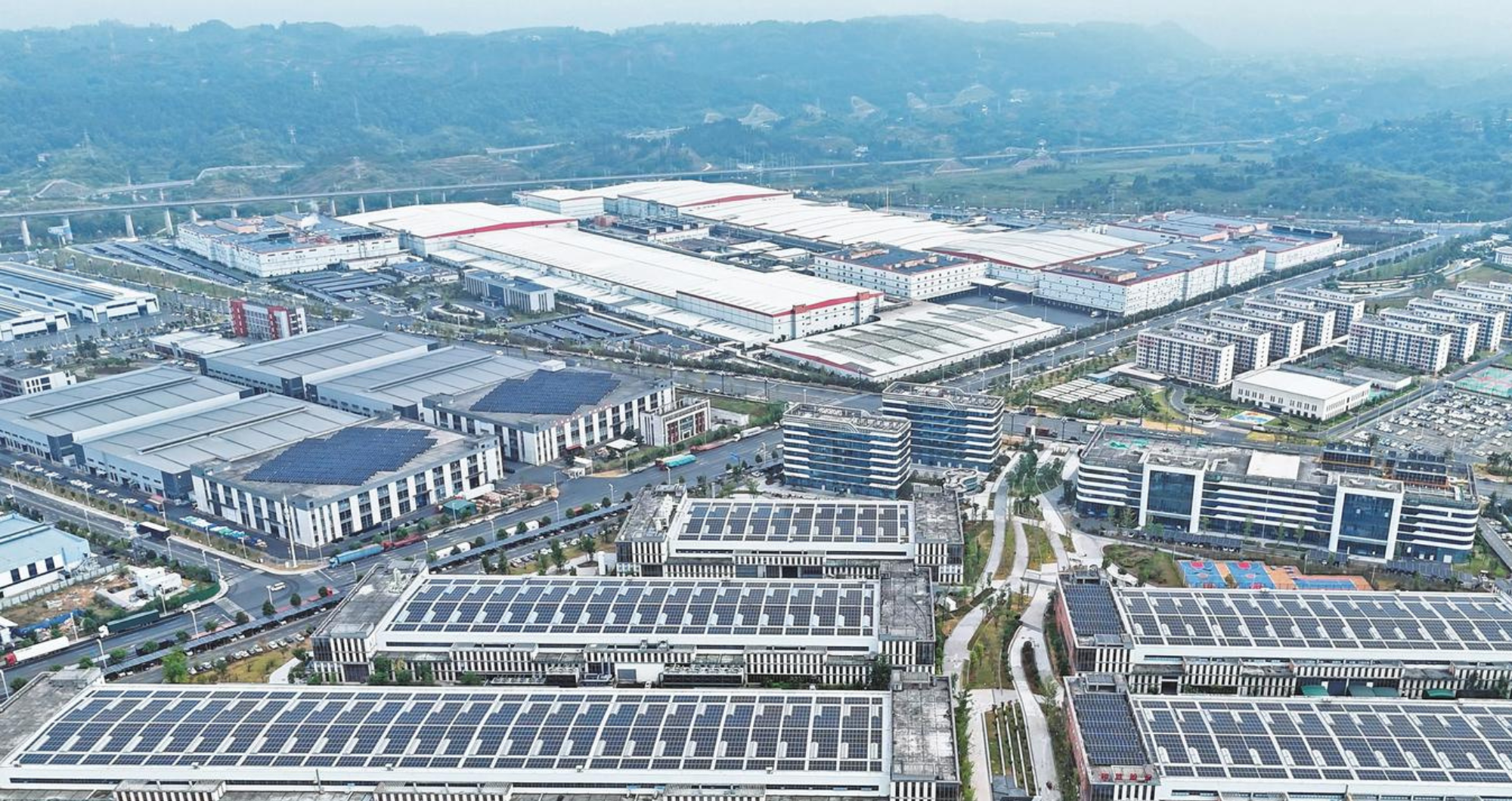
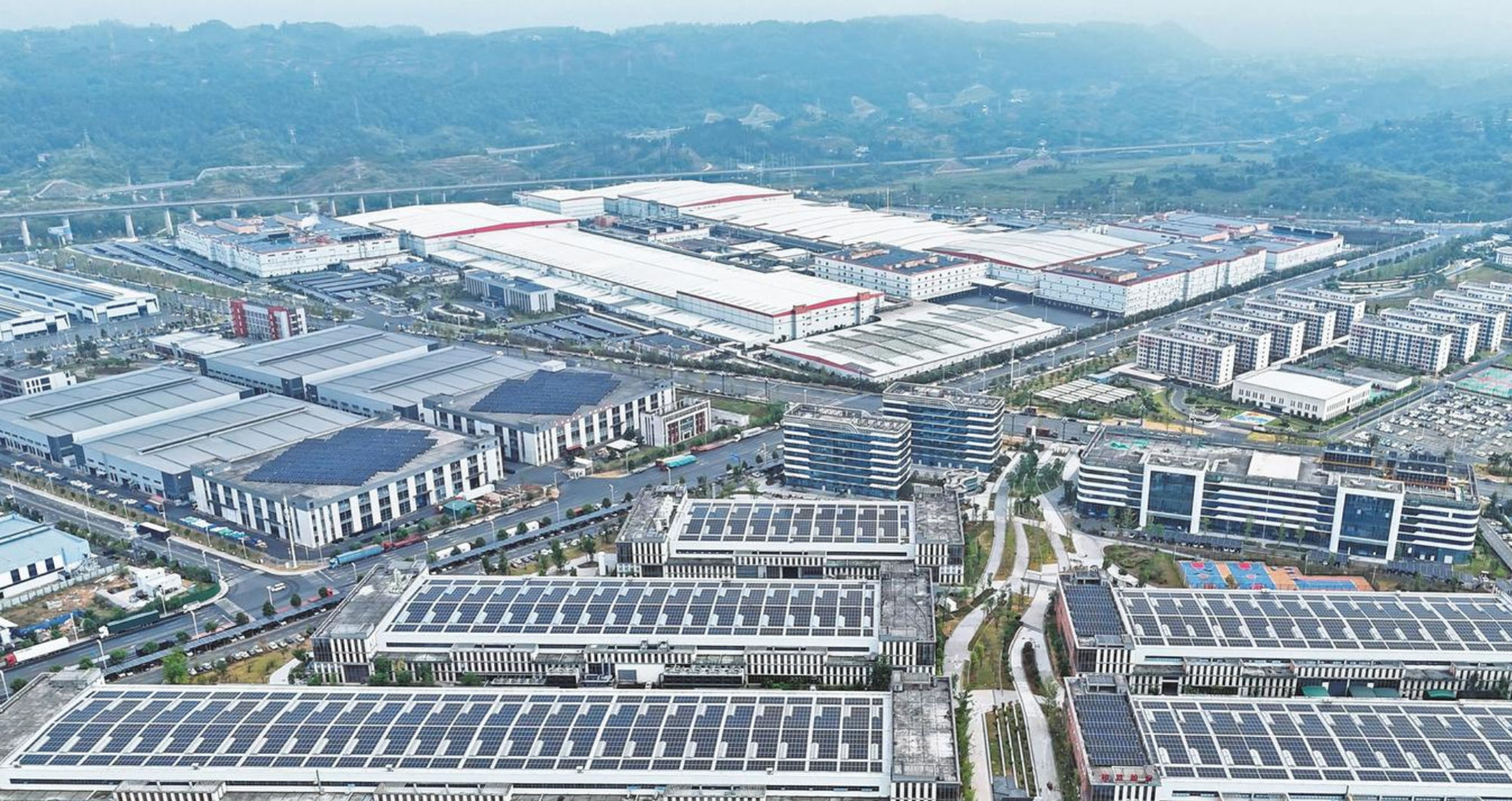
The water that shaped Yibin’s past now powers a new revolution in sustainable technology. With access to vast amounts of hydroelectric energy generated from the Yangtze River system, the city has rapidly become a leader in the production of “Zero-Carbon Batteries,” which connect Yibin’s rich historical legacy to the future of global mobility.
As the UK accelerates its transition to Zero Emission Vehicles (ZEV Mandate) and demands fully traceable, low-carbon battery supply chains, global clean-tech hubs like Yibin are becoming vital partners for the European and UK automotive ecosystems.
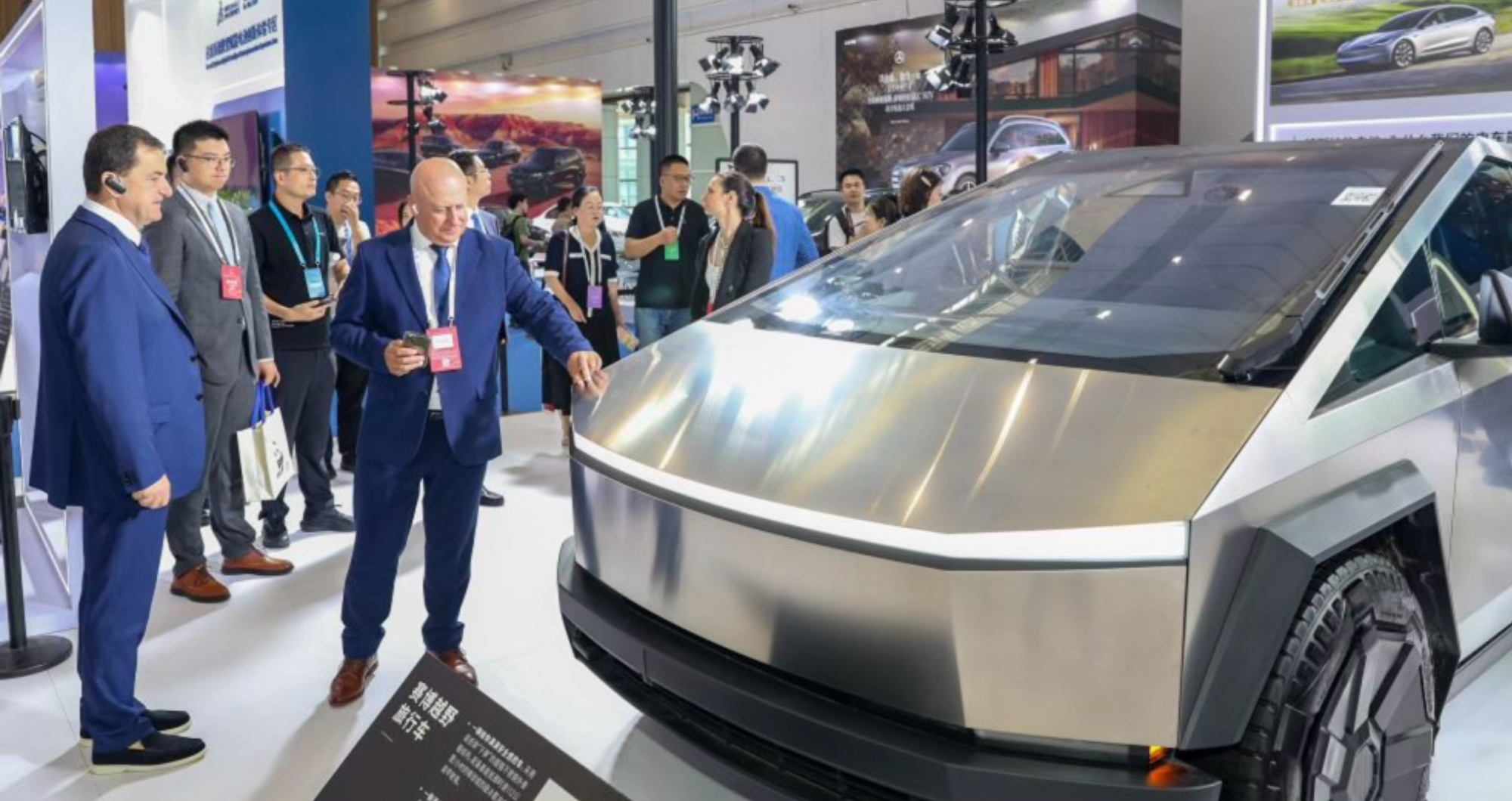
A Tesla Cybertruck draws a crowd of business executives and onlookers during its exhibition at the World Power Battery Conference in Yibin, China.
Scale and Hydropower’s Role in Development
The city’s massive industrial boom is driven by abundant, low-cost hydropower, enabling manufacturers to operate certified zero-carbon gigafactories. As regional production capacity scales to an expected 300 GWh, the local manufacturing base will supply a significant share of annual global EV battery demand. By building these massive, sustainable facilities, CATL and its core suppliers are signaling absolute confidence in Yibin’s future as a premier global battery hub.
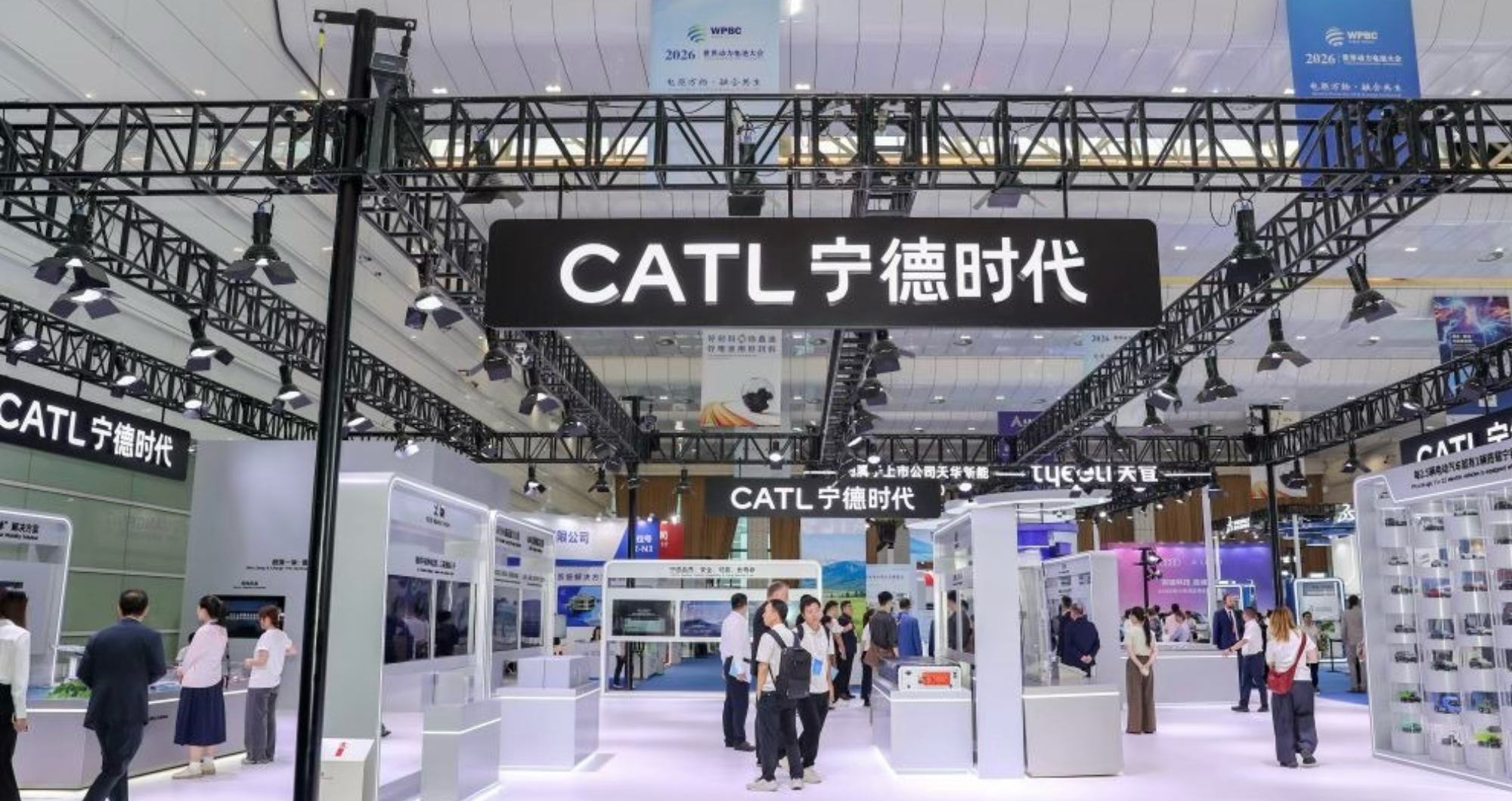
Global battery manufacturing giant CATL showcases its latest energy technologies at a massive, ultra-modern pavilion during the World Power Battery Conference (WPBC).
Although cell production volume is important for global automobile manufacturers, it is not the most compelling reason for their interest in Yibin’s growth. More importantly, it is how these cells are produced that makes Yibin so attractive. More than eighty percent of Yibin’s industrial power grid comes from hydroelectricity produced by the Yangtze River system. Hydroelectric power provides a clean energy source for local industrial facilities.
By capitalizing on this abundant hydroelectric power, it became possible to establish the first certified zero-carbon battery factory in the world. As global original equipment manufacturers (OEMs) attempt to meet increasingly stringent Scope 3 upstream emission requirements, the hub provides an immediate opportunity to obtain large-scale factory outputs while avoiding dependence on fossil fuels.
Key Milestones from the Conference
The major topic of discussion at this year’s conference revolved around the technological advances intended to address the most significant contradiction in the industry: balancing maximum battery performance with making entry-level vehicles economically feasible for consumers. The conference presented several key developments and next-generation technologies that are expected to be commercially viable by 2025–2026, including ultra-fast charging, high-energy density solid-liquid hybrid batteries, long life swappable batteries, high-safety energy storage systems (ESS), and 4th-generation LFP materials.
Among some of the other key developments presented were:
- AI-Based Battery R&D – By using artificial intelligence (AI) in molecular design, manufacturers are avoiding traditional laboratory testing. AI-driven software has reduced the amount of time needed to develop and validate new cell chemistries by at least fifty percent.
- Solid-State Commercialization – Several sessions at the conference focused on accelerating the commercialization of solid-state architectures. This technology will allow manufacturers to bring high-energy density, thermally stable battery packs to market much faster than previously possible for high-end EVs and also address many of the existing manufacturing challenges.
- Tariff Resilience and Supply Chain Restructuring – Attendees discussed the increasing complexity associated with meeting international trade regulations. As the European Union and North America implement higher tariffs on carbon emissions and require local manufacturing, Yibin’s battery industry is transitioning from a purely export-oriented operation to a model based upon licensing technology. By developing standardized zero-carbon operating practices locally, Chinese manufacturers can share those practices with joint ventures operating abroad. This allows global OEMs to comply with both local trade policies and increasingly strict Environmental, Social, and Governance (ESG) requirements.
- Dual-Pathway Manufacturing Strategy – Major manufacturers are pursuing a dual-pathway manufacturing strategy. Ultra-high energy lithium cells provide extended range for premium models, while rapidly developing low-cost sodium-ion technology provides an economical option for mass-market affordability.
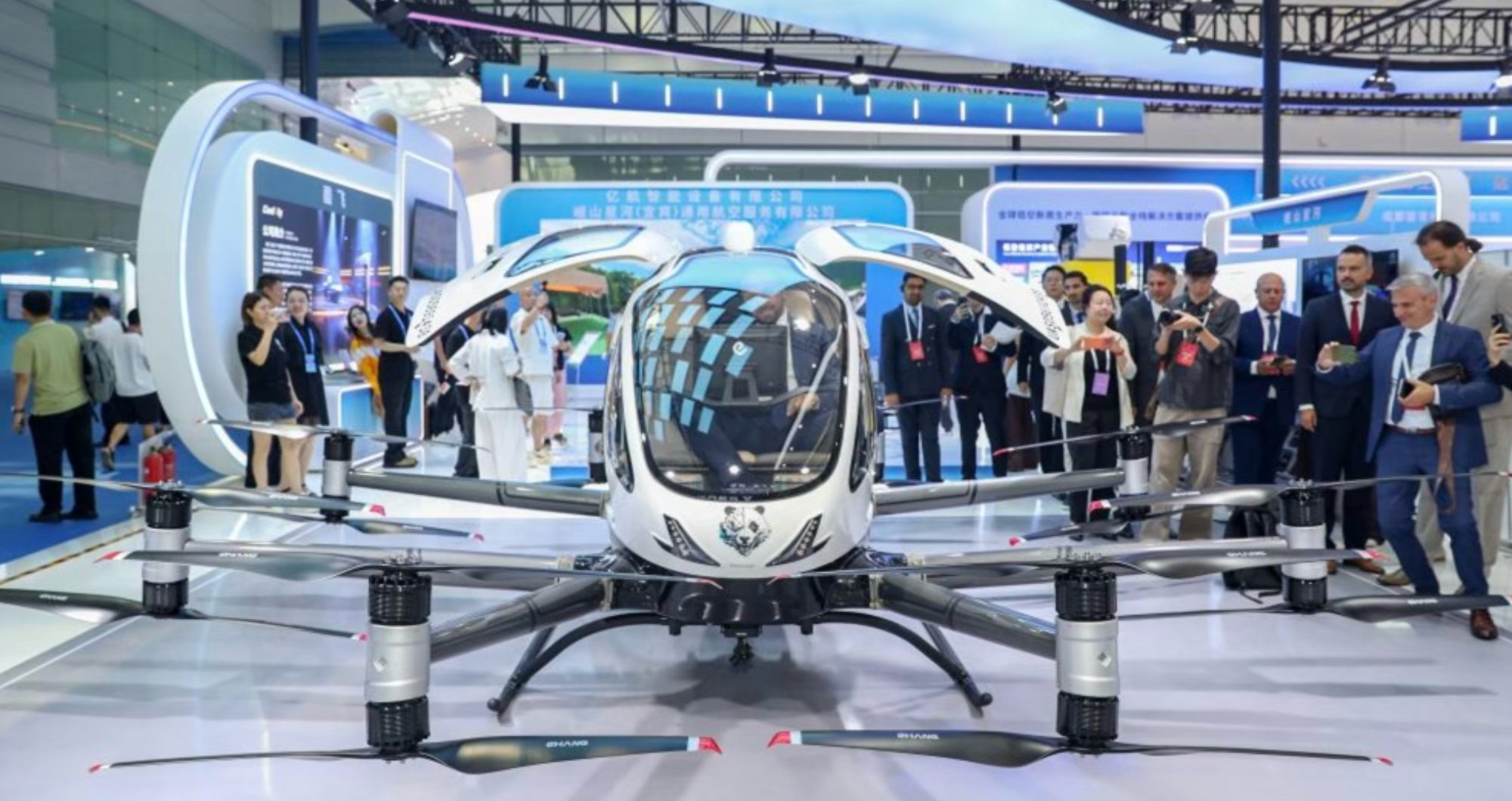
An autonomous EHang EH216-S passenger eVTOL aircraft takes center stage at the World Power Battery Conference (WPBC) in Yibin, highlighting the future of urban air mobility.
Localized Reality Check: Culture Shift on Site
On-site operations at multinational engineering firms in the region are undergoing a culture shift as well. Engineers from Germany, Spain, and China now work together in R&D bays. Instead of working independently from afar, they have formed a collaborative engineering culture. In order to capitalize on Yibin’s hydro-powered efficiency, Western automotive companies are establishing product development teams directly within Yibin’s ecosystem.
These teams combine European design standards with China’s manufacturing speed and scale. What once represented a transactional relationship between buyer and seller has evolved into a collaborative engineering partnership.
Circular Economy, ESG, and Digital Passport
With early generations of global EVs reaching the end of their service lives,the municipality is creating infrastructure necessary to handle what is expected to become an enormous influx of used battery waste – projected to reach over two million tons globally by 2030. Adjacent to Yibin’s primary production lines, a closed-loop recycling system has been established that extracts battery-grade materials from spent cells at high recovery rates.
In addition, local manufacturers are using digital battery passports to provide transparency throughout the supply chain. Through blockchain-based tracking systems, these passports monitor every cell from its source material extraction point to its final carbon footprint metrics, thus providing verifiable evidence of compliance with international ESG standards.
About the World Power Battery Conference
The World Power Battery Conference is an annual global B2B conference focusing on technical innovations in battery and energy storage technologies, supply chain resilience, and ESG metrics. Yibin has now successfully hosted 5 consecutive World Power Battery Conferences, proving its status as a permanent, world-class hub for battery dialogue. Each year, the conference brings together global automotive manufacturers, suppliers, and regulators to shape the future of sustainable transportation.