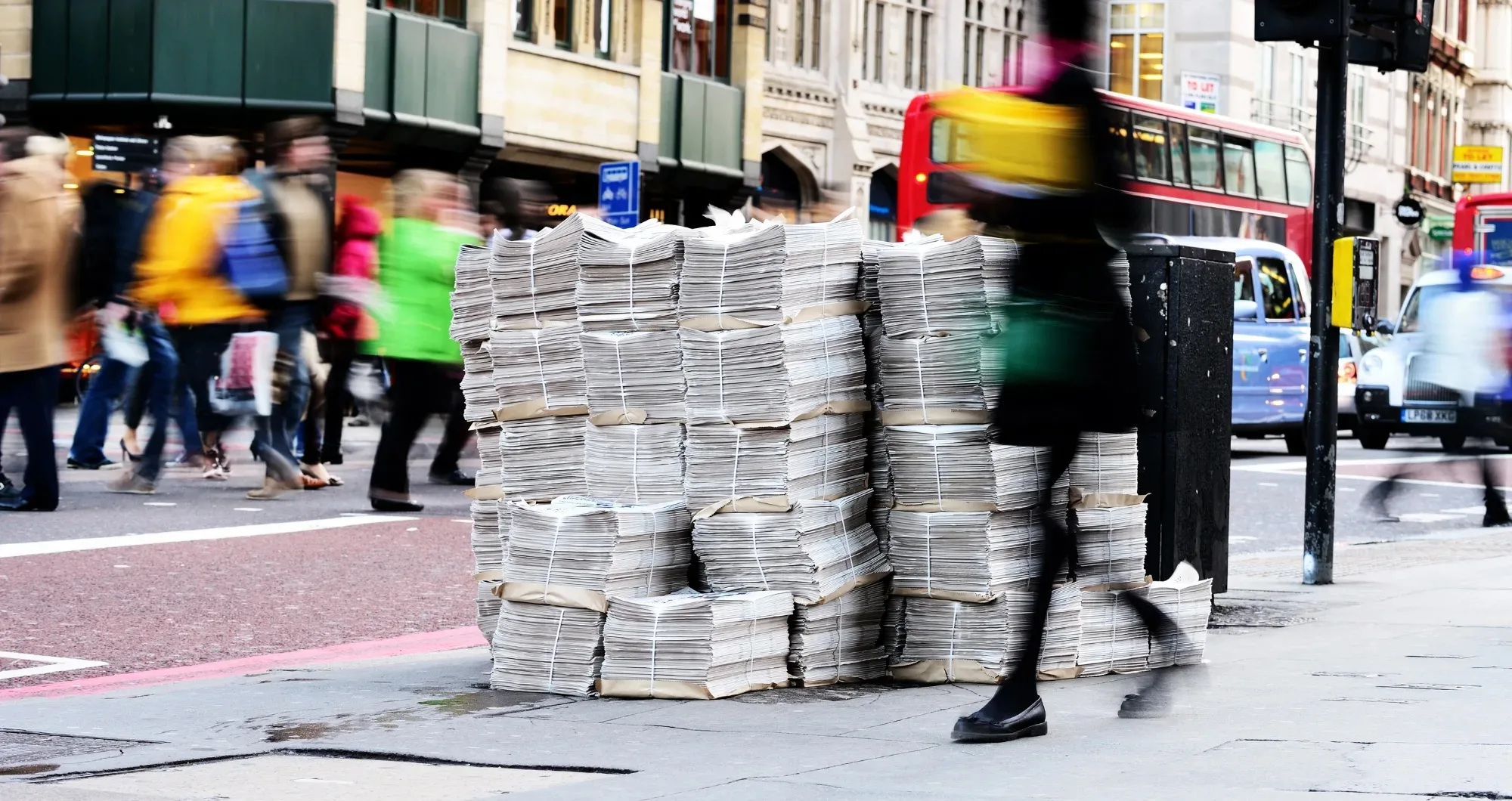

The closure of the daily Evening Standard, which released its final daily newspaper edition on Thursday, 19 September 2024, marked the end of nearly 200 years of publishing history. The decision, influenced by £84.5 million in losses over the previous six years, signalled a profound shift in the capital’s news landscape and a poignant farewell to an institution that once played a key role in keeping Londoners informed.
Founded in 1827, the Evening Standard was born in a city vastly different from today’s modern metropolis. At that time, London was illuminated by gas lamps, horse-drawn carriages filled the streets, and the British Empire was reaching the height of its global influence. Daily newspapers, delivered in print, were the primary source of information, and for many Londoners, the Evening Standard was the gateway to both local happenings and global events. It was a publication embedded in the daily life of the city, reflecting London’s unique character while adapting to the news demands of each passing era.
For decades, the Evening Standard was a paid-for newspaper, publishing multiple editions throughout the afternoon. It offered Londoners frequent updates, a necessity in a world where mobile phones and 24-hour news cycles did not exist. As Evening Standard Chair Paul Kanareck highlighted in his farewell address to staff, the paper’s unique position at the heart of the country’s political and media power centres meant it wielded significant influence, often read and respected by opinion leaders across the capital.
The arrival of the “freesheet wars” in the mid-2000s brought challenges, as Rupert Murdoch’s London Paper and Associated Newspapers’ London Lite entered the market, attempting to capitalise on the commuter market with free distribution. The battle between these publications resulted in substantial financial losses, with over £70 million burned between 2006 and 2009, disrupting the profitability and stability of London’s print media sector.
However, the paper’s fortunes really began to wane as technological and social changes reshaped the way Londoners accessed their news. The advent of smartphones and more recently internet access on the London Underground removed the paper’s edge.
For many Londoners, memories of the Evening Standard go beyond the stories it printed. My main memory will be of the smell of rain-soaked paper, and the ink-heavy advertising wraps that must surely have existed purely to annoy readers. The familiar feel of the paper in hand, often slightly damp on rainy evenings, left an indelible mark – one of London life captured through ink-stained fingers.
The paper must have left billions of London fingerprints smudged across the Underground.
When the Evening Standard shifted to a free model in 2009, it initially succeeded in expanding its audience, but the pandemic accelerated existing challenges. Pre-Covid, the Evening Standard circulated more than 600,000 copies daily. However, with more people working from home and fewer commuters to reach, those figures dwindled to just 275,000.
The paper’s transition to digital brought some success, attracting a sizable online audience; however, much of its web traffic came from covering national news and celebrity stories rather than maintaining its historic focus on London-specific reporting. This pivot allowed the Evening Standard to remain competitive in the digital space but marked a shift from its traditional identity as a go-to source for London-centric news.
The closure of the Evening Standard’s daily edition highlights the challenges facing legacy print media in an increasingly digital world. The paper’s journey from print dominance to digital adaptation reflects the struggles of newspapers globally, as they balance legacy identities with the demands of new media landscapes. The end of the Evening Standard daily marks not only the loss of a long-standing publication but also a transformation in how Londoners – and the world – access their news.
As Londoners said goodbye to a piece of their city’s cultural fabric, the hope remains that new media will continue the legacy of informing and connecting this vibrant metropolis. In a city that has continually adapted to change, the spirit of the Evening Standard – providing relevant, timely news – will live on, albeit in new forms suited to the evolving demands of modern life.
Austin Brailey, Red Five Comms