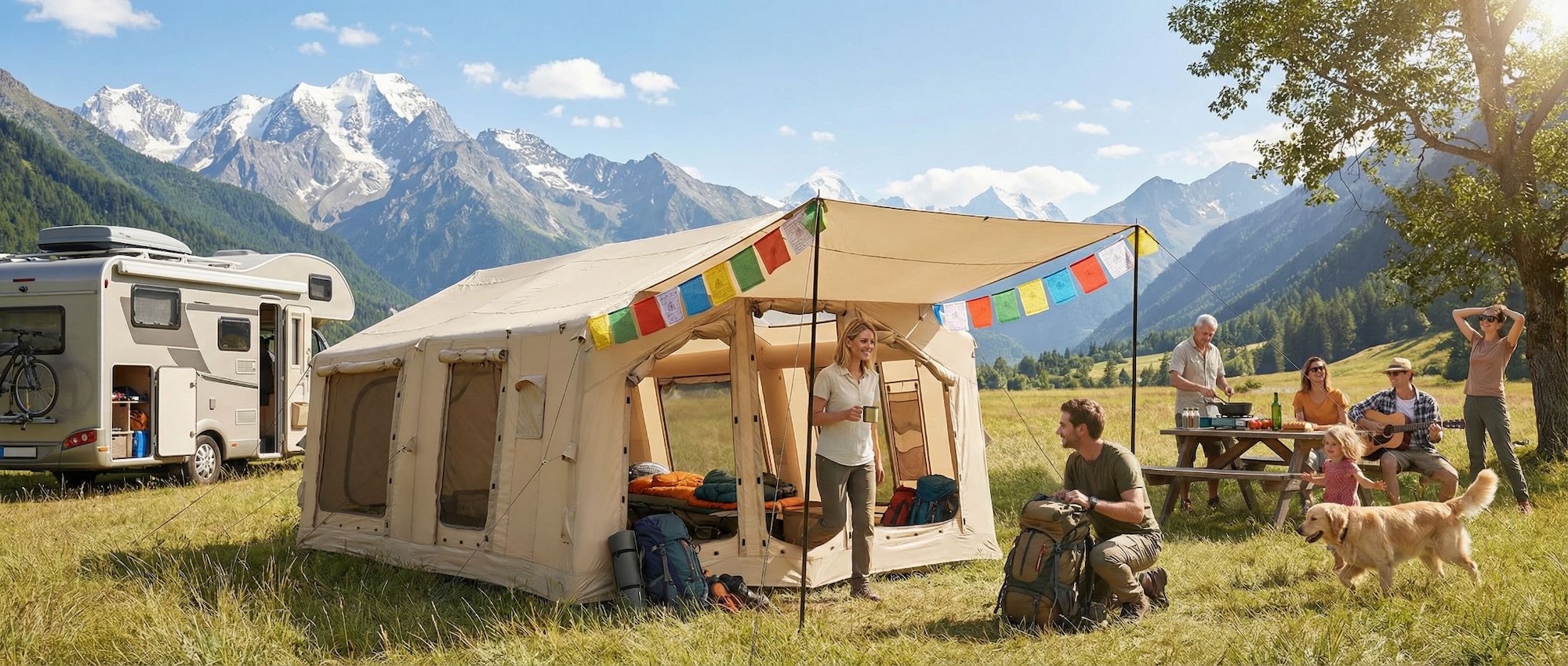

For families living in London and other UK cities, the most valuable part of a weekend is not always the destination. It is the space to slow down together. After weekdays shaped by commuting, school, screens, and indoor routines, many families go outdoors not for a complicated adventure, but for somewhere to eat, rest, talk, and breathe more easily.
That is part of what makes short camping trips appealing for city families. Compared with longer journeys that require more transport, accommodation, and itinerary planning, a weekend camping trip can be arranged with a shorter chain of preparation. But the real test is not only finding a campsite, or even whether the tent can sleep everyone. The bigger question is whether the family can quickly create a temporary living space that does not feel chaotic.
The Challenge Is Not Just Sleeping, but Living Well
When many families plan their first camping trip, they start by checking how many people a tent can sleep. That matters, but it only answers part of the night-time question. Once the family is inside, they also need space to change clothes, put down bags, organise children’s items, store rainwear, reach food, and prepare for the next day.
If a tent only has enough room for sleeping, everything soon gathers near the door. Shoes, jackets, backpacks, and tableware begin to overlap. Children have to step around things each time they move in and out, while adults struggle to find a clean place to sit.
That is why family camping should not be judged by capacity alone. The better question is whether the space can support real family movement: standing to change clothes, reaching what children need, keeping bags in place, and leaving the entrance usable.
More Space Helps When the Weather Changes
Weekend camping rarely happens only in perfect weather. The day may start bright, only for the evening to bring a quick change that sends jackets, seat cushions, children’s shoes, and some outdoor gear back inside. For UK families, that kind of shifting weather is familiar, and it is often when tent space begins to matter most.
When a shower brings people and belongings inside at once, a cramped tent can quickly lose order. Wet jackets, bags, and the resting area begin to compete for the same spot, and too many small tasks end up happening near the entrance.
This is where a large inflatable tent can have real value for family camping. Its purpose is not simply to be larger for the sake of size. It gives a family more room to adjust when weather changes, temporary storage, and short rests all have to happen at the same time.
A Simpler Setup Helps the Weekend Start Faster
For families without much experience setting up large tents, complex poles, connectors, and fixing steps can add more work after arrival. This is especially true on a Friday evening, when children are already tired and adults still have to choose the tent direction, unfold the body, and organise the gear.
Inflatable tents offer a different setup approach by using air beams to reduce some of the traditional pole-assembly steps. They do not replace proper site choice, pegs, guy lines, or final stability checks. Those still need to be done properly, but a more straightforward setup can make the first hour at camp feel much easier.
Many city family camping trips are Friday-after-work departures, a slower Saturday outdoors, and a return home on Sunday. The clearer the setup process is, the easier it is for the family to focus on settling the children, preparing dinner, and getting familiar with the campsite.
For a Few Nights, Zoning Matters More Than Capacity
If two people are travelling light for one night, or if the family is changing campsites every day, a smaller tent may be more flexible. But when a family stays on the same pitch for two or three nights, the question is no longer only whether everyone can sleep on the first night. It is whether the tent can support the rhythm of the next few days.
The longer a family stays, the more daily routines begin to differ. Children may need to sleep earlier while adults still want to organise items for the next day. Someone may want to change or rest while another person is still moving around inside. In this situation, zoning matters more than simple capacity.
For families staying on the same pitch for two or three nights, ZONKOO Draco can serve as an example of large inflatable tents with a focus on space division. It offers 17 m² (183 sq ft) of interior space and includes a removable divider that can create a two-room layout when needed. This kind of setup supports continued order during the stay: the family can settle in on the first night, then keep the space easier to manage on the second and third days.
This type of tent is less about the first setup moment and more about how the family lives after it is pitched: with less clutter, less rearranging, and fewer interruptions over several days.
More Space Helps City Families Slow Down
For many city families, the ideal weekend is not about filling every hour with more plans. It is about reducing confusion and having real time together. Short camping trips can work well because they do not require a flight, a complex itinerary, or a packed schedule.
When a tent reduces setup pressure, provides a clear living space, and helps the family move more smoothly between changing weather, daily activity, and night-time rest, a weekend trip can feel less like simply sleeping outside and more like real family time outdoors.
More space does not make camping more excessive. It helps reduce the small moments of disorder that can take over a family campsite, leaving more of the weekend for rest, outdoor activity, and time together.