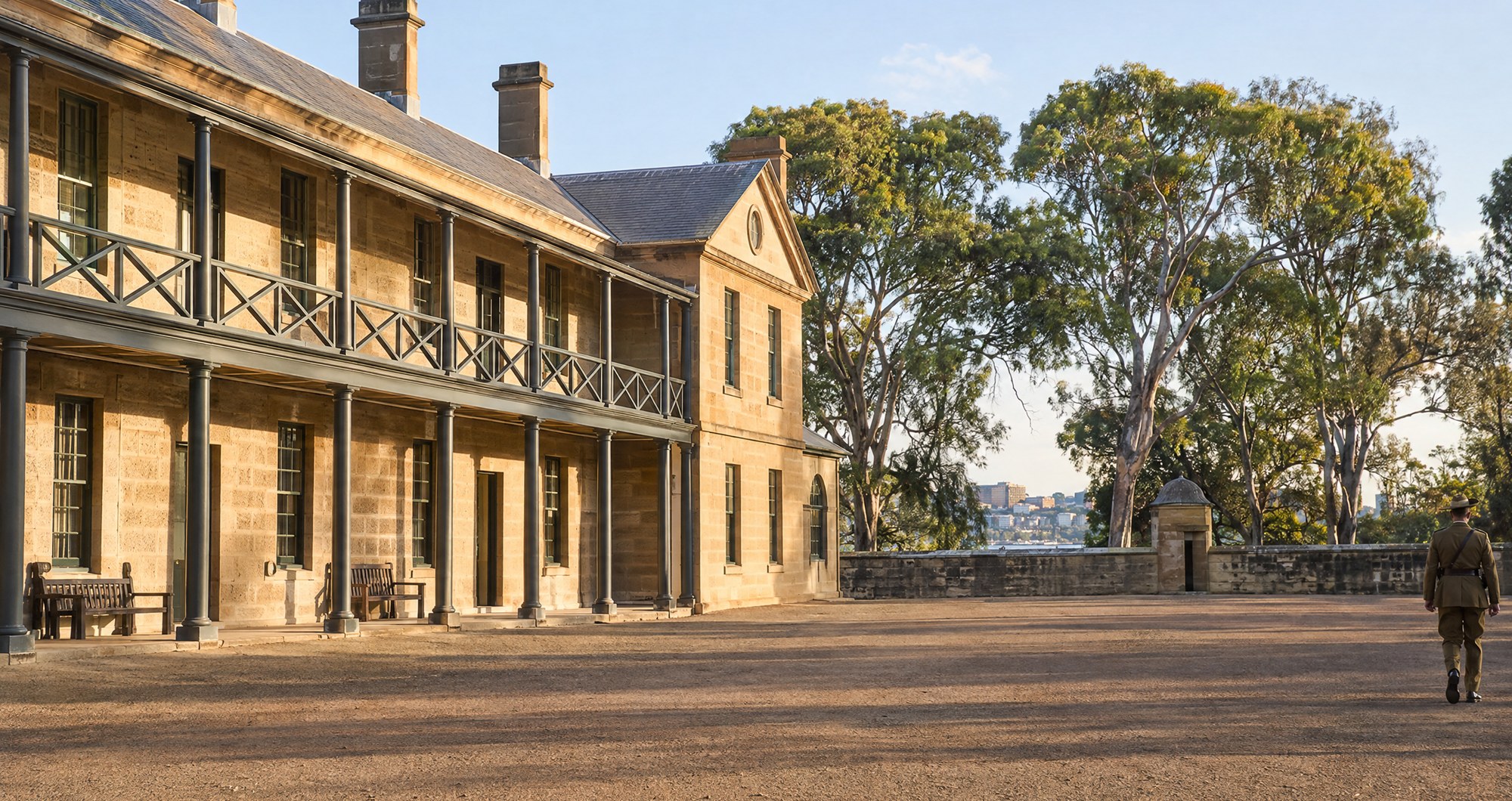

The Australian government has abandoned plans to sell Sydney’s Victoria Barracks and three other heritage defence sites, reversing the most contentious part of a programme intended to raise about A$3 billion from surplus military property. Prime Minister Anthony Albanese announced on Sunday that the Paddington site would remain in full public ownership and be opened to Sydneysiders, with the Australian War Memorial commissioned to interpret its history.
Victoria Barracks Melbourne, Fort Queenscliff and RAAF Williams Point Cook will also stay in public hands. The decision protects all four from sale, but does not end the wider disposal programme or cancel the planned departure of defence personnel from the Sydney barracks.
Deputy Prime Minister Richard Marles denied that the decision amounted to a backdown. He said the government’s revenue target remained unchanged and that other disposals would proceed. The announcement therefore separates the future of the four heritage properties from the broader effort to raise money from the defence estate.
Four sites removed from the sale plans
The four properties were among 67 sites identified for partial or full divestment in the Defence Estate Audit released in February. Eleven of those sites have already been transferred to the Department of Finance. That transfer process is distinct from the announcement that the four heritage sites will be retained in public ownership.
Albanese made the announcement at Victoria Barracks in Paddington, placing the Sydney property at the centre of the government’s change of course. Its future will now include public access and historical interpretation rather than a sale. The Australian War Memorial has been given the task of interpreting the site’s history.
The commitment to full public ownership does not mean the barracks will continue to operate with its existing personnel. Staff based at Victoria Barracks Sydney are due to move to Randwick Barracks and Defence Plaza Sydney by the end of the year. That relocation remains part of the next stage for the site.
The announcement establishes that the property will stay public and become accessible to Sydneysiders. It does not, on the information supplied, set out an opening date, the arrangements for public access or the detailed form of the War Memorial’s work. Those practical details remain separate from the decision to halt the sale.
Opposition brought military heritage to the fore
The reversal followed opposition from veterans’ groups, the RSL, former prime ministers Paul Keating, John Howard and Tony Abbott, and New South Wales Premier Chris Minns. Their opposition brought together prominent figures from different political backgrounds over the proposed disposal of the heritage properties.
The RSL called the decision a partial victory. That description reflects the limited scope of the change: four sites will remain public, while the government continues with the rest of its disposal programme. It is not a withdrawal of the February audit or a commitment to retain every property identified in it.
The dispute has exposed the political sensitivity of selling military heritage sites. The government had included the four properties within a much larger estate programme, but their future attracted opposition extending beyond veterans’ organisations to former national leaders and the premier of the state containing the Sydney barracks.
Marles’s rejection of the term backdown leaves a clear distinction between the government’s description of its decision and the change itself. The proposed sales of the four sites have been abandoned. The financial ambition behind the wider programme, according to Marles, has not changed.
Revenue target stays as other transfers proceed
The government still intends to raise about A$3 billion through the disposal programme. Retaining the four heritage sites means that target will now have to be pursued without selling them. The supplied information does not identify how much the four properties had been expected to contribute or which remaining disposals would make up that amount.
Other announced transfers involve public and Indigenous recipients. Part of HMAS Penguin, the Angophora Forest, will pass to the Sydney Harbour Federation Trust. The Stokes Hill fuel installation in the Northern Territory will go to the Larrakia people. These arrangements sit alongside the wider programme, rather than the decision to retain the four heritage sites.
The immediate next steps are therefore different across the estate. Personnel will leave Victoria Barracks Sydney by the end of the year, while work on its public future and historical interpretation follows the ownership decision. Elsewhere, the government says disposals will continue. The central question for the remaining programme is how the unchanged revenue target will be met after its most disputed sales were dropped.