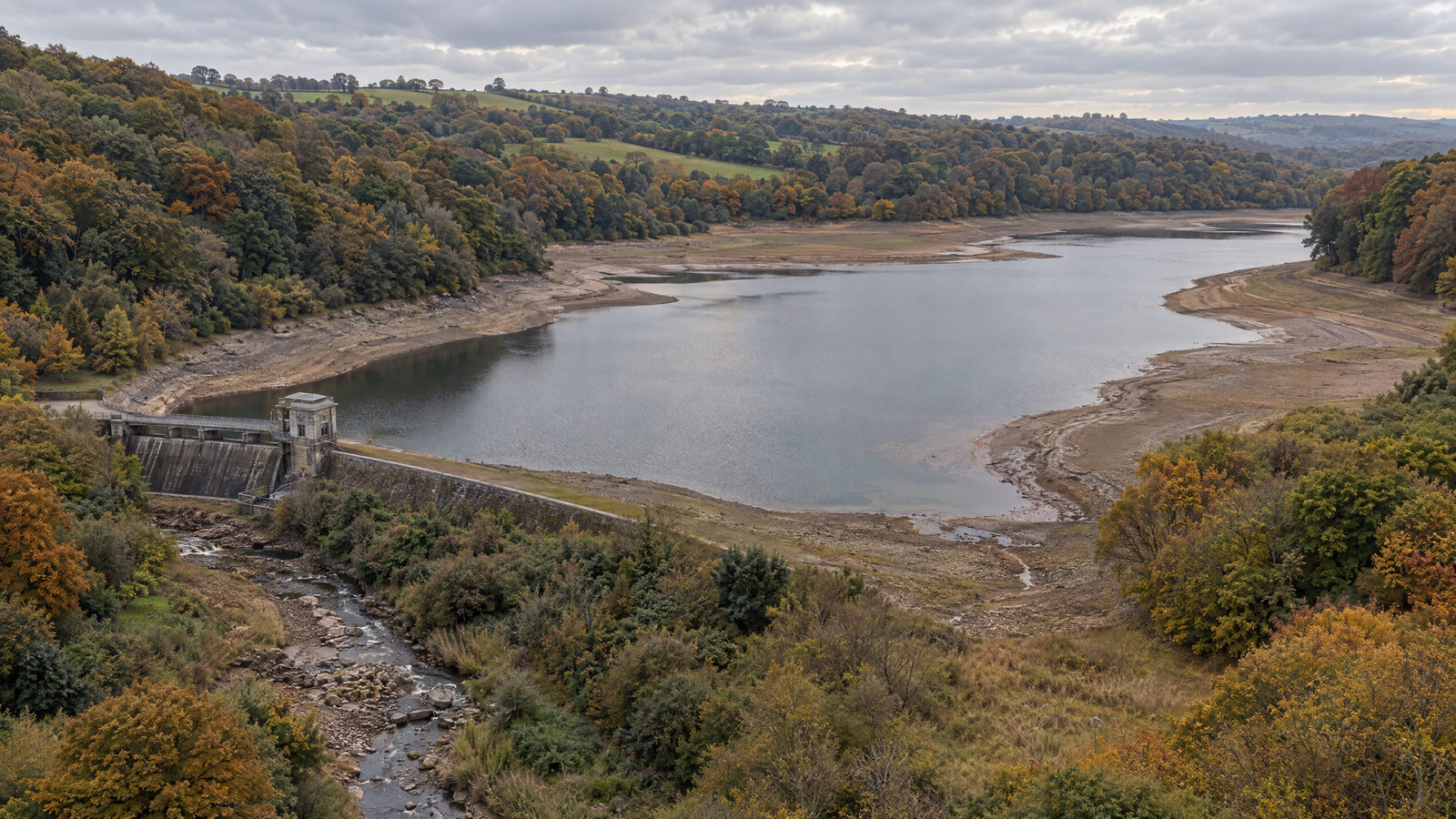

A temporary drought permit has been granted for Ardingly Reservoir in West Sussex, allowing a reduction in specified river flows as water-resource pressure deepens in Sussex. The measure is intended to help protect public water supplies, but it also reduces water that would ordinarily remain in parts of the River Ouse system.
The permit was announced on 2 October after the reservoir, near Haywards Heath, was reported to be at about 23% of its capacity at the end of September. It is time-limited and does not amount to a declaration that supply security has been restored. The regulator has said further action within the company’s drought plan may still be necessary.
What the permit changes
The permission runs for up to six months, ending on 29 March 2027 unless it is withdrawn sooner. Its central effect is to relax two environmental-flow requirements which normally apply when water is taken for customers.
Ardingly Reservoir would ordinarily release four megalitres a day to compensate Shell Brook, a tributary of the River Ouse. Under the permit, that release is reduced to one megalitre a day. The permission also allows less water to be left in the River Ouse at Barcombe Mills after abstraction.
Those changes are operational rather than cosmetic. They give the water company more flexibility to retain water in the reservoir and manage supplies during exceptionally dry conditions. They do not remove the need for the company to operate within the permit’s conditions.
A balance between supplies and the river
The decision explicitly involves a trade-off. Holding back more water at Ardingly can support drinking-water availability, while lower compensation releases and lower minimum river flows can affect the river environment. The regulator says it will monitor river conditions and environmental impacts while the temporary permission is in force.
The permit followed an application made on 28 August and a public hearing on 18 September. That process gave stakeholders and objectors an opportunity to set out their views before the decision was made. South East Water says the permit was granted on 29 September; the announcement was published on 2 October.
Restrictions have tightened separately
The permit is only one element of the response. On 2 October, South East Water also removed exemptions from its existing hosepipe restrictions in Sussex, other than exemptions connected to health and safety. The company has separately applied for a Non-Essential Use Ban aimed at commercial and other non-household uses.
That proposed commercial ban is not yet in force. It requires a decision by the Secretary of State, so it should not be treated as an approved restriction. The existing change to hosepipe rules and the drought permit are different measures, even though both arise from the same pressure on local supplies.
Why the winter matters
The water company said Sussex received only a little over 56% of expected rainfall between March and August. It also described dry ground and reduced flows in local streams and rivers after the prolonged warm weather. Recent rainfall had not brought Ardingly back to a normal seasonal position.
Recovery now depends heavily on the colder, wetter months, when river flows and groundwater can begin to replenish water resources. The regulator says at least average winter rainfall is needed to refill Ardingly and move Sussex from drought towards recovery by spring. If rainfall falls below that level, the pressure on supplies may continue.
For households and businesses, the immediate position is that the temporary permit is designed to preserve essential supplies while restrictions remain in place. It is not a signal that drought conditions have ended, nor a guarantee that no additional steps will be required before next spring.