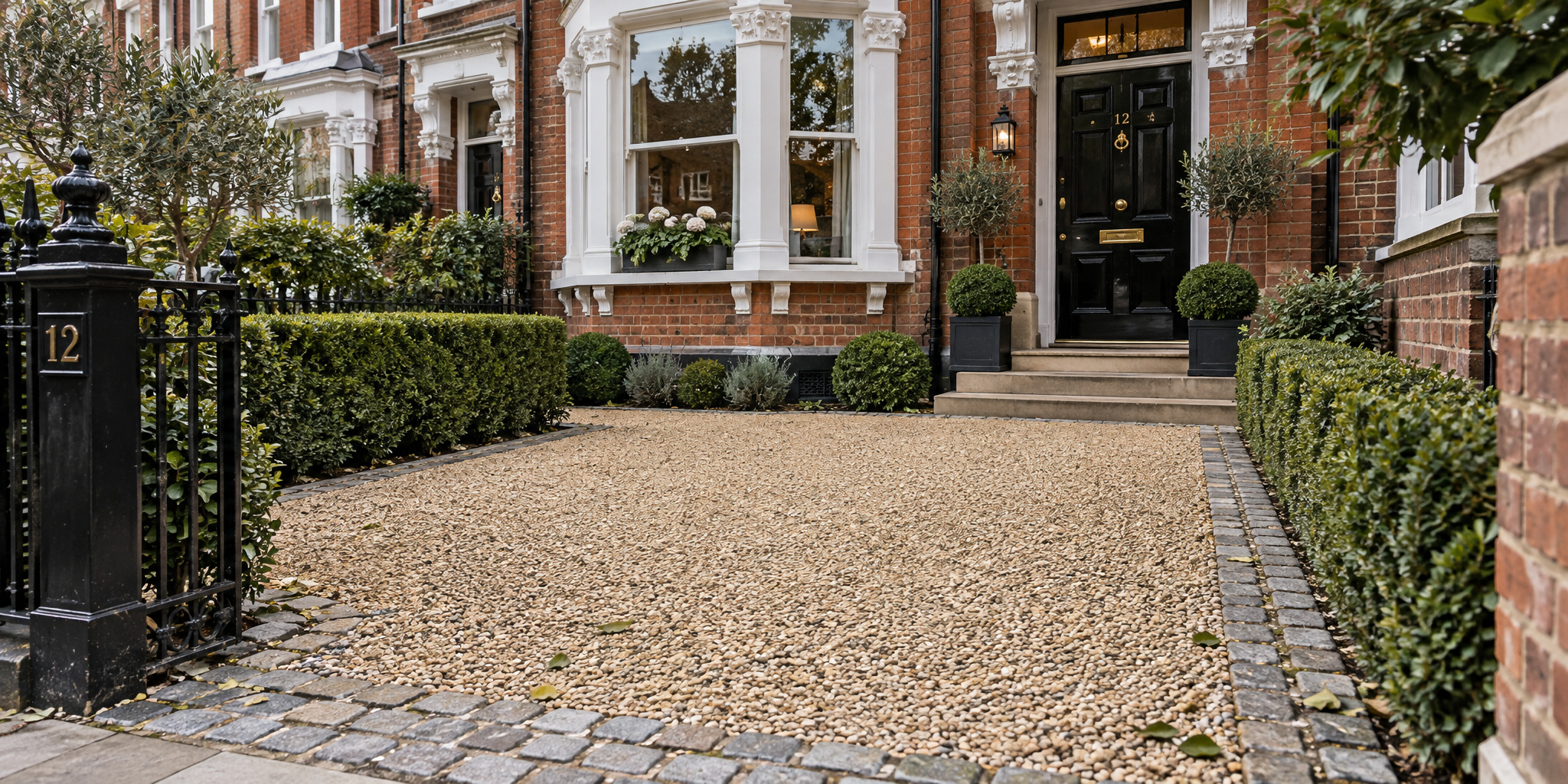

There are few sounds quite as evocative as the crunch of tyres on gravel. It is a sound that announces arrival long before the doorbell rings—a sensory signature that has become synonymous with country estates, boutique hotels, and the kind of London townhouses that hide unexpected courtyards behind their facades.
But beyond the nostalgia and the aesthetics, there is a genuine question worth asking: Do you actually like the sound of your car on a gravel drive?
The answer, it turns out, reveals more about you than you might think.
The Psychology of the Crunch
Sound is one of the most underrated elements of landscape design. We obsess over how a garden looks, how it smells after rain, how it feels underfoot. But how it sounds? That is often an afterthought.
Yet the auditory experience of arriving home matters. The crunch of gravel is a ritual. It marks a transition—from the public road to private territory. It slows you down, literally and psychologically. You cannot speed across a loose gravel surface without spraying stones and announcing your impatience. Gravel forces a gentler, more considered arrival.
For many homeowners, that sound is a daily reminder that they have arrived somewhere special.
The Practical Case for Gravel
Aesthetics aside, gravel drives offer real advantages, particularly in urban and semi-urban settings like London:
- Drainage: Unlike solid tarmac or concrete, gravel allows water to permeate. In a city prone to flash flooding, this is a genuine benefit.
- Cost: Gravel is significantly cheaper to install than block paving or resin-bound surfaces.
- Permeability and Planning: In many areas, permeable surfaces like gravel do not require planning permission, even in front gardens where hard surfacing is restricted.
- Security: The noise of gravel underfoot—or under tyre—is a natural intruder alarm. It is almost impossible to approach a gravel drive quietly.
- Ease of Repair: Potholes and stains? Simply rake and top up. No specialist trades required.
The Drawbacks Nobody Mentions
Of course, the romance fades slightly when you consider the maintenance.
Gravel migrates. It scatters into flower beds, onto the road, and into the house. Weeds love it. Raking is a seasonal chore. And for those with mobility issues, or for cyclists and wheelie bins, loose gravel can be genuinely inconvenient.
There is also the matter of noise pollution—specifically, the sound of other people’s cars on your gravel. What feels charming at 6pm feels rather different at 6am.
The Sound of Luxury (and the Sound of Annoyance)
Context is everything. On a sweeping country estate, the crunch of gravel signals arrival at a rural idyll. In a tight London mews, it might simply signal that your neighbour is leaving for work at an ungodly hour.
This is why resin-bound gravel has become so popular. It offers the look of gravel with a smooth, firm surface. You get the aesthetic without the scatter, the weeds, or the noise. But purists argue you lose the very thing that makes gravel special: the sensory experience.
So, Do You Like It?
The answer depends on what you value.
If you crave order, low maintenance, and silence, a resin-bound or paved drive will serve you better. If you value texture, permeability, and that unmistakable crunch of arrival, gravel is hard to beat.
Perhaps the better question is not whether you like the sound, but what you want that sound to say. A gravel drive says: slow down, you are home now. In a city that rarely stops moving, that is a message worth listening to.