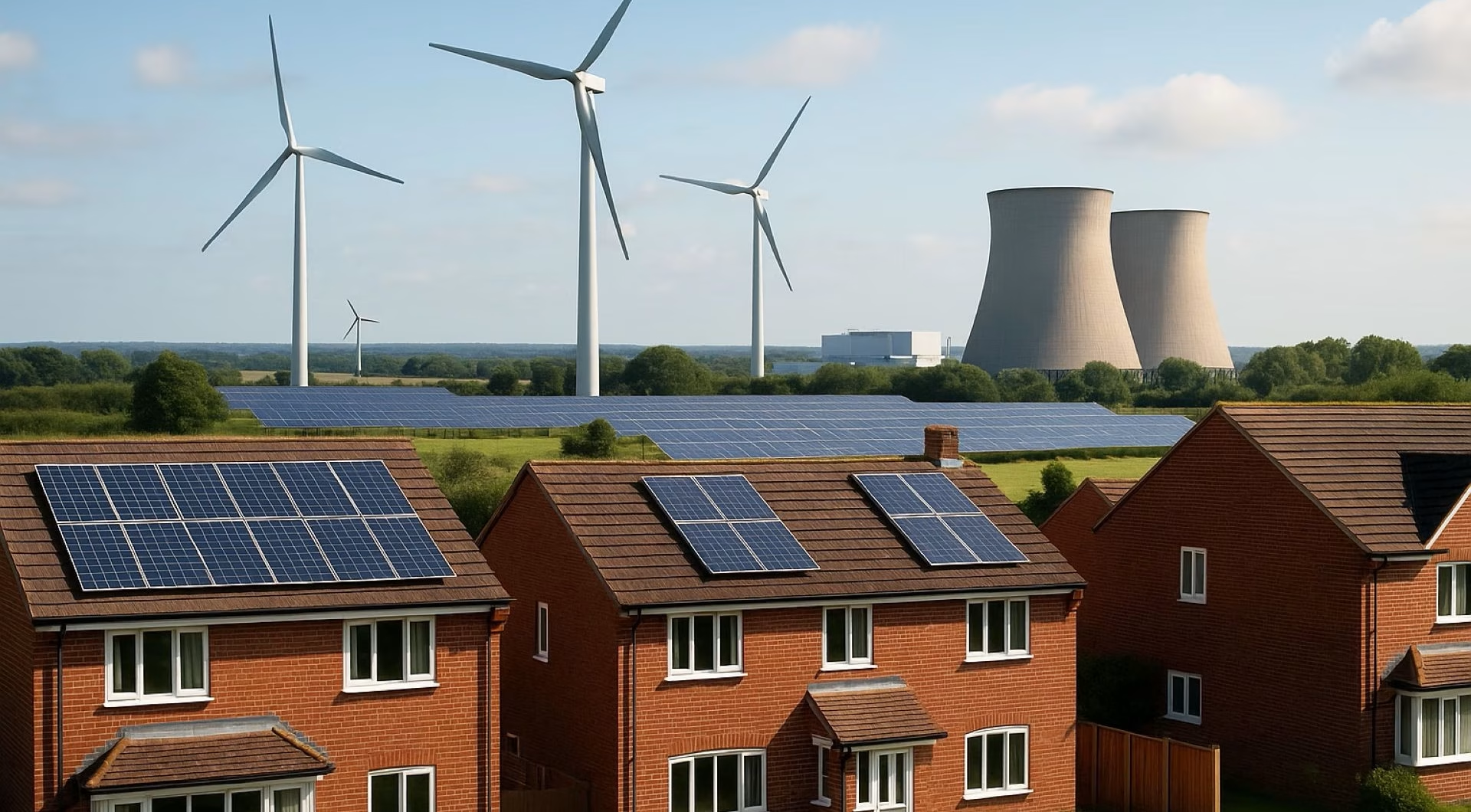

As UK households face rising energy costs, EDF is navigating the challenge of keeping tariffs competitive while investing in nuclear and renewable generation.
Energy Market Pressures
Over the past three years, UK households have faced some of the sharpest energy price rises on record. Global supply chain disruption, volatility in wholesale gas prices, and the cost of transitioning to low-carbon power have all pushed bills higher.
While the energy price cap has shielded households from the full brunt of international volatility, average dual-fuel bills remain several hundred pounds higher than they were just a few years ago. With budgets under pressure, families are scrutinising their suppliers more closely than ever.
EDF’s Position in the Market
EDF Energy, one of the UK’s largest suppliers, sits at the heart of this conversation. The company supplies millions of households and businesses, offering both standard variable tariffs and a range of fixed deals. EDF’s distinct advantage is its generation mix — particularly its fleet of nuclear plants, which provide a significant share of the UK’s low-carbon electricity.
Andrea Troy, spokesperson for Free Price Compare, said:
“EDF is in a unique position. It must manage affordability for today’s customers while investing in the infrastructure that will deliver clean energy tomorrow.”
“EDF has to balance two priorities: keeping tariffs fair and funding long-term clean energy projects.”
— Andrea Troy, spokesperson, Free Price Compare
Why Consumers Should Compare
For households, the question remains how to navigate this complex market. Prices vary widely between suppliers and tariff types, and customers who simply roll over onto standard rates may pay significantly more than those who switch or fix at the right time.
The ability to compare EDF Energy prices against other suppliers is crucial for finding value. By doing so, families can see whether EDF’s mix of competitive rates and low-carbon credentials matches their household priorities.
Troy added:
“Consumers should not assume that big suppliers automatically cost more. Comparison is the only way to see the real picture.”
EDF Energy Tariffs Explained
EDF offers a variety of tariff options designed to suit different household needs. Standard variable tariffs are protected by the price cap but can fluctuate with market conditions. Fixed deals provide budget certainty, locking in rates for one or two years.
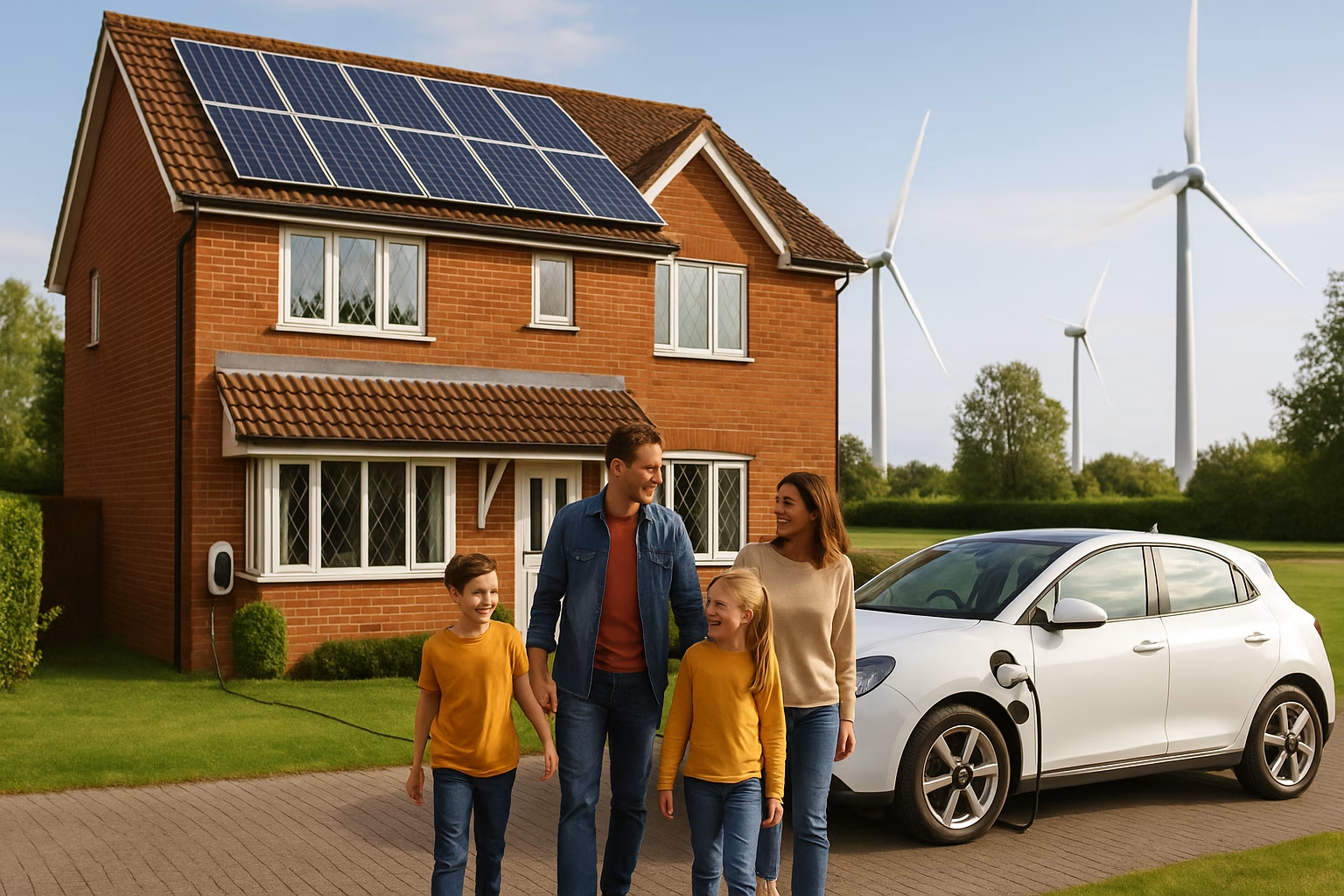
Specialist products, such as electric vehicle tariffs, are aimed at households adopting new technologies. These allow drivers to charge EVs at cheaper off-peak rates, reflecting EDF’s role in supporting the transition to greener transport. Some tariffs also integrate smart meter data, helping families better understand and manage their consumption patterns.
Households can explore EDF Energy tariffs to assess which product structure aligns best with their usage patterns and financial goals.
Clean Energy Commitments
EDF’s investments go far beyond tariffs. The company is heavily involved in nuclear projects such as Hinkley Point C and Sizewell C, as well as expanding wind and solar capacity. These projects underpin the UK’s ambition to decarbonise the power sector by 2035.
The scale of these projects is considerable, with tens of billions committed to building and maintaining assets that will generate low-carbon power for decades. Industry experts note that while nuclear and renewables require heavy upfront investment. For consumers, this means EDF’s generation portfolio could support greater price stability in the years ahead.
The Role of Transparency and Reviews
Alongside affordability and sustainability, transparency is increasingly important for customers choosing an energy supplier. Clear billing, accessible customer service, and trustworthy communication are now viewed as essential, particularly after recent high-profile issues across the sector.
Comparison platforms such as Free Price Compare highlight not only tariff details but also customer service scores and reviews, giving households a complete picture.
Troy commented:
“Energy isn’t just about unit rates. It’s about trust, transparency, and knowing your supplier can support you when it matters.”
Looking Ahead
As the UK moves towards net zero, suppliers face the dual challenge of managing short-term price pressures and long-term decarbonisation goals. For EDF, the balance between keeping tariffs competitive and funding clean energy projects will define its role in the market.
For households, the key message remains clear: compare, review, and consider both cost and sustainability when choosing a supplier.
Troy concluded:
“The energy market is changing. By comparing properly, households can secure fair prices today while supporting the transition to tomorrow’s cleaner power.”