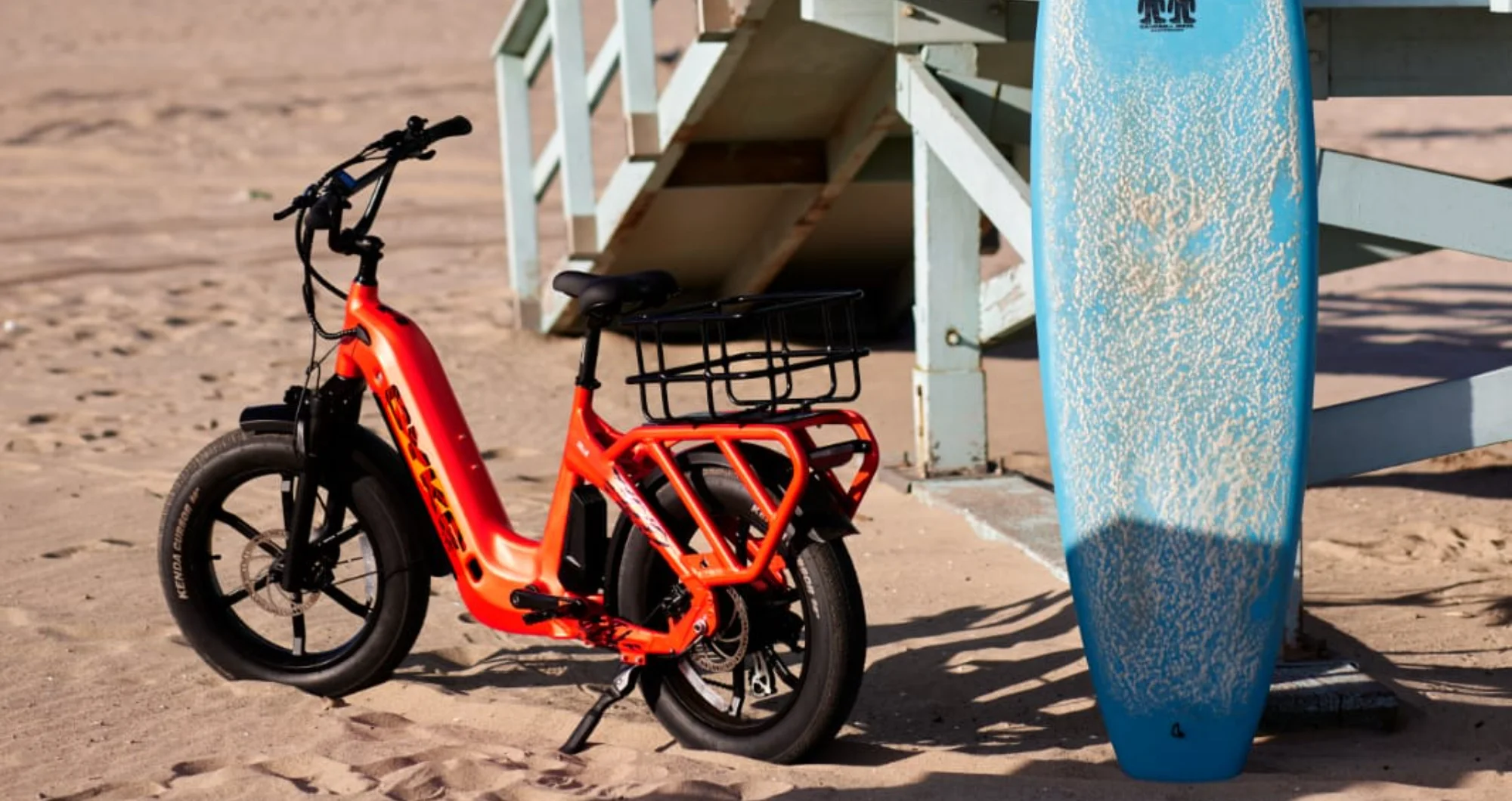

The speed and performance limits of a foldable e-bike depend mainly on a number of factors, including motor power, battery capacity, tire design, braking system, rider’s physical fitness and riding conditions.
Motor power and battery capacity
Motor power and battery capacity directly affect the acceleration ability and driving range of electric bicycles. For example, the DENAGO Folding 1 EBIKE is equipped with a 500-watt wheeled motor and lithium-ion battery, giving it good power and endurance, allowing it to conquer hills and maintain a certain speed.
Tire design
Tire design is also an important factor affecting speed and performance. Wide tires generally provide better stability and grip, but may slightly reduce top speed. For example, the 20 “x3” tires on the Anroch 20-inch dual battery 36V 250 Watt remote control foldable ladies e-bike provide comfort and grip, which helps improve riding stability and safety.
Brake system
An effective braking system is essential to ensure safety and control speed. Disc brakes have good braking performance, which is very important to slow down quickly and maintain control.
Additional factor
The physical quality of the rider, whether regular exercise, road conditions, etc., will directly affect the riding speed. Under ideal conditions, an experienced rider may ride faster than a novice rider.
Design feature
Due to its design and technological innovation, the Tern D9 is considered one of the fastest folding bikes. While no specific speed data is provided, it can be inferred that advances in design and technology could significantly improve the performance of e-bikes.
To sum up, the speed and performance of folding electric bicycles are not only affected by the hardware configuration, but also by the rider’s skills and riding conditions. When choosing an electric bicycle, understanding your own needs and riding environment, and choosing the right model and configuration are the keys to improving your riding experience and performance.
FAQ
Why are e-bikes limited to 20 miles per hour?
The main reason for e-bike speed limits is safety. Higher speeds increase the risk of accidents, which can result in serious injury or death.
How fast is too fast for an e-bike?
Once you reach 20 MPH, the motor will cut off and any higher speed will come from your pedals. Level 2: These e-bikes also offer pedal assistance up to 20 MPH; They also have a throttle involved with the motor and provide a push whether you are stepping on it or not. The engine stopped helping at 20 miles per hour.
How fast are police EVs?
It has many levels of pedals to assist power your ride as you see fit. Our flagship Police Interceptor can travel more than 60 miles at 28 MPH on a single charge. Our 4 “puncture resistant tires eliminate the possibility of pinching, making for a super comfortable ride.
Can an electric bike go up steep hills?
So there you have it: electric bikes are definitely a great option for conquering steep hills. Key components, such as pedal assist, throttle system and ramp sensors, work together to give you the best performance on hilly terrain.
Can a 500w bike climb a hill?
One of the main differences between a 250w e-bike and a 500w e-bike is the climbing power. The 500w motor can hold up to 130kg, while the 250w motor is more suitable for light riders.