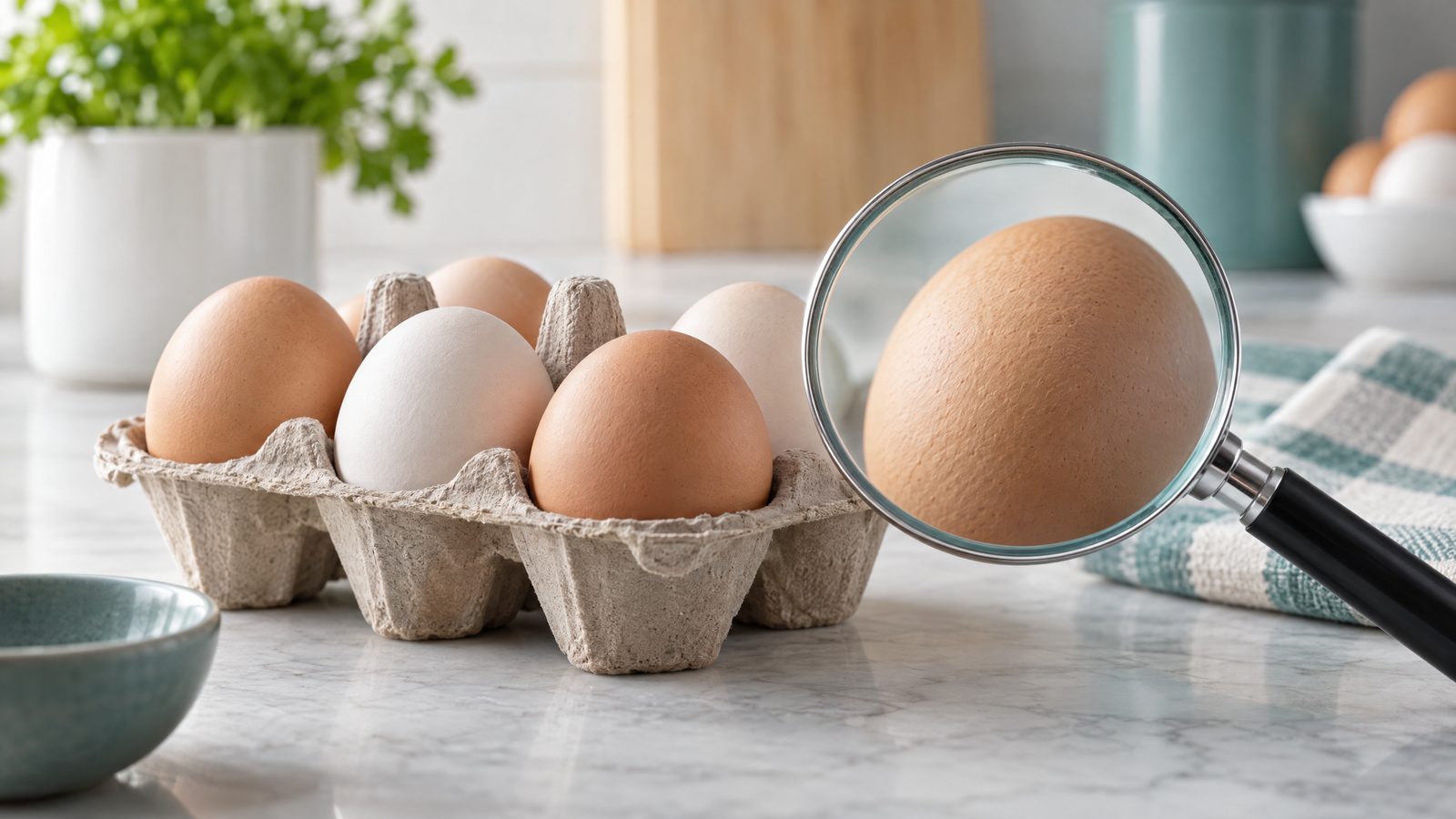

Food businesses have been ordered to remove raw shell eggs stamped 3UA1012066 after Salmonella was detected in samples from Ukrainian supplier Yasensvit Ltd, based in Kyiv. The Food Standards Agency’s Food Alert for Action applies to every pack size and best-before date bearing that code. Where the eggs have reached retail customers, sellers must recall them as well as withdraw remaining stock.
The warning is specific to eggs carrying the stamp, which is printed directly on the shell. Businesses are being told to stop using or selling them, dispose of affected stock safely and not send it for further processing. Consumers who have bought eggs with the code should not eat them and should dispose of them at home.
Check the shell, not just the box
Some eggs may have been repacked in the UK, so a carton could show different business details or a packing-centre code from those associated with the original supplier. The FSA says the code on the egg itself is the key identifier. The alert covers all sizes and dates, and notes that other eggs from the establishment with the same stamp may also be affected.
Most of the affected eggs are understood to have gone through catering and food-service supply chains. They may also have been sold by small shops, including corner shops, but are not sold in large supermarket chains. The warning is not a recall of supermarket eggs generally, nor does it cover all imported eggs or all eggs from Ukraine.
What the laboratory finding means
Testing was carried out during an ongoing investigation into Salmonella Enteritidis infections associated with imported eggs. The UK Health Security Agency found the bacteria in samples from the Yasensvit eggs and used whole-genome sequencing to compare the strain with others under investigation.
The sampled-egg strain did not match the strains linked to the separate outbreak investigation. It was, however, associated with 36 Salmonella infections reported in England during 2026. That association is not proof that the sampled eggs or this specific batch caused each of those infections. The two findings should not be collapsed into a claim that the Yasensvit eggs were the source of the wider outbreak.
The product action follows the positive egg sample and the possibility that other eggs carrying the same stamp could be affected. Removing the marked eggs is a precaution aimed at preventing further exposure while investigations continue. The wider source investigation remains unresolved; no conclusion about every case or every imported egg follows from this alert.
Symptoms and the scope of the advice
Salmonella commonly causes diarrhoea, stomach cramps, vomiting and fever. Many infections settle after a few days, but illness can be more serious, particularly for young children, older adults, pregnant people and those with weakened immune systems. Anyone who is unwell and concerned should seek appropriate medical advice.
The alert does not change general advice for eggs outside its scope. The FSA says UK-produced eggs are not affected by this finding. Eggs that are cooked thoroughly and handled hygienically should not present a food-safety risk. Infants, young children, pregnant people and older adults should continue to eat raw or lightly cooked eggs only when they carry the British Lion mark or are produced under the Laid in Britain scheme.
For caterers and other food businesses, the immediate task is to check stock and supply records, including eggs already removed from their original packaging, against the shell code. Any eggs bearing 3UA1012066 should no longer be used or sold; if they were sold directly to customers, a recall is required. For shoppers, checking the printed code rather than relying only on the carton helps identify the precise product covered.