
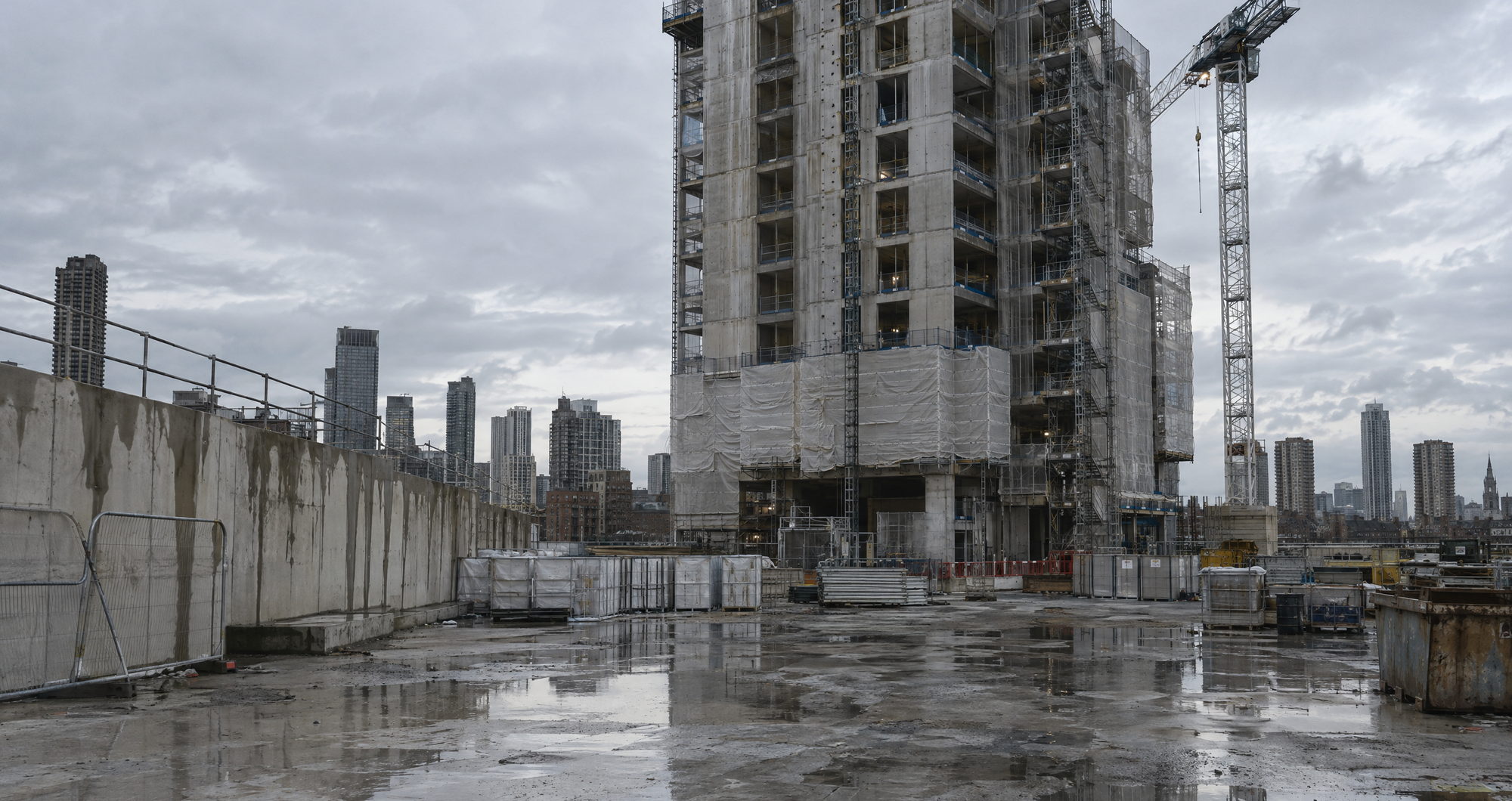

Hackney Council has approved a £30m contract to restart work on the final phase of a 371-home development in Hoxton that stalled in June when its main contractor went into administration.
The contract with Wates Construction, worth £30.1m including VAT or £25m excluding it, was signed off on Monday 2 November. It covers making the building watertight, buying critical construction materials and site management on phase 2b of the Britannia Project at Shoreditch Parkside, one of the largest regeneration sites in the borough.
A scheme that has grown more expensive
The Britannia Project is being built in towers up to 25 storeys and will deliver 371 homes: 51 for social rent, 30 for shared ownership and 290 for market sale. The social rent homes are intended to rehouse some residents of the Colville Estate, whose homes are being demolished under a separate regeneration programme.
Phase 2b was originally estimated at £153.9m in 2023. The council now expects the final cost to exceed a revised budget of £196.8m, a gap that will have to be met from elsewhere in the housing programme or absorbed through value engineering on the remaining works.
A second contract covering internal works and landscaping is expected to go to the council’s cabinet procurement and insourcing committee in spring 2027. Until then, the site will be secured and weatherproofed rather than completed.
How the contractor collapsed
Ardmore Construction Group entered administration in June 2026 after a High Court building liability order made its companies liable for £14.9m in historic cladding claims. The group had worked on several tall residential schemes across London, and its failure left multiple sites with incomplete structures and unpaid subcontractors.
The collapse illustrates a problem that has spread through the capital’s construction market since the Building Safety Act changed liability rules. Contractors that signed work in the 2010s are now exposed to remediation claims on buildings they completed years ago, and insurers have withdrawn cover or raised premiums sharply, leaving some firms unable to keep trading through a single adverse judgment.
What residents have been told
Leaseholders who have already bought into the completed phases of the Britannia Project have faced months of uncertainty about when the remaining buildings will be finished and what the delay means for service charges and the management of the site.
The council has said the priority is to protect the structure from water damage over the winter and to keep the programme moving so that the social rent homes are not lost. Hackney, like most London boroughs, is under pressure to show delivery against its housing targets while managing a capital programme that has been hit by inflation in materials and labour.
Buying the remaining work directly, rather than appointing a replacement main contractor on a fixed-price deal, shifts more of the risk onto the council but gives it control over sequencing and cost. The trade-off is that Hackney now carries the risk of further price movements on a project whose budget has already risen by more than a quarter.
The decision also raises a question for other boroughs with stalled sites. Where a contractor fails, councils can wait for a replacement to take on the whole job, procure the remaining work in packages, or complete the build themselves. Each option changes who carries the risk and how quickly homes are delivered.
For now, the practical effect of the vote is that work at Shoreditch Parkside will resume rather than the site sitting unfinished through another winter, with the internal fit-out and public realm to follow once the building is sealed.







