
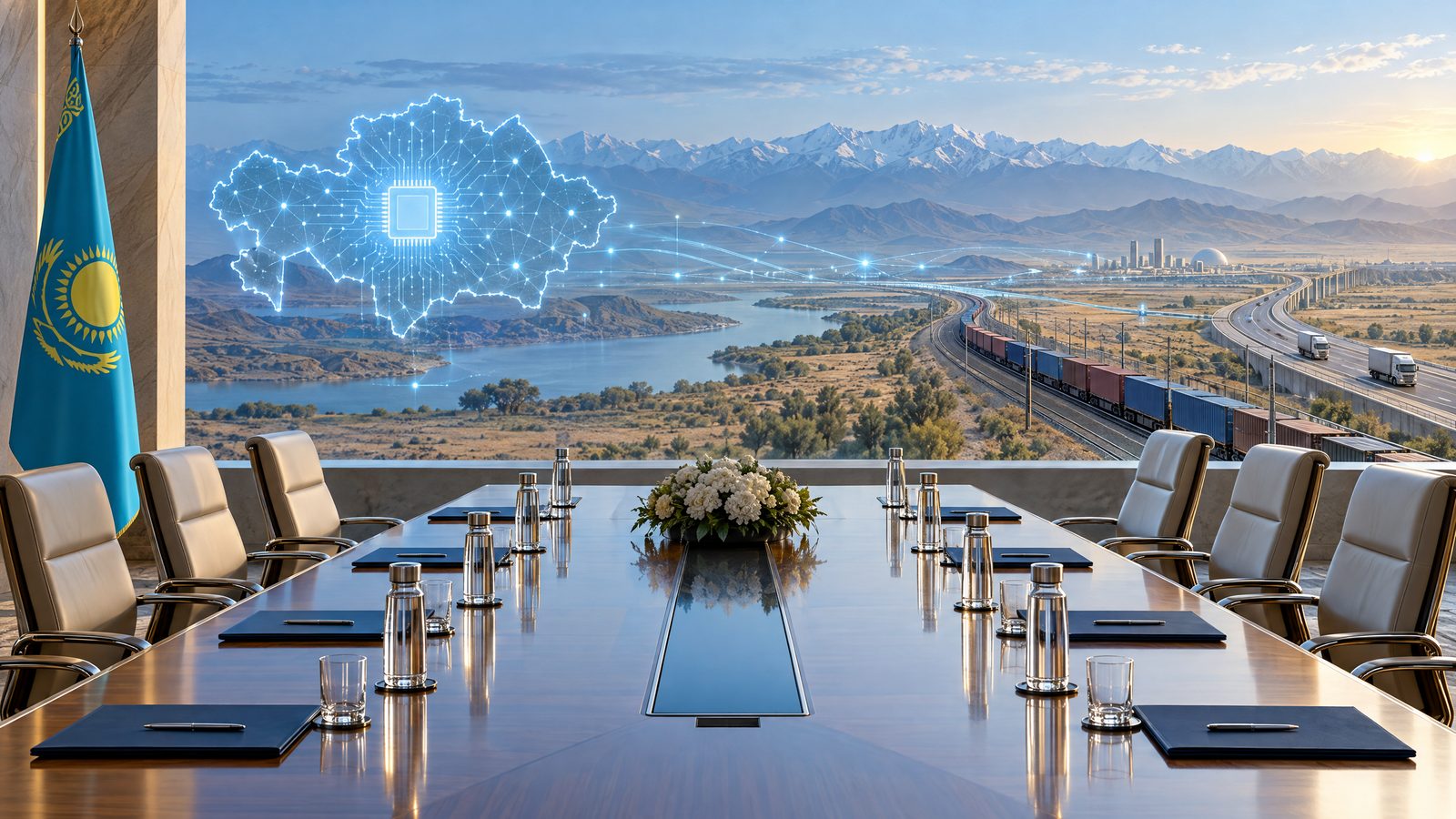

Kazakhstan has urged its fellow members of the Shanghai Cooperation Organisation (SCO) to coordinate regional transport corridors and create a network of artificial intelligence centres, as governments met in Dushanbe on 20 October. The proposals were presented by Prime Minister Olzhas Bektenov at the Council of Heads of Government meeting; they are not evidence that the suggested network or transport strategy has already been established.
The gathering brought together leaders and representatives of SCO member governments in both restricted and expanded sessions. The agenda covered trade and economic cooperation, cultural and humanitarian links, transport, digitalisation and investment. A separate report of the meeting said discussions also included rail links, energy, agriculture, tourism, healthcare, scientific cooperation and support for start-ups.
Transport coordination proposed through 2035
Bektenov called for a structured dialogue to connect China’s Belt and Road Initiative with existing and planned regional transport corridors. Kazakhstan proposed defining shared targets through an SCO Transport Connectivity Strategy extending to 2035. That is a proposal for coordination and planning, not a commitment that specific routes will be built or integrated.
Kazakhstan also called for accelerated work to modernise sea and dry ports under an existing SCO action plan running to 2030. Bektenov identified the Trans-Caspian International Transport Route as one possible platform for cooperation, with traffic volumes planned to reach 10 million tonnes a year. The figure describes a target, not a current measured volume or a forecast shown to have been achieved.
These infrastructure ambitions sit alongside practical questions about how participating countries would align investment, customs procedures and operating standards across borders. The meeting account records Kazakhstan’s call to remove trade barriers and simplify procedures, but does not say those changes were agreed at this session. Nor does it set out a timetable for implementing the proposed corridor strategy.
AI centres remain an initiative
On technology, Kazakhstan proposed an SCO network of artificial intelligence centres intended to bring together member states’ technical expertise and support exchanges of solutions. Bektenov also pointed to the UN Economic and Social Commission for Asia and the Pacific’s Asia-Pacific Center for Digital Solutions in Almaty as a potential base for technology exchange and wider use of digital tools.
He described Kazakhstan’s aim of becoming a regional digital hub under its Digital Qazaqstan strategy. The government said exports of the country’s IT services had risen 34-fold over five years to $1.1 billion. That figure was presented by Bektenov as a national measure; the meeting reports do not provide a breakdown or independent assessment of the export data.
Kazakhstan also raised energy and water security. Its suggestions included implementing the SCO energy cooperation strategy to 2030 and establishing a centre to analyse water issues. These were presented as priorities for further cooperation, rather than decisions establishing a new centre.
One freight-platform concept was approved
The proposals should be distinguished from a concrete multilateral outcome. At the close of the meeting, the council signed a decision on a concept for an SCO digital platform to develop international multimodal freight transport. Regional accounts also describe approval of a separate concept for a unified platform to manage multimodal land freight traffic, alongside documents on trade cooperation and industrial investment projects.
The decision concerns a concept: the published accounts do not say that the platform is operational, identify a launch date or set out participating carriers and technical rules. The distinction matters because a shared digital system could support freight coordination, but its practical effect will depend on later design and implementation decisions.
The meeting therefore produced a mix of adopted planning documents and national proposals. Kazakhstan placed transport links, digital cooperation, AI and regional resource security on the table, while the freight-platform concept was among the documents signed by the council. Whether the broader proposals lead to coordinated projects will depend on follow-up among member governments.







