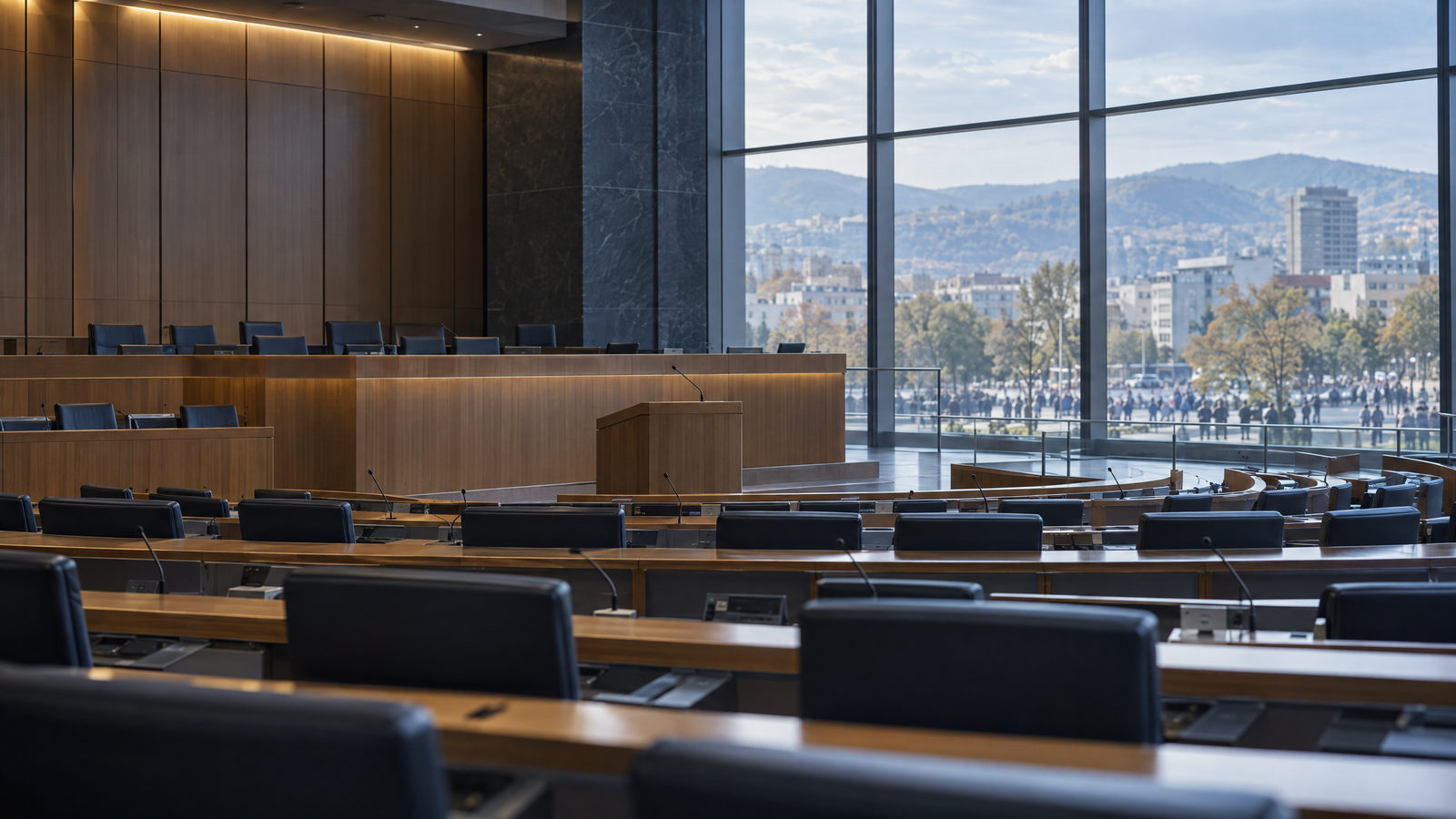

Kosovo’s parliament has taken an initial step towards changing the law governing the Kosovo Specialist Chambers, but the proposed reforms were not enacted after lawmakers adjourned without holding a second reading. The first-reading vote took place on 5 October, as protests outside the Assembly escalated into clashes and a separate constitutional deadline over the country’s presidency approached.
All 91 lawmakers who took part supported the bill at its first reading. That vote allowed the proposal to proceed; it did not complete the legislative process. The text still required committee scrutiny and a further reading. The session ended before that vote, leaving the proposed changes unapproved as law and their next parliamentary stage uncertain.
The proposal would cap prison sentences imposed by the Hague-based court at 15 years, allow people convicted by it to serve sentences in Kosovo and create a route to appeal to Kosovo’s Supreme Court. It would also make convicted people eligible for a presidential pardon. The draft would narrow the court’s jurisdiction by limiting the categories of offences it could address and reducing the period covered, from January 1998–December 2000 to July 1999–December 2000. These are proposed changes, not current rules.
Hundreds of people, including Kosovo Liberation Army veterans and supporters, gathered outside parliament in Pristina. After the session ended, demonstrators tried to prevent lawmakers from leaving and demanded the bill advance. Police used tear gas and water cannons, while some protesters threw flares, firecrackers and bottles. Injury figures differed: one hospital tally recorded 12 people, including 11 civilians and one officer, while police gave a total of 17, including six officers. Three protesters were detained.
The dispute became entangled with efforts to elect Kosovo’s next president. The Constitutional Court set 6 October as the deadline for lawmakers to choose a head of state; failure to meet it would lead to the Assembly’s dissolution and another early parliamentary election. The Democratic Party of Kosovo, which sponsored the bill, tied its support for the presidential process to passage of the amendments. Prime Minister Albin Kurti’s governing party wanted the presidential vote to come first. Kurti backed consideration of the bill but called the proposed changes rushed and insufficiently analysed.
The Specialist Chambers were established in 2015 through an international agreement ratified by Kosovo’s Assembly, a constitutional amendment and national legislation. They are a temporary part of Kosovo’s judicial system, based in The Hague and staffed by international judges and personnel. Their mandate covers war crimes, crimes against humanity and other crimes under Kosovo law related to events from 1998 to 2000. Moving sentencing, appeals and possibly the court’s reach would therefore alter more than the location of imprisonment.
The immediate political pressure follows the court’s 16 September convictions of four former KLA leaders, including former president Hashim Thaçi. They received prison terms ranging from 13 to 25 years for war crimes, and their defence teams have appealed. The proposed 15-year ceiling would be below the sentences imposed in the case. Supporters of reform say the court should remain within its original mandate; critics of the bill have questioned both the process and whether parliamentary changes could take effect.
Legal consequences remain unresolved. The first reading alone neither changes the court’s powers nor settles whether Kosovo can unilaterally amend the arrangements under which it was created. The proposal may face constitutional scrutiny, and Kosovo has commitments to consult European partners on changes affecting the court. At the close of the Assembly session, there was no second vote and no final law. The immediate questions were whether lawmakers could complete the bill, how the presidential deadline would be handled, and whether any eventual amendment would survive legal review.