
Billions of people remain without safely managed drinking water, sanitation and hygiene, while more than one billion receive care in health facilities without even basic water services, a new global report warns. The World Health Organization’s annual review for 2025, published on 5 October, says the world is still dangerously off track to meet Sustainable Development Goal 6, the promise of universal access to water and sanitation by 2030. It estimates that inadequate water, sanitation and hygiene contribute to 1.4 million deaths each year.
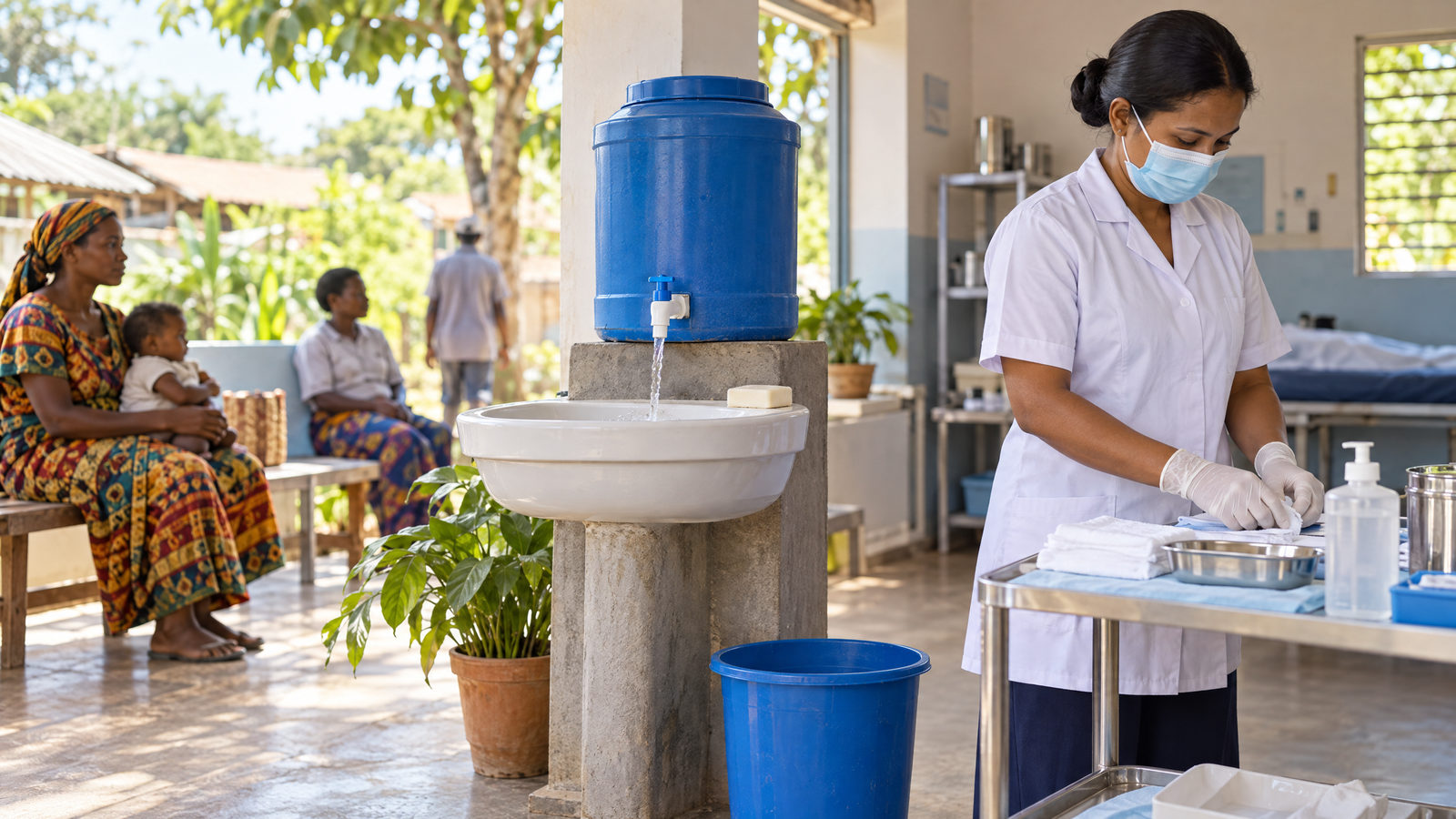
The report frames those gaps as a health-system problem as well as a development challenge. Reliable water and functioning sanitation underpin infection prevention, safe childbirth, treatment and routine cleaning. When a clinic lacks them, patients and staff face risks even before an outbreak begins. That vulnerability can become more visible during cholera outbreaks, armed conflict or climate shocks, when essential services may be strained or disrupted and safe alternatives are harder to reach.
The latest global monitoring of health facilities gives a more detailed picture of the service standards behind the warning. In 2025, an estimated 85 per cent of facilities had a basic water service and 72 per cent had basic hygiene. The reported gap was sharper for sanitation: only 40 per cent met the basic standard. Basic service is a defined minimum, not a guarantee that every patient has enough clean water, a usable toilet or suitable handwashing facilities at the point of care.
These figures should not be read as a new headcount of deaths in 2025. The 1.4 million figure is an estimate of the annual health burden associated with inadequate services, while the facility percentages describe reported coverage against agreed service definitions. A separate global estimate released earlier this year put the number of people relying on health facilities without water at 907 million in 2025. That measure is not worded identically to the annual report’s reference to people receiving care without basic water services, so the two totals should not be treated as directly interchangeable.
The central challenge is not simply building more taps or toilets. Services have to remain safe, available and maintained, including during emergencies. WHO’s review describes its own contribution through health-based guidance, monitoring, regulation and technical partnerships rather than direct construction. That distinction matters: standards and reliable information can help governments identify risks, but they cannot substitute for investment, staffing, supplies and accountable local systems.
The report’s urgency rests on the distance between incremental progress and the 2030 goal. A health facility without basic water is a visible failure, but household and community access also shape whether people can prevent illness and recover when services are disrupted. The review does not claim that a single intervention can resolve those pressures, nor does it provide a new global tally of the cost of closing the gaps. Its warning is that cholera, conflict and climate shocks make weak services harder to ignore—and make the consequences of delayed investment more immediate.
“Safely managed” access is a higher bar than having a source or facility nearby. Drinking water must be on the premises, available when needed and free from contamination. For sanitation, facilities must not be shared, and waste must be safely disposed of in place or transported and treated. These standards help explain why counting taps and toilets alone can overstate how many people have a dependable service that protects health.