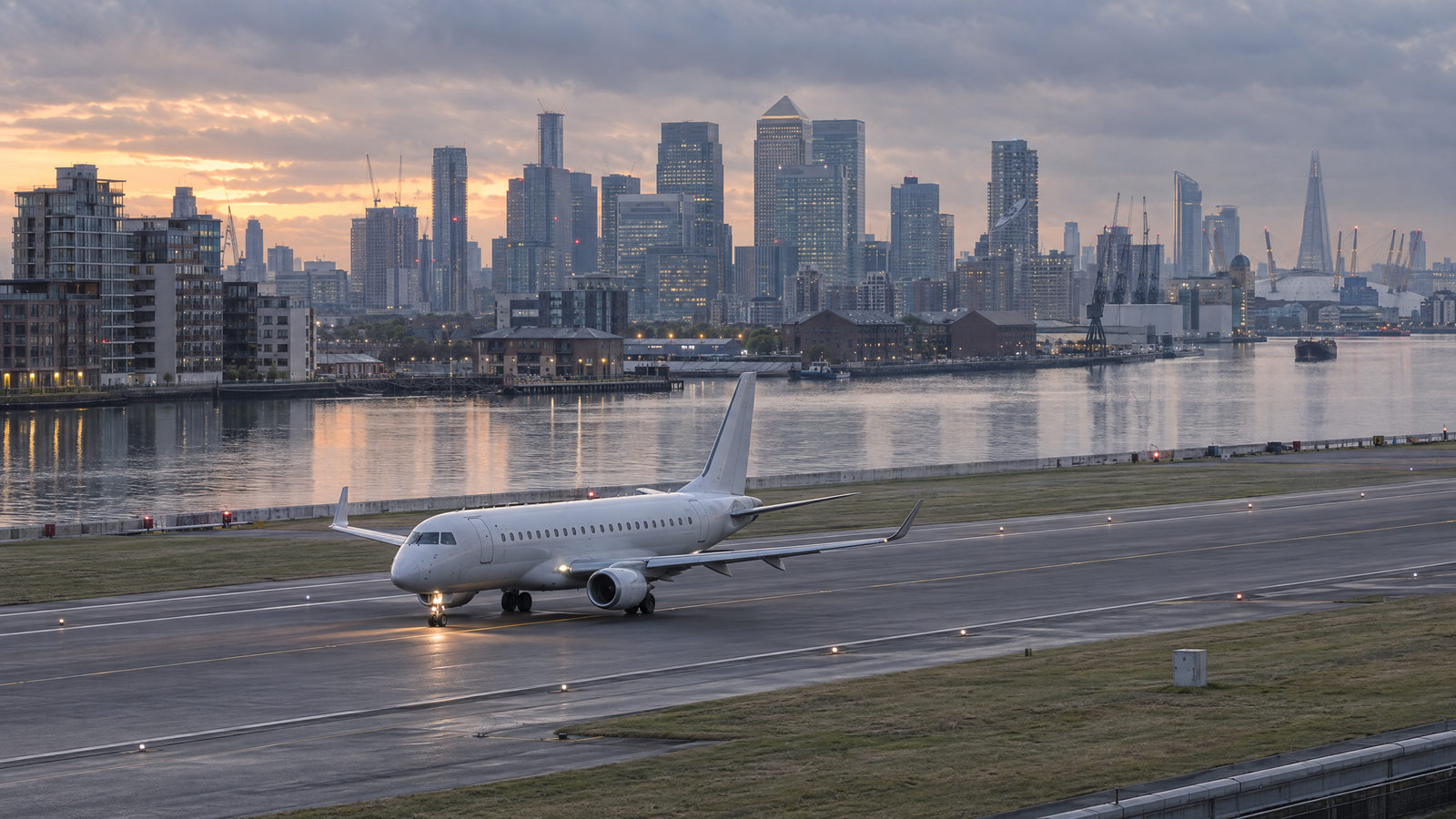

London City Airport recorded the highest flight-cancellation rate among the capital’s major airports in the first six months of 2026, according to a newly published analysis of official airport returns.
The analysis put the airport’s cancellation rate at 2.44 per cent between January and June. It counted 555 cancelled air transport movements from 22,703 recorded movements over the period. That places the airport ahead of Heathrow, Gatwick, Stansted, Luton and Southend when the comparison is made by proportion of flights cancelled rather than raw totals.
The distinction matters. A larger airport can experience more cancellations in absolute terms while a smaller airport has a higher share of its schedule cancelled. London City Airport’s result is therefore a measure of the likelihood of cancellation within the movements recorded there during the six-month period, not a claim that it had the greatest number of disrupted passengers in London.
The rate has risen from 1.37 per cent in the equivalent period of 2025, when 325 movements were cancelled. The latest figure represents 230 more cancellations year on year. The comparison uses the same January-to-June window, allowing the two periods to be assessed on a like-for-like basis.
Across the 25 UK airports included in the analysis, London City ranked third. Exeter was first with a 5.27 per cent cancellation rate and Southampton second at 4.43 per cent. London City’s position is notable because it is a key gateway for business and leisure travellers travelling between the capital and UK or European destinations, with a schedule that can leave passengers needing to rearrange tightly timed journeys when a service is withdrawn.
The figures should not be treated as a live picture of the airport’s operations today. They cover the first half of the year rather than the current timetable, and a cancellation rate does not show why an individual service did not operate. Weather, aircraft availability, crew issues, airline scheduling decisions, airspace restrictions and wider network disruption can all affect flights. The published comparison does not attribute London City Airport’s result to any one of those factors.
It is also important to read the measure carefully. The dataset uses air transport movements, meaning take-offs and landings connected with passenger or cargo transport. The analysis refers to these movements as flights for simplicity. It calculates the percentage by dividing cancellations by the total number of recorded air transport movements, rather than by averaging separate monthly percentages. That approach gives more weight to months with more traffic.
For passengers, the most practical consequence is not that a historic percentage predicts any particular journey. It is a reminder that a compact, convenient airport is still part of a wider aviation system in which disruption can have a disproportionate effect on a short itinerary. Travellers with fixed meetings, onward rail connections or important events may wish to allow time for alternatives, keep airline notifications switched on and understand the rebooking options attached to their ticket.
The new ranking also provides a clearer benchmark for future data releases. Whether London City Airport’s rate falls or rises later in the year will depend on both the number of cancellations and the volume of services operated. For now, the first-half figures place it at the top of the London comparison and make the reliability of the airport’s flight programme a matter of direct interest to the passengers who rely on it.