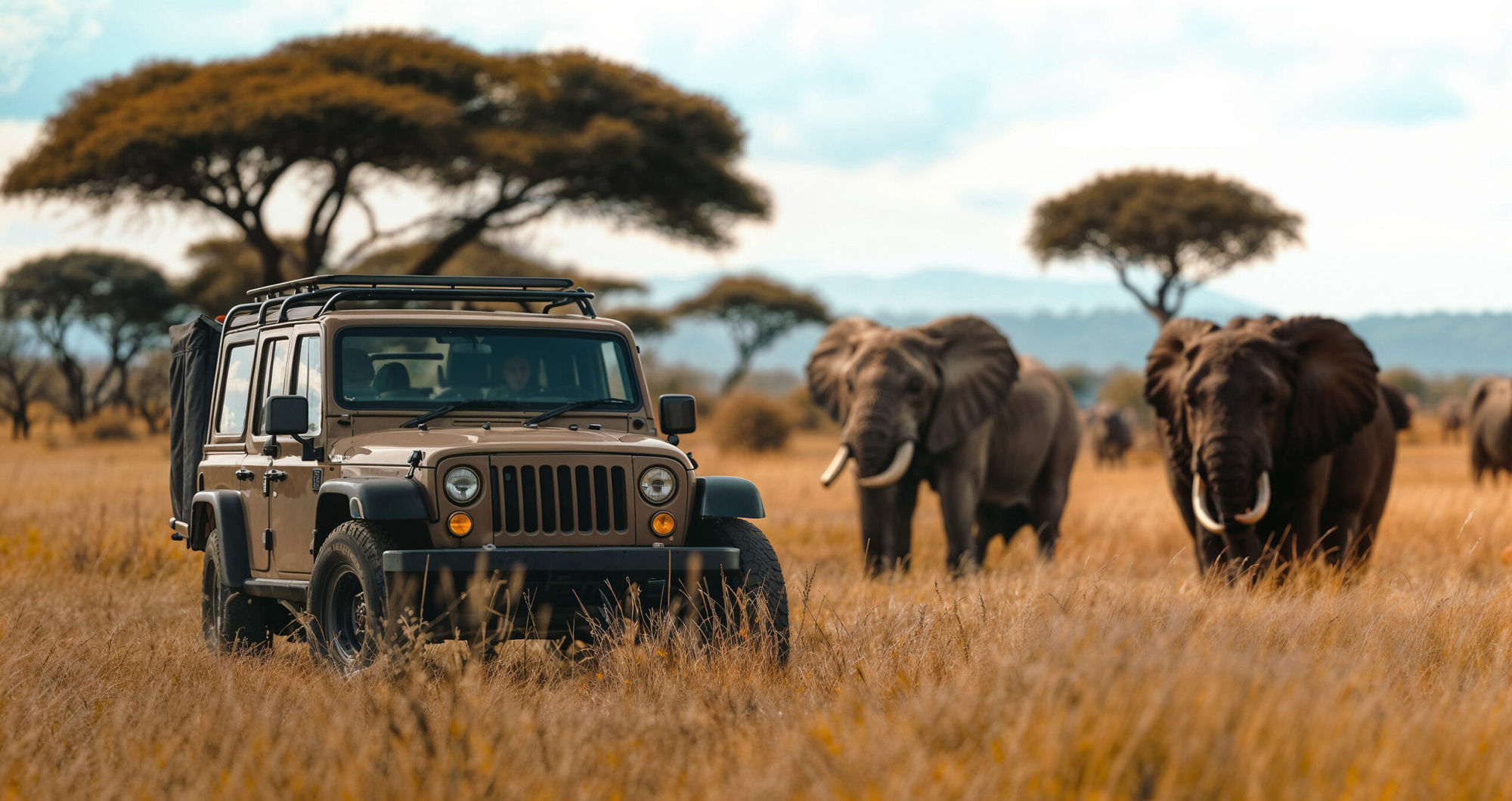

For the nature-loving traveller, few experiences rival the raw, primaeval power of an African Safari during the peak of the migratory season. It is a spectacle of such immense scale, stretching across the vast, sun-drenched plains of Tanzania and Kenya, that it humbles even the most seasoned globetrotter.
As we mark the 12th anniversary of HerdTracker, the pioneering app that has revolutionised how we witness this natural wonder, we take a closer look at the stories from the ground that continue to captivate the world’s imagination.
Launched in 2014, HerdTracker was born from a simple yet ambitious goal: to provide real-time updates on the movements of about two million wildebeest, zebras, and gazelles as they journey over the Serengeti-Mara ecosystem. Twelve years later, it has become an indispensable tool for photographers, conservationists, and luxury safari-goers alike.
A Front-Row Seat to the Wild
The migration is not merely a journey; it is a continuous cycle of life and death played out across the enormous plains of East Africa. Starting in the Southern Serengeti and Ngorongoro Conservation Area in Tanzania, the herds move in a clockwise loop through the central and western Serengeti, to the Northern Serengeti, eventually braving the crocodile-infested waters of the Mara River to reach the lush grass of the Maasai Mara in Kenya.
With storms building in the south again, the herds gradually filter back through Northern and central Serengeti to the southern plains, closing the loop.
For the professional guides who track these movements day and night, the encounters are as dramatic as any Hollywood thriller. Mohamed Hassan, a professional safari guide and photographer living in Arusha, remembers a particularly poignant moment during the peak of the global pandemic.
“I was lucky to have a few safaris during that quiet period,” Hassan explains. “I witnessed a river crossing that lasted over ten hours. Because travel was restricted, my vehicle was the only one there. To see such a monumental event in total silence, without the usual hum of other onlookers, was a spiritual experience.”
The Ruthless Reality of the River
The images shown in travel magazines often focus on the sunset silhouettes, but the reality on the ground is far more visceral. Field guide Manja Kema, who operates in the Serengeti, recounts a harrowing scene at the Mara River involving a single, particularly ambitious lion.
“We waited three hours for the first crossing of the season,” Kema says. “A lion was waiting on the opposite bank and began catching wildebeest one after another. He caught seven in total, but two actually managed to escape because the lion was so overwhelmed by the sheer volume of prey that he didn’t finish the kill before moving to the next.”
It is this chaotic, unscripted drama that keeps travellers returning year after year. From wildebeest mothers defending their calves against cheetahs to the heartbreaking sight of lost calves mistakenly following predators in a desperate search for a mother’s scent, the migration offers a window into the uncompromising laws of nature.
Conservation in a Changing Climate
However, the last decade has not been without its challenges. The London Daily News has frequently reported on the shifting patterns of global weather, and the African savannah is no exception. Modern technology like HerdTracker has become vital not just for tourism, but for scientific data.
Experts have noted that erratic rainfall is beginning to disrupt the traditional timing of the migration. In recent seasons, herds have arrived in the central Serengeti far earlier than expected, only to double back when heavy rains have flooded the southern Ndutu region.
Beyond climate change, human intrusion remains a pressing threat. As village populations grow, the traditional migratory corridors are increasingly fragmented by fences and habitat loss.
The good news is that education programs and the economic upside of sustainable tourism have reduced poaching, and local communities have come to value the benefits of these “greatest shows on earth”, meaning the wildebeest’s future may be more secure.
Conclusion
And so, 12 years of HerdTracker has not only helped to book the best safari for many, but has developed a worldwide army of “digital rangers” for the survival of this ancient migration. To the Londoner trying to escape the city, the Great Migration is the ultimate reminder of the strength and beauty of our planet.
As we head into the next decade, the message from the ground is this: witnessing the migration is a privilege, but protecting it is a necessity, whether you are experiencing the crossing through the high-end lens in the Maasai Mara or tracking the herds on your smartphone in Kensington.