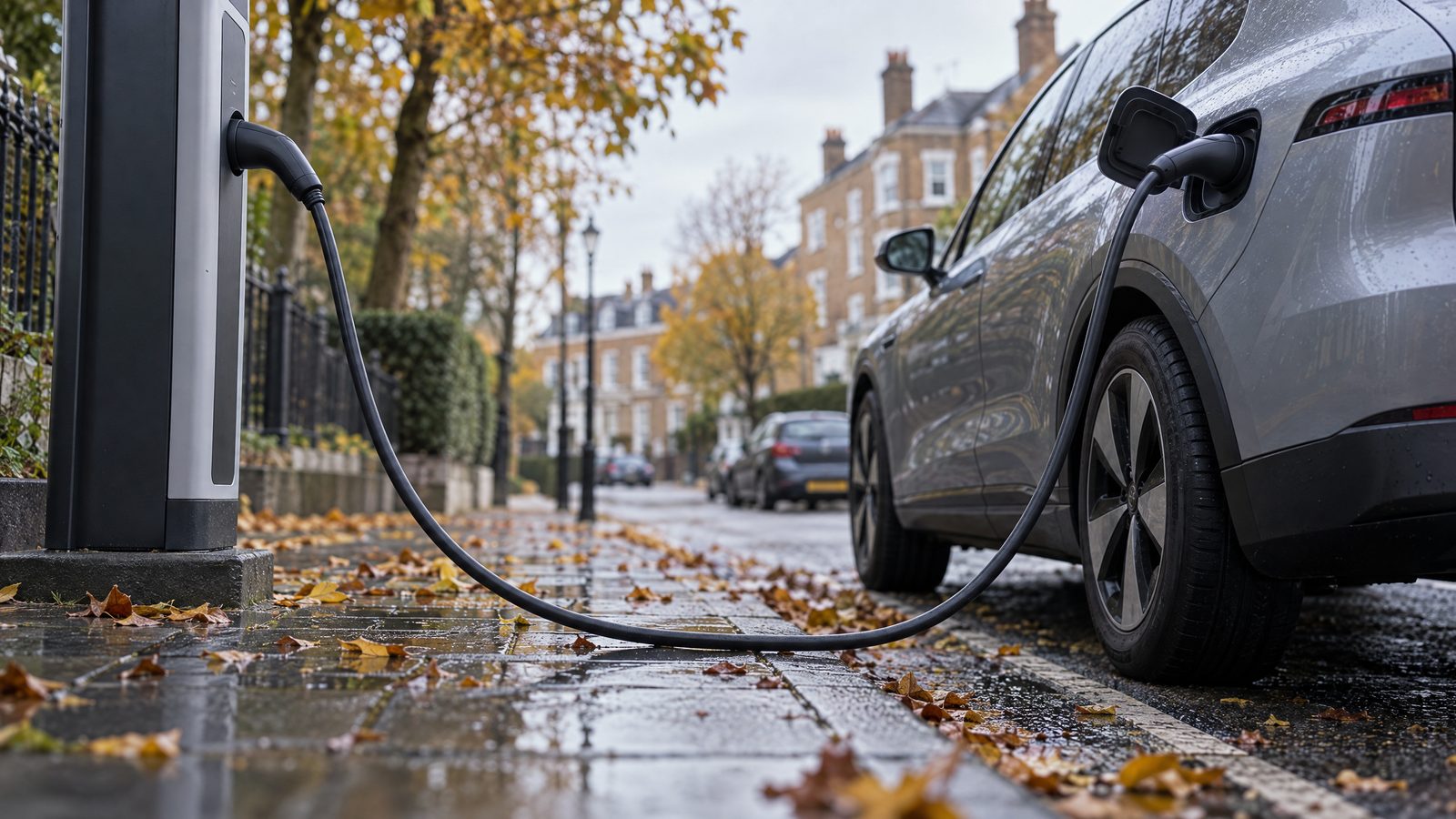

Legislation clarifying the VAT treatment of public and workplace electric vehicle charging takes effect on 1 November 2026. It confirms that electricity supplied through those charging points is not supplied for domestic use, with the standard 20% VAT rate applying unless the supply is to a charity for non-business use.
The measure concerns publicly accessible charging points and workplace charging points across the United Kingdom. Its central distinction is between electricity supplied through those facilities and electricity that qualifies for domestic-use relief. It is a legislative clarification of tax treatment, rather than an announcement that every charging session will attract a newly created charge.
For public charging, the legislation confirms that electricity supplied through a publicly accessible point does not count as a domestic supply. The same clarification applies to electricity supplied through a workplace charging point. Both types of supply are therefore standard-rated for VAT, subject to the stated exception for a charity receiving electricity for non-business use.
That exception is important to the scope of the measure. The standard-rate treatment is not expressed as an absolute rule covering every recipient without qualification. A supply to a charity for non-business use falls outside the stated standard-rating position. The distinction rests on both the recipient being a charity and the supply being for non-business use.
The clarification also addresses Climate Change Levy treatment. Electricity supplied through publicly accessible and workplace charging points is not treated as being supplied for domestic use for that purpose either. This is a separate tax-treatment point alongside the VAT clarification; the 20% figure relates to the standard VAT rate, not to the levy.
The legislation follows a tribunal judgment concerning electric vehicle charging. The position taking effect on 1 November expressly confirms the non-domestic classification of electricity supplied through public and workplace charging points. That classification is the basis for the standard VAT treatment described in the clarification, while retaining the charity exception.
Charging at a residential property is not addressed in the same blanket terms. A general supply of electricity to a home can still qualify for domestic-use relief, subject to the applicable rules. Some separate supplies to residential charging points can also qualify. The clarification therefore does not place all electricity used to charge an electric vehicle into one tax category.
The distinction between a general household electricity supply and a separate residential charging-point supply remains relevant. Both can potentially qualify for domestic-use relief, but the position for separate residential supplies is limited to some such supplies. Neither statement amounts to an unconditional assurance that every residential charging arrangement receives that relief.
For anyone comparing the treatment of charging in different settings, the confirmed categories are public, workplace and qualifying domestic supplies. Electricity supplied through public and workplace points is classified as non-domestic. Home electricity and some separate residential charging supplies remain capable of qualifying for domestic-use relief under the rules.
The change should not be read as evidence of a particular increase in charging prices. Its stated effect is to clarify the classification and tax treatment of the electricity supplied. From 1 November, that means a confirmed standard rating for public and workplace charging, with the charity exception, while preserving the possibility of domestic-use relief for qualifying home and residential supplies.