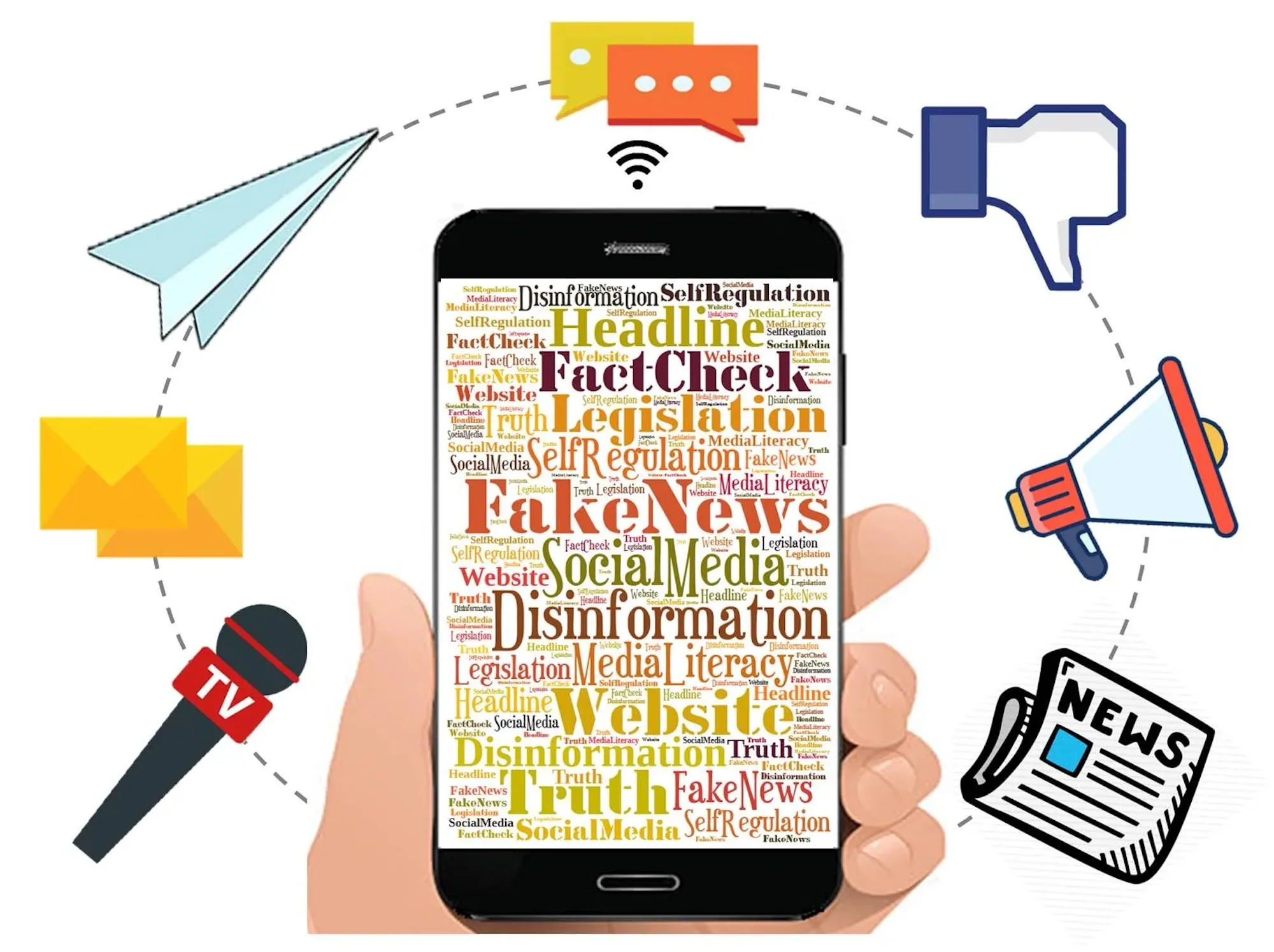

As we navigate through 2024, a year marked by a record number of national elections, ensuring that voters have access to accurate, fact-based information has never been more crucial. The rise of disinformation, exacerbated by the misuse of AI technologies to create false narratives, presents a significant challenge. This article examines recent legislation aimed at combating ‘fake news’ and explores the role of AI, including AI detectors, in maintaining news integrity.
https://www.seedworld.com/europe/2022/09/09/fake-news-throughout-history/
The Misuse of “Fake News” Laws
Governments have sometimes exploited “fake news” legislation to stifle independent journalism by labelling it as disinformation. In 2022, 39 out of 363 journalists imprisoned worldwide were detained under such laws, according to the Committee to Protect Journalists. Even well-intentioned laws, like those in Germany targeting hate speech and Holocaust denial, can lead to concerns about potential government overreach.
While the United Kingdom’s Online Safety Act and similar legislation are significant in the broader context of online safety and algorithm regulation, this study focuses on 32 “fake news” policies enacted or proposed between 2020 and 2023 in 31 countries, 11 of which are holding elections in 2024.
Key Findings
- Vague Definitions: Many of the “fake news” laws analysed suffer from vague or ambiguous definitions, leading to potentially arbitrary enforcement. This issue is compounded by the use of AI tools, which may not always accurately differentiate between true and false information. The lack of clear parameters in legislation creates challenges for AI systems, making them susceptible to errors or biases in identifying what constitutes “fake news.”
- Problematic Definitions of Journalism: The definitions of journalism in these laws are often unclear or poorly defined. AI systems designed to monitor and enforce these laws might struggle with these ambiguous definitions, leading to the unintended labelling of legitimate journalism as “fake news,” particularly if AI tools are not adequately trained to handle nuanced contexts or if the definitions themselves are too broad or imprecise.
- Government Control: A significant concern is the potential for AI technologies to reinforce government control over the press. When definitions of “fake news” and oversight mechanisms are not clearly established, AI tools may be leveraged to enforce government-friendly narratives, suppress dissent, and control the flow of information. This misuse of AI could further entrench governmental power over media and undermine press freedom if not carefully regulated.
Consequences of Poorly Defined Laws
The penalties for violating “fake news” laws vary widely, from fines to suspension of publications, and even imprisonment. Among the 27 policies with clear penalties, three-quarters include imprisonment, with sentences ranging from less than a month in Lesotho to up to 20 years in Zimbabwe.
These findings are alarming. Vague or absent definitions in “fake news” laws can easily be exploited to silence dissenting voices and curb press freedom. Even legislation crafted under leadership that supports an independent press must account for the potential of future regime changes or shifts in legal interpretation.
Navigating the Complexity of Disinformation
The integration of AI into the fight against disinformation presents both opportunities and challenges. On the positive side, AI can significantly enhance the detection and analysis of false information by sifting through vast amounts of data and identifying patterns that might indicate misinformation. Machine learning algorithms can help flag potentially misleading content and provide tools for fact-checking at scale. For publishers and journalists, checking the accuracy of AI-assisted content is just as important, particularly when a generated response includes unsupported claims or questionable information. GPTZero can help with this through its hallucination detector, which gives writers another way to review AI-generated content before it reaches readers.
However, this technology can also be a double-edged sword. The same AI systems that can identify false information might be employed to enforce vague or poorly defined “fake news” laws. When AI tools are used in this context, they may inadvertently contribute to the suppression of legitimate journalism if the definitions of “fake news” are unclear or overly broad. This misuse of AI could lead to censorship and undermine press freedom, as governments might leverage these technologies to control narratives and target dissenting voices.
Thus, while AI holds promise for improving the accuracy and efficiency of information dissemination, it is crucial to ensure that its implementation is transparent and operates within a framework of clear, well-defined guidelines. Policymakers must carefully balance the benefits of AI in combating disinformation with the risks of misuse, ensuring that AI tools do not become instruments of censorship.
Approaches to “Fake News” Policy
- COVID-19 Focused Legislation: During the COVID-19 pandemic, many countries implemented legislation specifically targeting misinformation related to the virus. AI detectors could have played a crucial role in monitoring compliance with these pandemic-related misinformation laws by analyzing and flagging content that contradicts official health directives or spreads false information about the virus.
However, the deployment of AI detectors in this context presents several challenges. Ensuring that these tools are used fairly and accurately is paramount. AI systems, if not properly designed and calibrated, might misidentify legitimate information as false or vice versa. For instance, nuanced scientific discussions or emerging research that challenges prevailing narratives might be wrongly flagged as misinformation.
Furthermore, there is a risk that governments could leverage AI detectors not only to address genuine misinformation but also to suppress critical voices or dissenting opinions. This could result in a chilling effect on free expression and undermine trust in public health communications.
To mitigate these risks, it is essential to establish robust oversight mechanisms and transparent criteria for the use of AI detectors. Clear guidelines should be set to ensure that AI tools are employed in a manner that respects both the need for accurate information and the principles of free speech.
- Broader Legislation with Expansive Definitions: In the context of broader legislation targeting misinformation related to national security, economic stability, or social harmony, AI has the potential to play a significant role in identifying and managing these expansive categories of false information. AI systems can be employed to sift through vast amounts of data, flagging content that falls within these broad definitions.
However, the use of AI in this area raises critical implications for press freedom and the integrity of information. When legislation includes expansive definitions that cover a wide range of topics, AI tools might struggle with the nuanced and context-dependent nature of such content. For example, content critical of government policies or reporting on sensitive issues could be mistakenly classified as harmful to national security or social cohesion by AI algorithms.
The broad application of AI to monitor and control information under these laws poses several risks:
- Overreach and Misuse: AI systems could be used to enforce vague or overly broad definitions, leading to the suppression of legitimate journalistic work. Content that questions government actions or exposes critical issues might be unfairly categorised as harmful, thus stifling investigative journalism and dissent.
- Chilling Effect: The deployment of AI in managing misinformation about national security or social harmony could create a chilling effect, where journalists and media outlets might self-censor to avoid potential repercussions. This could reduce the diversity of viewpoints available to the public and undermine the role of a free press in democratic societies.
- Bias and Accuracy: AI tools are not infallible and can exhibit biases based on their training data or the algorithms used. Inaccuracies in AI detection could lead to the misclassification of legitimate content as harmful, further complicating the landscape of information management.
To address these challenges, it is crucial to implement stringent oversight and transparency measures for the use of AI in monitoring misinformation. Clear and precise definitions in legislation, along with independent review processes, can help ensure that AI is used responsibly and does not infringe upon press freedom or suppress valuable public discourse.
Defining “Fake News”:
- AI Detection Challenges: The challenges of defining “fake news” are further complicated when artificial intelligence (AI) tools are employed for content moderation and enforcement. AI systems, which rely on algorithms and training data, often struggle with vague or broad definitions of “fake news.” These difficulties can significantly impact the accuracy and fairness of content moderation efforts.
- Ambiguity in Definitions: When definitions of “fake news” are vague or overly broad, AI tools may encounter difficulties in accurately distinguishing between false information and legitimate content. For instance, if a definition is not specific about what constitutes false or misleading information, AI systems might misclassify nuanced or context-dependent content. This can lead to an increase in both false positives (legitimate content flagged as fake) and false negatives (false information not detected).
- Contextual Understanding: AI algorithms often lack the ability to fully understand the context and intent behind content. Vague or broad definitions require AI to make nuanced judgments that are challenging to program into algorithms. As a result, AI systems may struggle with differentiating between satire, opinion, and factual reporting, which can affect the overall effectiveness of content moderation.
- Potential for Bias: AI systems are influenced by their training data, which can introduce biases into the detection process. When definitions of “fake news” are ambiguous, these biases can be exacerbated, leading to unfair treatment of certain types of content or perspectives. This is particularly concerning when AI tools are used to enforce laws or policies that lack clear and precise definitions.
- Impact on Press Freedom: The challenges faced by AI in interpreting broad or vague definitions of “fake news” can have serious implications for press freedom. Misclassification of journalistic content as “fake news” can result in unwarranted censorship and undermine the ability of the media to perform its role in a democratic society.
To mitigate these challenges, it is essential for policymakers to establish clear, precise definitions of “fake news” and ensure that AI tools used for content moderation are designed with robust oversight and transparency. This approach will help balance the need for effective misinformation management with the protection of press freedom and the accuracy of content moderation.

https://www.kaspersky.com/resource-center/preemptive-safety/how-to-identify-fake-news
Authority to Decide What’s “Fake”:
A critical aspect of “fake news” legislation is determining who holds the authority to decide what constitutes “fake news” and how these determinations are made. Centralising this authority within a single government body or using AI systems without appropriate oversight raises significant concerns:
- Centralised Control: Granting a single government authority the power to define and enforce “fake news” laws can lead to abuses of power and censorship. Historical examples show that centralised control over information often results in the suppression of dissenting voices and the manipulation of public perception. It is essential to have checks and balances to prevent such overreach.
- AI System Oversight: Relying on AI systems to make determinations about “fake news” requires careful oversight to ensure fairness and accuracy. Without transparent criteria and independent review mechanisms, AI tools might reinforce existing biases or misclassify legitimate content. It is crucial to establish oversight processes that involve diverse stakeholders to ensure that AI decisions are made with integrity.
Conclusion
In the 2024 election year, the potential risks associated with poorly defined “fake news” legislation are significant. The interplay between AI, government regulation, and media freedom presents complex challenges. While AI can be a powerful tool in combating misinformation, its use must be balanced with rigorous oversight to avoid infringing on press freedom and stifling legitimate discourse. Policymakers must prioritise clear definitions and fair enforcement practices to protect the integrity of information and support a vibrant, independent press.