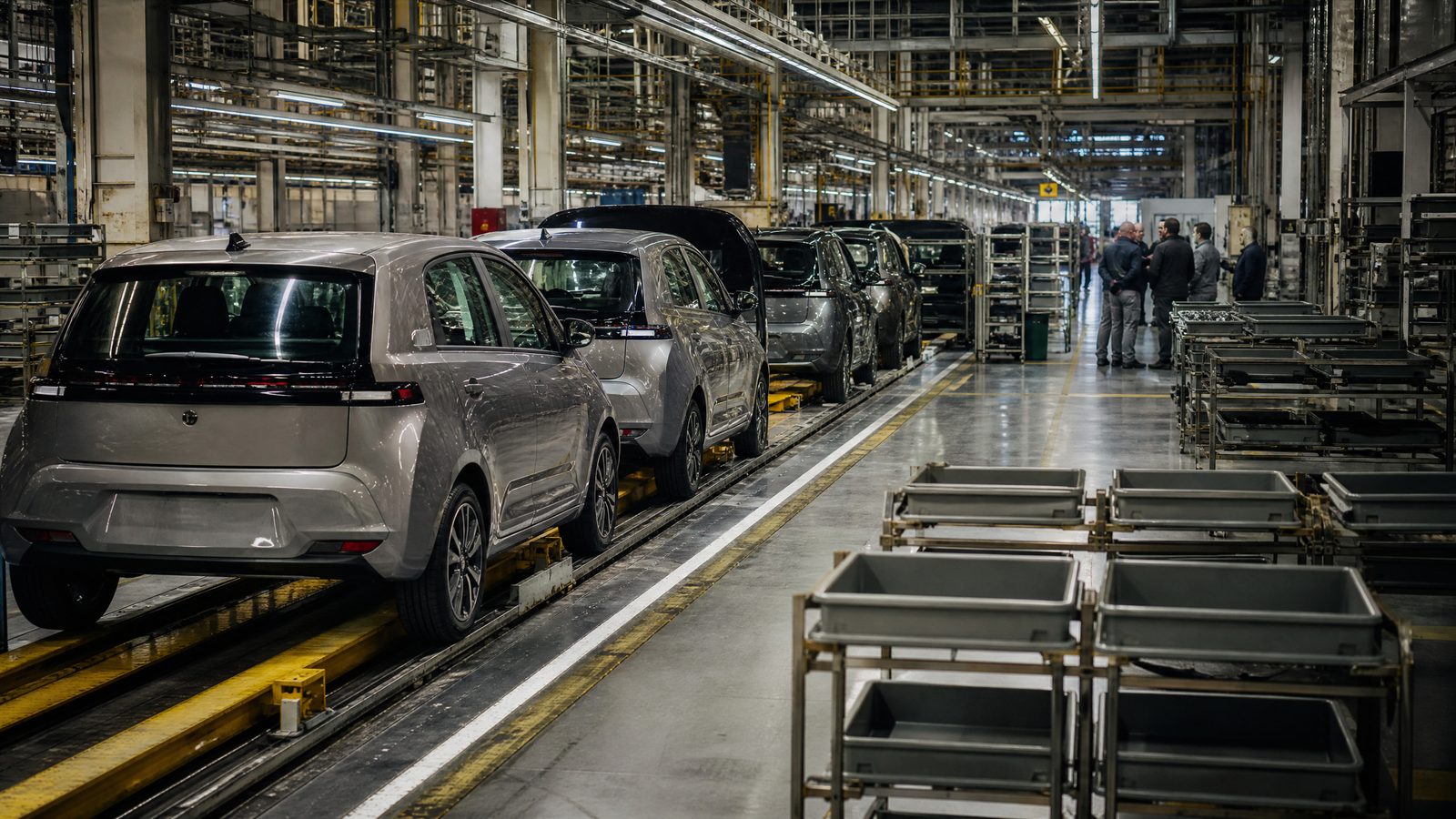

Stellantis has announced a temporary halt in production at its Mirafiori plant in Turin. The stoppage, scheduled to take place from the second to the fourth of September 2026, has brought to light the ongoing supply chain vulnerabilities affecting the European automotive sector. This development underscores a complex period for the industry, where shifting consumer preferences and logistical bottlenecks are creating challenges for major manufacturers.
Supply Chain Pressures and Shifting Consumer Demand
The core issue driving the temporary closure appears to be a significant disruption in the supply of crucial engine components. According to statements released by Stellantis, the production halt is a direct consequence of a shortage of parts originating from the Teksid plant located in Carmagnola. This facility is responsible for supplying essential elements for the assembly process at Mirafiori, and the current shortfall has made it impossible to maintain normal operations during the affected days.
The root cause of this shortage is an unexpected surge in demand for hybrid vehicles. As consumers across the United Kingdom and Europe increasingly seek out hybrid options as a bridge between traditional internal combustion engines and fully electric vehicles, manufacturers are finding themselves under immense pressure to keep pace. The stronger-than-expected appetite for these transitional models has strained the existing supply chain infrastructure, leading to the current bottleneck at the Teksid plant and the subsequent ripple effect on the Mirafiori assembly lines.
Conflicting Explanations for the Shutdown
While Stellantis has clearly attributed the production pause to the overwhelming success of its hybrid models and the resulting component shortages, an alternative narrative has emerged from the workforce representatives. The FIOM trade union, which represents a significant portion of the workers at the Mirafiori facility, has offered a starkly different explanation for the sudden halt in manufacturing activities.
According to the union’s assessment, the underlying reason for the stoppage is a concerning drop in consumer demand for the Fiat 500 city car model. The FIOM representatives argue that the market appetite for this specific vehicle has waned, prompting the company to adjust its production schedules accordingly. This conflicting viewpoint highlights the underlying tensions between management and labour organisations as they navigate the volatile automotive market. Both perspectives represent the stated positions of the respective parties, reflecting the complex realities of managing a large-scale manufacturing operation in a rapidly changing economic environment.
The Broader European Automotive Landscape
The situation at the Mirafiori plant serves as a microcosm of the broader challenges facing the European automotive industry. For consumers in the United Kingdom who closely track vehicle availability and industry trends, this development offers valuable insights into the current state of the market. The transition towards more sustainable forms of transportation is proving to be anything but smooth, with manufacturers constantly having to adapt to fluctuating demand signals and supply chain constraints.
The fact that high demand for a specific category of vehicles—in this case, hybrids—can lead to a factory shutdown is a rare and telling phenomenon. It illustrates the delicate balance that automakers must maintain as they attempt to phase out older technologies while simultaneously scaling up production of newer, more popular models. The inability to seamlessly pivot production lines to meet sudden spikes in demand exposes the rigidities inherent in traditional automotive manufacturing processes.
Recent Operations and Future Outlook
Adding to the frustration of the current situation is the timing of the stoppage. The Mirafiori plant had only recently resumed operations following a scheduled four-week summer shutdown. The workforce had just returned to the assembly lines, anticipating a steady period of production leading into the autumn months. Instead, they are now faced with another, albeit brief, interruption to their working schedules.
As Stellantis works to resolve the supply chain issues originating from the Carmagnola facility, the industry will be watching closely to see how quickly normal production can be restored. The conflicting narratives surrounding the cause of the halt will likely continue to be a point of discussion, but the immediate priority for the company will be to satisfy the robust demand for its hybrid offerings. Ultimately, the events unfolding at the Mirafiori plant serve as a stark reminder of the intricate and often unpredictable nature of the global automotive supply chain, where a surge in popularity can be just as disruptive as a sudden decline.