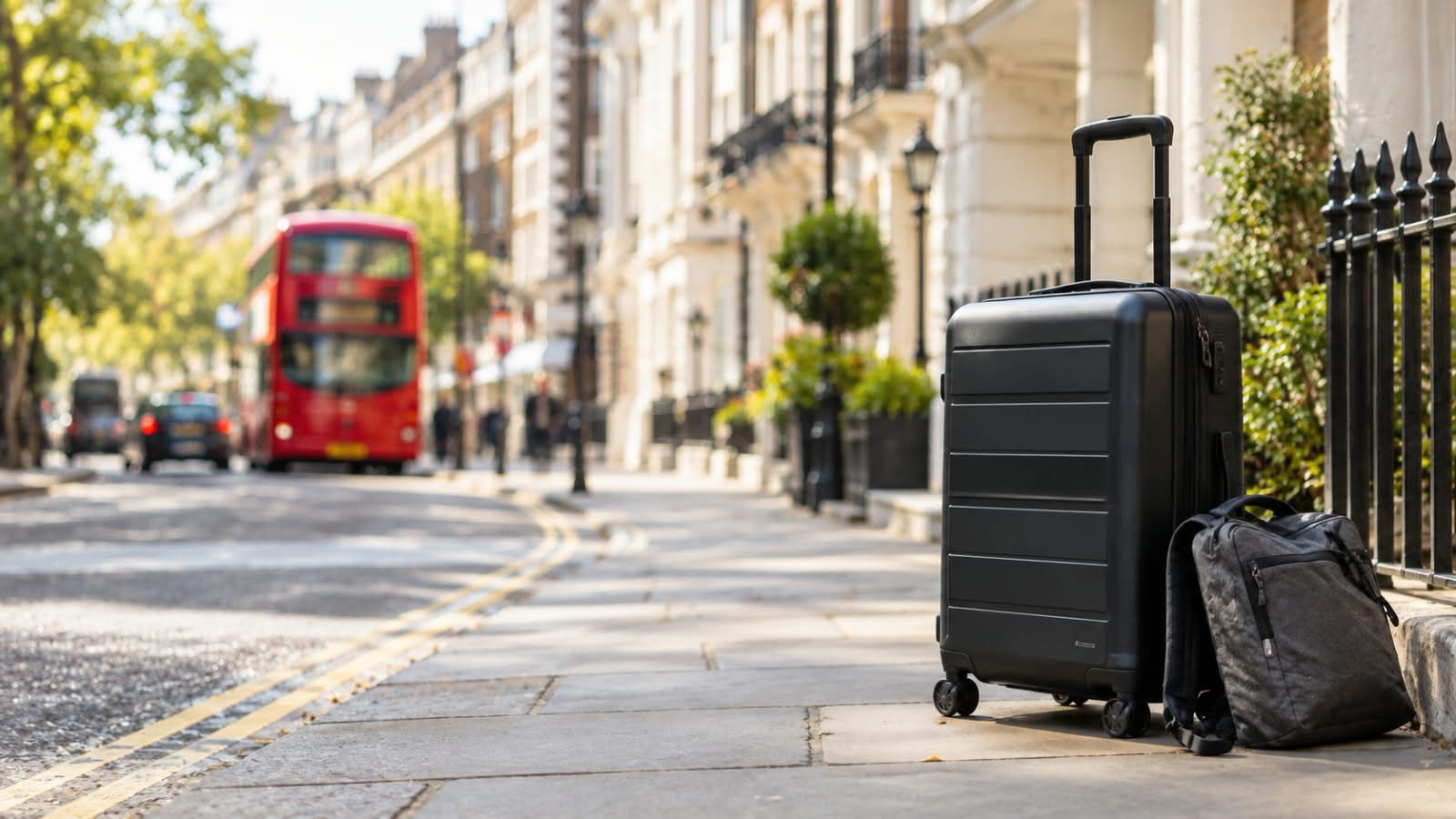

Hotel checkout is usually where the problem starts.
It is 11am. Your flight is at 8pm. Your Eurostar is in the evening. Your bags are packed, but the day is not over. You still want lunch, maybe one more museum, a walk by the river, or a final bit of shopping before heading home.
Then reality gets involved.
Dragging a suitcase through Covent Garden is not charming. Taking it on the Tube at rush hour is worse. Leaving it with a hotel on the wrong side of London can quietly steal two hours from the day.
This is the part of travel planning people often leave until the morning of departure.
London is a brilliant city for a last-day wander, but only if your luggage is not running the schedule. A little planning can turn those awkward hours into one of the easiest parts of the trip.
Key Takeaways
- The gap between checkout and departure is one of the easiest parts of a London trip to get wrong.
- Bags should be stored near your departure route, not automatically at the hotel.
- A small day bag makes the final day far easier, especially with children, medication, chargers or documents.
- London’s airports, rail stations and visitor numbers make smart luggage planning more important.
- The best final day plan is simple: store the big bag, keep essentials close, and avoid crossing London twice.
Why this matters more now
London is busy, and travel demand is still high.
VisitBritain forecasts 44.2 million inbound visits to the UK in 2026, with visitor spending expected to reach £33.9 billion. Heathrow handled 84.5 million passengers in 2025, making it the airport’s busiest year to date. Eurostar also carried 20 million passengers in 2025, with growth on London-Amsterdam, London-Brussels and London-Paris routes.
That means more travellers moving through hotels, stations, airports and city streets with luggage in tow.
Most people plan the big parts of a London trip: where to stay, what to see, where to eat and how to get to the airport. The smaller question often gets ignored:
What happens to the bags after checkout?
That one detail can shape the whole final day.
Do not store bags in the wrong place
The easiest option is often to leave luggage at the hotel.
Sometimes that works perfectly. If your hotel is close to your final route, it makes sense. But if you are staying in Kensington and leaving from St Pancras, or staying in Shoreditch and flying from Heathrow, returning to the hotel may add unnecessary travel.
Before deciding where to store your bags, look at the day backwards.
Where do you leave from?
What time do you need to be there?
Which Tube, train, taxi, or coach route will you use?
Where do you actually want to spend your final few hours?
The best storage spot is usually near your departure route, not necessarily near your bed from the night before.
For example, if you are taking the Eurostar, storing luggage near King’s Cross or St Pancras can make the day easier. If you are flying from Gatwick, storage near Victoria or London Bridge may work better, depending on your route. If Heathrow is the final stop, check whether staying closer to the Piccadilly line, Elizabeth line or Heathrow Express route saves time.
London rewards good routing.
It punishes backtracking.
Pack a final-day bag before checkout
The big suitcase should not be opened again on the pavement, in a café or beside a station bench.
Before checkout, pull out what you need for the rest of the day and keep it in a small bag.
That may include:
- Passport or ID
- Wallet
- Phone
- Charger and power bank
- Medication
- Glasses or contact lenses
- Travel documents
- A light layer
- Snacks
- Water bottle
- Small toiletries
- Any items needed for children
This is where smart packing really helps. It is not about making the bag look neat. It is about keeping the day from becoming annoying.
If the suitcase is going into storage, treat it as unavailable until departure time. Anything important should stay with you.
Use luggage storage when it saves real time
Luggage storage is useful, but only when it fits the route.
A cheap storage option that sends you 30 minutes out of the way may not be cheap by the time you add transport, tiredness and lost time. A slightly more convenient location can be worth it if it lets you enjoy the final day without worrying about the clock.
When choosing a storage point, check:
- Opening and closing hours
- Distance from your station or airport route
- Whether booking is required
- Bag size limits
- Security details
- Insurance or guarantee terms
- Reviews from recent users
Do not assume all storage options work the same way. Some are dedicated facilities. Others are local shops, hotels or businesses that store bags as an added service.
The right choice depends on the day you have planned.
Keep the final day light
The last day of a trip is not the best time to plan three major activities across London.
People are tired. Phones are low. Children are less patient. Weather may change. Transport may take longer than expected. A simple plan usually works better.
Choose one area and enjoy it properly.
If you are leaving from St Pancras, spend time around King’s Cross, Bloomsbury, Camden or the British Library. If you are leaving through Victoria, keep the plan near Westminster, St James’s Park or Belgravia. If London Bridge is on your route, Borough Market, the river, Southwark and Tower Bridge can make sense.
This kind of planning sounds basic, but it avoids the classic final-day mistake: trying to squeeze in one more thing and spending most of the time in transit.
Think about the airport before the airport
The final few hours should also prepare you for security and boarding.
The UK Department for Transport reported that 86% of surveyed passengers in 2025 were satisfied or very satisfied with airport security screening, and 63% said they queued for no more than five minutes. That is reassuring, but it does not mean every airport moment is smooth.
Travellers still need to think about liquids, electronics, medication, documents, children’s items and anything that may need to be removed from a bag.
If you have used luggage storage during the day, give yourself time to repack calmly before reaching the airport or station. Do not leave the reshuffle until the security line.
A good packing checklist can help here, especially if you are travelling with carry-on luggage and need to keep essentials easy to reach.
Families need an even clearer plan
For families, the 11am suitcase problem can become bigger quickly.
Children get tired. Snacks disappear. Pushchairs, backpacks and small suitcases make stairs and busy stations harder. Nobody wants to hunt for medicine, wipes or a charger after the main bags have been stored.
A simple family rule helps: each person keeps what they need for the day, but one adult carries the shared essentials.
That could include snacks, water, medication, wipes, a spare layer, and entertainment for the journey. The main luggage should stay closed until departure.
If children are old enough, explain the plan before leaving the hotel: where the bags are going, what you are doing before travel, and when you are heading to the station or airport. Fewer surprises usually means fewer meltdowns.
For adults too.
Business travellers should plan around meetings
The same issue affects business travellers.
A late flight after a London meeting sounds efficient until you are carrying a suitcase into a client office, restaurant or co-working space. If the hotel is far away, leaving the bag there may not work. If the storage point closes too early, that creates a different problem.
For work trips, store luggage near the last meeting or near the departure route. Keep laptop, charger, documents, medication, and a change of essentials with you.
Also think about appearance. If a meeting matters, do not rely on pulling a jacket or shirt from a tightly packed suitcase ten minutes beforehand. Creased clothes and station bathrooms are not a great combination.
Final thought
The last day of a London trip can be surprisingly good.
There is time for breakfast without rushing. One more walk. One more shop. One last coffee. Maybe a museum you missed earlier in the week.
But only if the luggage is handled properly.
The suitcase should support the day, not control it.
So before checking out, ask one simple question: where do the bags need to be so the rest of the day still feels easy?
Answer that well, and London gives you a few more hours back.