
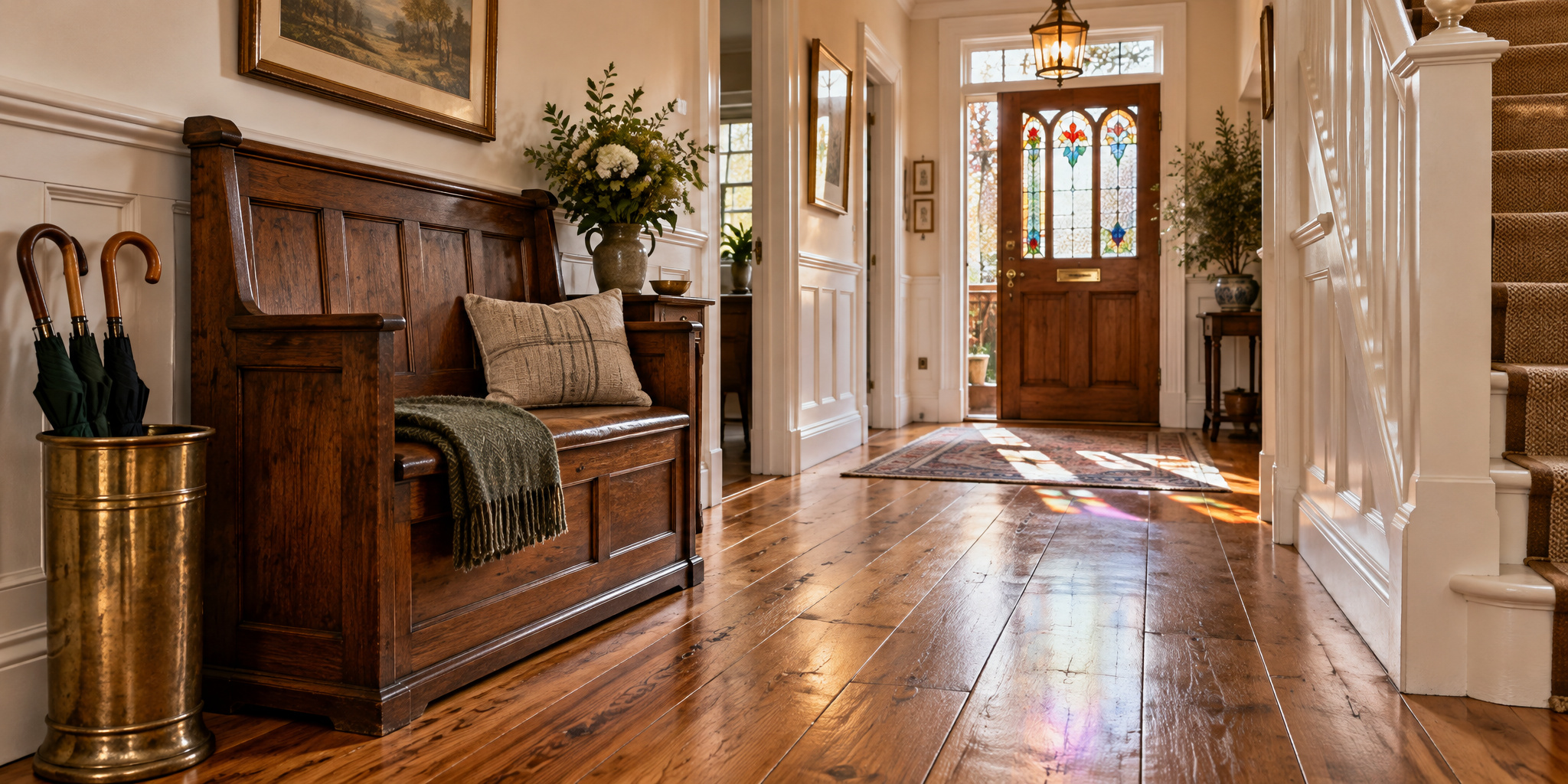

Arriving home is a small ritual that most homes handle badly. The door opens, bags are dropped, shoes are kicked off, post is dumped on the nearest surface, and within seconds the hallway has become a repository for everything the day has brought in. The hallway bench addresses that moment directly, and its quiet return reflects a wider reassessment of how entrances work.
It is a modest piece of furniture. A seat, some storage, perhaps a few hooks above it. Yet it solves a set of problems that almost every household recognises, and it does so without demanding much space.
The Problem With Arriving
Think about what actually happens when you walk through the front door.
You are carrying something—a bag, shopping, a laptop case, a child’s school bag. You need somewhere to put it down. Your coat needs to come off. Your shoes may need to come off, particularly in wet weather. The post needs to go somewhere other than the floor. A dog may be greeting you enthusiastically. A child may be asking a question before the door is closed.
Without a designated place for these things, they end up wherever there is space. Coats go over the bannister. Shoes pile by the door. Bags land on the stairs. The hallway becomes cluttered within minutes, and it stays that way.
A bench interrupts that pattern. It provides a place to sit, a place to store, and a place to pause before the rest of the house takes over.
Why Benches Are Returning
Several factors have driven the revival.
The hallway has been reassessed. As homeowners have come to see the entrance as a room rather than a corridor, they have begun to furnish it accordingly. The bench is the most useful piece of furniture a hallway can hold.
Storage has become a priority. Homes are smaller, possessions are more numerous, and built-in storage is expensive. A bench with storage beneath offers a practical solution at modest cost.
The boot room influence. The rise of the boot room, and the wider interest in practical, hard-working spaces, has popularised the bench as a piece of domestic infrastructure rather than decoration.
Remote working. With more people at home during the day, the hallway is used more often, and the arrival ritual happens several times rather than once.
Design has improved. Benches are now made in a wide range of styles, from simple painted timber to upholstered seats with integrated shelving. There is a bench to suit almost any hallway.
What a Good Bench Does
A hallway bench earns its place by performing several functions at once.
It provides seating. Putting on shoes, taking off boots, or simply pausing for a moment is easier when sitting down. For older people or anyone with mobility difficulties, this is more than a convenience.
It offers storage. The space beneath the seat can hold shoes, baskets, bags, or seasonal items. Lift-up seats, drawers, and open shelves all provide access without consuming additional floor space.
It anchors the hallway. A bench gives the entrance a focal point and a sense of order. It signals that the space has been considered rather than merely passed through.
It supports the rituals of arrival. Hooks above the bench take coats and bags. A shelf or a small tray holds keys and post. A mirror above makes a final check possible before leaving. Together, these elements create a functioning arrival zone.
Choosing the Right Bench
The right bench depends on the hallway, and hallways vary enormously.
Measure the depth. A bench that projects too far into a narrow hallway will obstruct movement. Slim benches, around 30cm to 40cm deep, suit tight spaces. Deeper benches offer more storage but require more room.
Consider the height. A seat height of around 45cm suits most adults. Lower benches suit children but are uncomfortable for adults; higher ones suit taller users but may be awkward for shorter ones.
Choose the storage type. Lift-up seats offer the most storage but require clearance above. Drawers are convenient but reduce the internal space. Open shelves are accessible but visible, which means the contents must be tidy.
Think about materials. Painted timber suits traditional hallways. Oak and walnut suit period properties. Upholstered benches add softness and comfort but are less practical in a hallway used by muddy shoes.
Plan for hooks and shelves. A bench works best as part of a system. Hooks above, a shelf or tray for keys, a mirror, and perhaps a basket for post. These elements should be planned together.
The Small Hallway Version
Not every hallway can accommodate a full bench, and in a compact flat the idea may seem impractical.
Several alternatives deliver much of the benefit. A slim shoe bench with a padded top fits into a narrow space. A bench that folds flat against the wall can be opened when needed. A storage ottoman serves as both seat and cupboard. A wall-mounted folding seat takes up no floor space at all when not in use.
Even a simple stool with a basket beneath it provides somewhere to sit and somewhere to put things. The principle matters more than the specific piece of furniture. Place yours next to a hallway radiator, and you have somewhere warm in winter to sit and put your shoes on.







