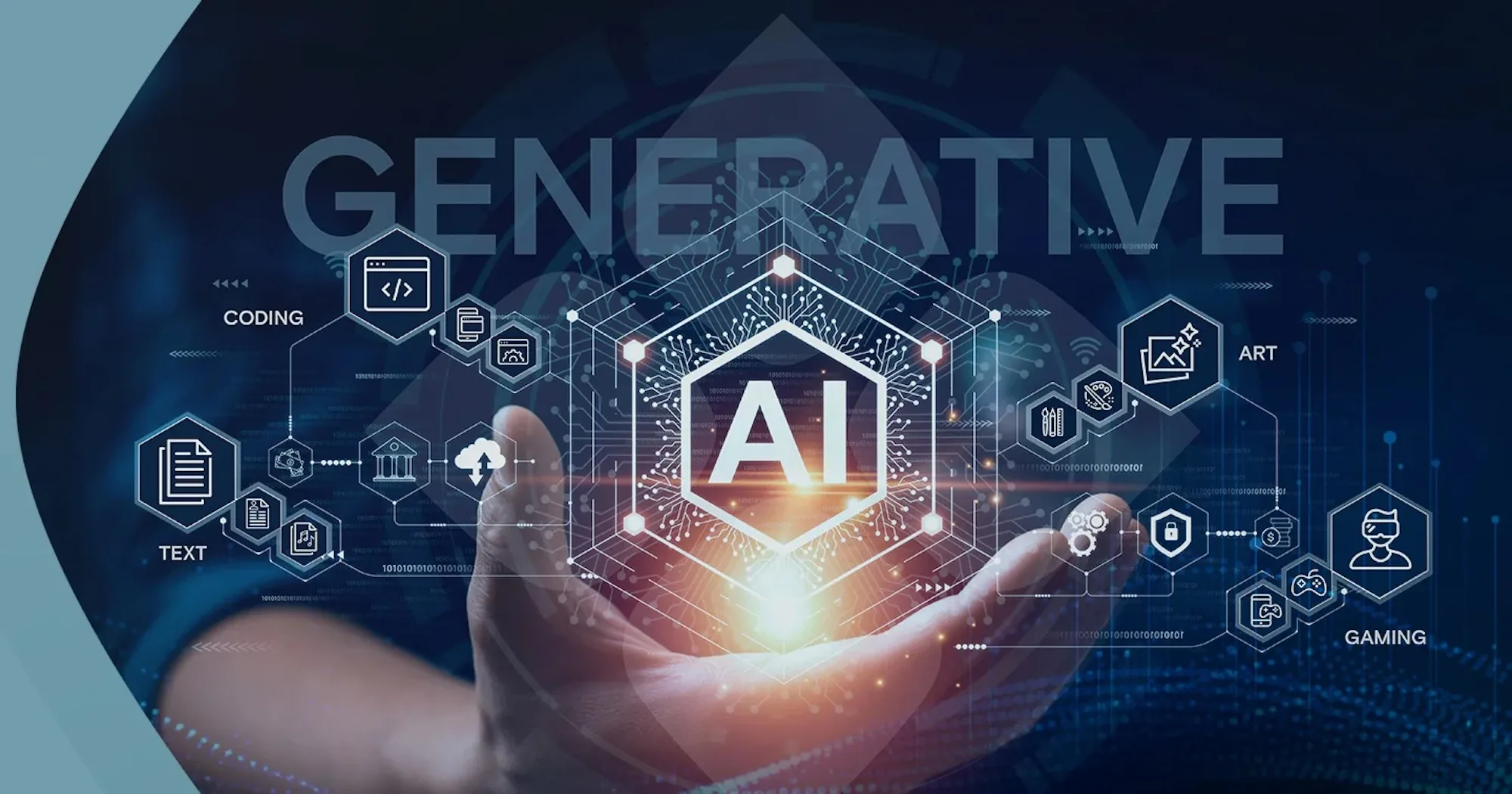

In recent years, the technological landscape has witnessed groundbreaking advancements, among which Generative AI stands out as a revolutionary force. This subset of artificial intelligence, distinguished by its ability to create content—ranging from text and images to complex data models—has begun to reshape modern businesses across various sectors. From automating routine tasks to enabling sophisticated data-driven strategies, generative AI is redefining the boundaries of innovation and efficiency.
Companies specialising in Generative AI development are at the forefront of this transformation, pushing the limits of what these technologies can achieve. This article delves into how generative AI is changing modern businesses, exploring its applications, benefits, challenges, and future prospects.
Understanding Generative AI

Generative AI refers to algorithms that can generate new content based on the data they have been trained on. Unlike traditional AI models that might classify or analyse data, generative models like GPT-4 (for text) or DALL-E (for images) can produce novel outputs that mimic human creativity. These models are built on advanced architectures such as Generative Adversarial Networks (GANs) and Transformer networks, which enable them to learn patterns and generate realistic data.
Key Technologies
- Generative Adversarial Networks (GANs): GANs consist of two neural networks—the generator and the discriminator—that work in opposition to create and evaluate data. The generator creates new data, while the discriminator assesses its authenticity. This adversarial process results in increasingly realistic outputs.
- Transformer Models: Transformer-based models like GPT-4 leverage attention mechanisms to process and generate sequences of data. They are highly effective in generating coherent and contextually relevant text, making them ideal for applications in content creation and customer interaction.
Applications in Modern Businesses
Generative AI is being integrated into various business functions, leading to significant improvements in productivity, creativity, and customer engagement. Here are some key areas where generative AI is making an impact:
1. Content Creation
One of the most prominent applications of generative AI is in content creation. Businesses are utilising AI to produce written content, generate images, and create multimedia materials efficiently.
- Text Generation: AI models like GPT-4 can draft articles, reports, and marketing copy, significantly reducing the time and effort required for content creation. For example, companies can automate the generation of product descriptions, social media posts, and even complex technical documents.
- Image and Video Synthesis: Tools like DALL-E and other image-generating models enable businesses to create high-quality visuals without needing a team of designers. These models can generate custom graphics for marketing campaigns, create product prototypes, and even assist in visual storytelling.
2. Personalised Customer Experiences
Generative AI enhances customer experiences by enabling more personalised and interactive interactions.

- Chatbots and Virtual Assistants: AI-powered chatbots can provide instant, context-aware responses to customer inquiries. These systems can handle a wide range of interactions, from answering common questions to guiding users through complex processes.
- Personalised Recommendations: Generative AI algorithms analyze customer data to offer tailored recommendations. For instance, e-commerce platforms use these models to suggest products based on past purchases and browsing behaviour.
3. Product Development and Innovation
Generative AI accelerates product development by facilitating design, prototyping, and testing.
- Design Automation: AI tools can generate design variations and prototypes, helping businesses explore new concepts and iterate more quickly. This is particularly useful in industries like fashion and industrial design.
- Simulation and Testing: Generative models can simulate various scenarios to test products’ performance under different conditions, reducing the need for physical prototypes and expediting the development cycle.
4. Data Analysis and Insights
Generative AI enhances data analysis by uncovering patterns and generating predictive models.
- Predictive Analytics: AI models can analyse historical data to forecast future trends and behaviours. This capability is invaluable for making informed business decisions, such as optimising inventory levels or anticipating market shifts.
- Synthetic Data Generation: In scenarios where real data is scarce or sensitive, generative AI can create synthetic datasets that mirror the characteristics of real data. This synthetic data can be used for training models and testing hypotheses without compromising privacy.
Benefits of Generative AI for Businesses
The integration of generative AI into business operations offers a multitude of benefits, including:
1. Increased Efficiency
Generative AI automates repetitive tasks and generates content at scale, freeing up human resources for more strategic activities. This leads to significant time and cost savings.
2. Enhanced Creativity
By providing tools that can generate novel ideas and content, generative AI augments human creativity. Businesses can leverage these capabilities to explore new designs, marketing strategies, and product innovations.
3. Improved Customer Engagement
Personalised interactions powered by generative AI result in more engaging and relevant customer experiences. This enhances customer satisfaction and loyalty, driving long-term business success.
4. Data-Driven Decision Making
Generative AI facilitates advanced data analysis and predictive modelling, empowering businesses to make more informed decisions based on comprehensive insights.
Challenges and Considerations
Despite its transformative potential, generative AI presents several challenges and considerations for businesses:
1. Quality Control
Ensuring the quality and accuracy of AI-generated content is crucial. Businesses must implement rigorous review processes to avoid errors and maintain high standards.
2. Ethical Concerns
The use of generative AI raises ethical issues related to content authenticity, privacy, and bias. Businesses must address these concerns by establishing clear guidelines and ensuring responsible use of AI technologies.
3. Data Privacy
Generative AI models often require large amounts of data to train effectively. Businesses must be cautious about data privacy and security, ensuring that sensitive information is handled appropriately.
4. Cost of Implementation
While generative AI can drive cost savings in the long run, the initial investment in technology and infrastructure can be substantial. Businesses need to evaluate the return on investment and plan for the associated costs.
Future Prospects

The future of generative AI in business is poised for continued growth and innovation. Several trends and developments are likely to shape its evolution:
1. Integration with Other Technologies
Generative AI will increasingly be integrated with other emerging technologies, such as augmented reality (AR) and the Internet of Things (IoT). This convergence will create new opportunities for interactive and immersive experiences.
2. Advancements in Model Capabilities
As AI research progresses, generative models will become more sophisticated, offering enhanced capabilities for generating high-quality content and more accurate predictions.
3. Regulatory Frameworks
The development of regulatory frameworks will address ethical and privacy concerns associated with generative AI. Clear guidelines will help businesses navigate the complexities of AI implementation responsibly.
4. Democratisation of AI Tools
The availability of user-friendly generative AI tools will enable smaller businesses and individual entrepreneurs to leverage AI capabilities, fostering innovation across a broader range of sectors.
Looking Ahead: The Future of Generative AI in Business
Generative AI is undeniably transforming modern businesses by driving efficiency, creativity, and data-driven decision-making. Its applications span content creation, customer engagement, product development, and data analysis, offering substantial benefits while also presenting challenges. As technology continues to advance, the integration of generative AI will become increasingly sophisticated, paving the way for new opportunities and innovations. Businesses that harness the power of generative AI effectively will be well-positioned to thrive in an ever-evolving digital landscape.