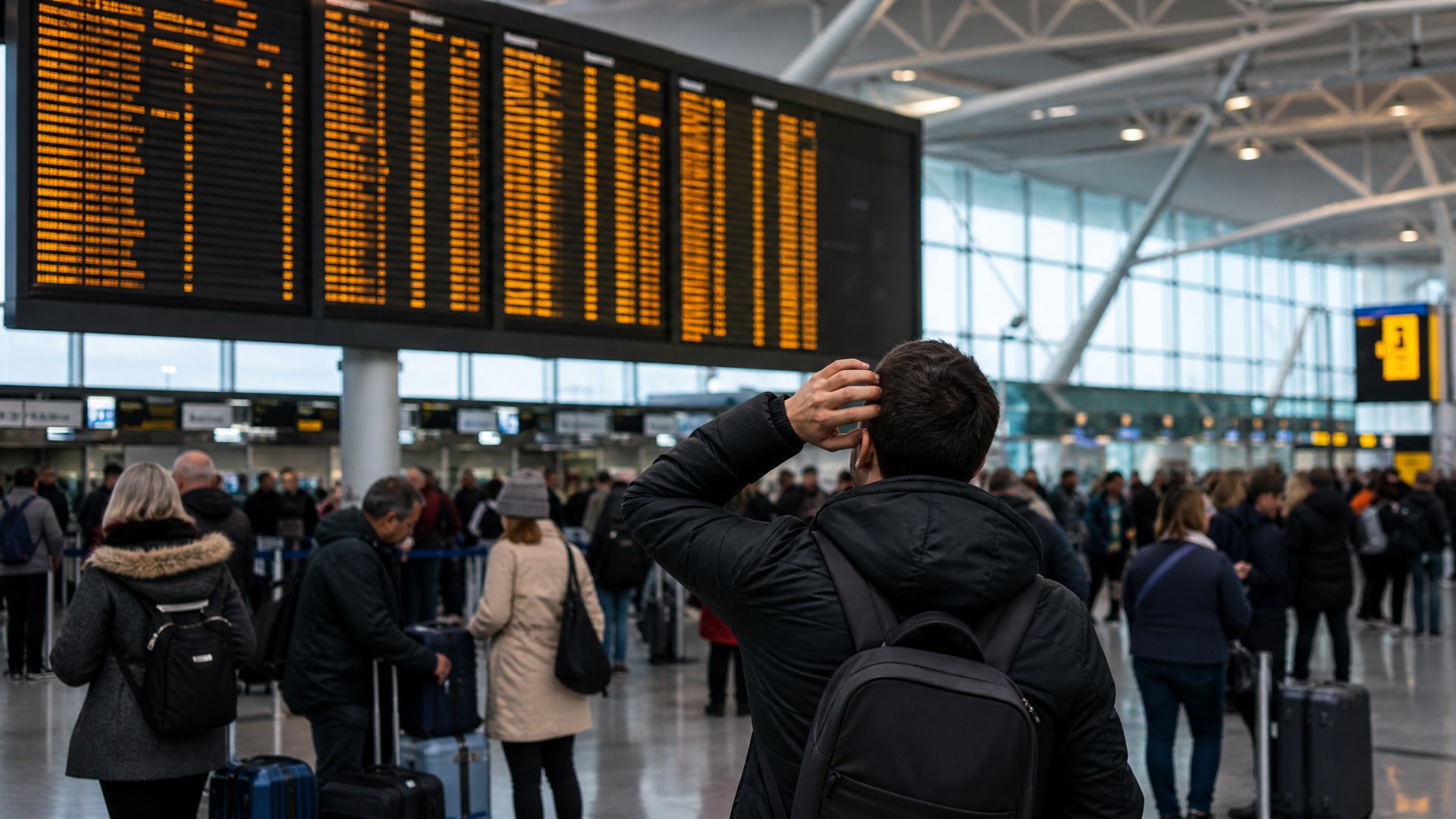

Holidaymakers across the UK are facing mounting disruption as summer travel peaks, with Manchester and Birmingham airports named among the worst for punctuality and new European border checks producing hours-long queues. The crisis has combined infrastructure and operational strain with rising costs, leaving passengers exposed to cancellations, lengthy delays and larger travel bills.
Manchester and Birmingham top the delay league
Data from the Civil Aviation Authority shows Manchester Airport now has the worst on-time performance of any major UK airport, with an on-time rate of 71.5 per cent. That places it well below the national average of 77 per cent on-time for UK airports, and marks a sharp deterioration as airlines and ground operators struggle to cope with summer demand.
Birmingham Airport is close behind, ranked second worst with a delay risk score of 27.5 per cent. The score reflects the probability of significant disruption based on recent operations, and has prompted concern among local tourism and business groups as the airport prepares for weeks of peak flying. Other hubs are also under stress, with Stansted, Bristol and Gatwick all recording on-time figures below the 77 per cent UK average, according to industry data.
Passengers report long queues at check-in and security, sporadic gate changes and last-minute cancellations, with knock-on effects for connecting travellers. Staff shortages, the rapid rebound in demand since pandemic restrictions eased and the difficulties of scaling ground operations quickly have all been cited by industry insiders as contributory factors.
New EU entry checks add hours to travel time
Compounding problems at UK airports, the European Union’s Entry/Exit System, known as EES, has introduced biometric passport checks that, in some cases, are creating queues of up to six hours at border control in continental Europe. The new system, designed to register arrivals and departures from the Schengen area, uses facial images and fingerprints to automate checks, but initial roll-out has caused severe bottlenecks at major continental hubs.
Airlines have warned passengers to allow far more time than previously for transfers into the EU and for return journeys. easyJet, among carriers issuing public advisories, has explicitly warned travellers that flights cannot wait for passengers delayed in EES queues. That position has left some holidaymakers stranded apart from their party, or forced to rebook flights at short notice, sometimes at substantial extra cost.
Airport authorities and airlines are engaged in urgent discussions with EU border agencies to ease throughput, but operational changes will take time. For now, passengers should expect longer processing times at many continental border posts, particularly at peak arrival windows, and factor this into travel plans.
Fuel prices, airspace restrictions and cancelled routes
Beyond border controls, airlines are contending with a separate set of pressures that are worsening disruption. Surging jet fuel costs continue to squeeze airline margins and influence network decisions. In some cases carriers have reduced frequencies or cancelled less profitable services to conserve fuel and manage crew rostering, leaving fewer options for travellers when delays occur.
Geopolitical tensions have also imposed airspace restrictions that lengthen flight times and reduce capacity on certain routes. Rerouting to avoid restricted zones increases fuel burn and complexity, and can push aircraft into unfavourable arrival windows, exacerbating airport congestion. Combined with tight aircraft utilisation plans, these factors have contributed to a pattern of late departures and missed connections.
The result is a summer in which operational fragility means a single technical fault, weather event or border delay can trigger cascading cancellations. Airlines say they are doing their best to reallocate aircraft and crews to keep as many flights as possible operating, but passengers are increasingly being asked to accept rebookings or vouchers rather than immediate alternatives, particularly on shorter notice disruptions.
Passenger rights and how to respond
Passengers affected by delays should be aware of their rights. Under UK261 rules, travellers whose flights are delayed by three hours or more because of an airline fault can claim compensation ranging from £220 to £520, depending on the length of the flight and other factors. The regulation applies when the delay is attributable to the carrier rather than extraordinary circumstances, such as severe weather or certain security incidents. Travellers should keep boarding passes, receipts and records of communications when making a claim.
Practical steps for passengers include checking the airline’s communications channels for real-time updates, arriving at airports significantly earlier than usual for departures to the EU during the early weeks of EES operation, and allowing extra connection time. For those intending to travel through continental hubs, booking direct flights where possible will reduce exposure to border queue risks. Travel insurance that covers delays and missed connections can provide an extra safety net, though policy terms and exclusions vary.
If a flight is cancelled, passengers are generally entitled to a refund or re-routing, meals and accommodation when necessary, and assistance in arranging onward travel. Engaging with the airline first is important, and escalations can be pursued through the regulator or dispute resolution services if the carrier fails to provide a satisfactory remedy.
Airport operators and airlines insist they are hiring seasonal staff, extending check-in and security capacity where feasible, and investing in technology to smooth flows. However, recruitment challenges and the speed of summer demand growth mean improvements may be incremental rather than immediate.
As the peak holiday period progresses, travellers should expect continued disruption in some locations while changes to border operations and airline schedules take effect. Government and industry bodies are under pressure to co-ordinate a response that reduces queue times, stabilises networks and clarifies passenger protections.
Looking ahead, passengers and industry watchers will be watching whether targeted measures, including temporary extra staffing at EU border posts, revised flight schedules to spread demand more evenly across the day, and further airline network adjustments, can ease congestion through July and August. For now, the advice from travel experts is clear, plan for delays, document any disruption and explore compensation rights promptly if you are affected.