
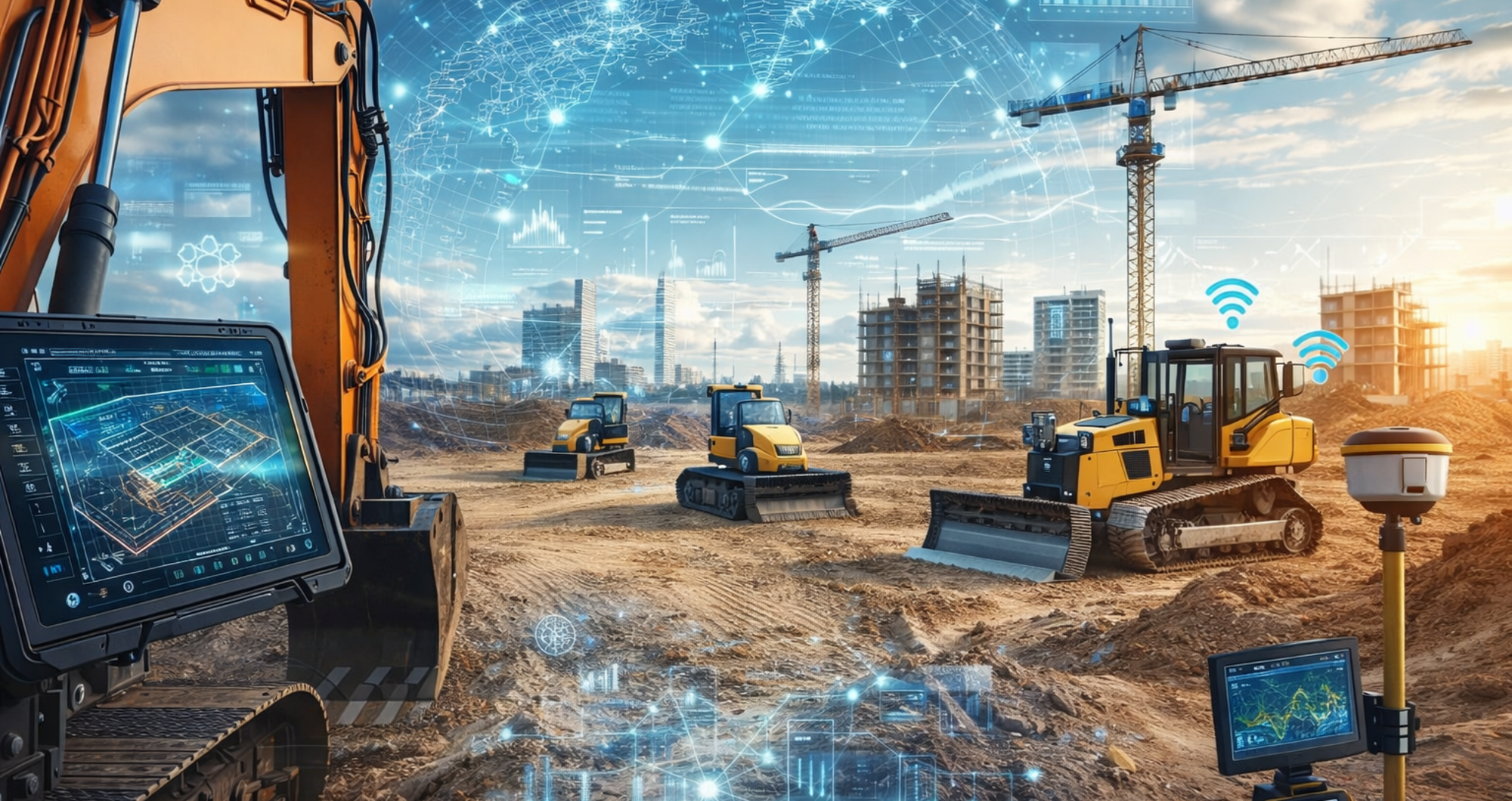

Construction is an industry traditionally centred on physical labour, heavy machinery, and skilled craftsmanship. While these fundamentals remain essential, technological developments over recent decades have altered how construction equipment is designed, monitored, and operated. Digital systems, automation, and data integration now influence how machinery performs across different project environments.
Rather than replacing existing construction practices, technology has become an additional layer that supports accuracy, monitoring, and operational consistency on modern job sites.
Smart Machines For Better Projects
Smart machines are defined by the integration of multiple digital technologies within a single system. Construction equipment such as excavators, bulldozers, and loaders may include GPS modules, sensors, onboard computers, and advanced hydraulic systems. Together, these components enable machinery to execute tasks with greater precision under defined parameters.
Machine control systems, for example, combine GPS positioning with digital terrain models to guide excavation and grading activities. Instead of relying solely on manual measurements, operators can reference electronic site plans that help maintain alignment and depth consistency. These systems are commonly applied on large-scale projects where tolerances must remain uniform across extended areas.
Telematics: The Power Of Data
Telematics represents a significant technological development in construction equipment management. These systems collect and transmit operational data such as fuel usage, engine performance, idle time, and maintenance status. The information can be accessed remotely, allowing equipment activity to be reviewed without direct on-site supervision.
By examining usage patterns, organisations can plan maintenance schedules based on actual machine operation rather than fixed time intervals. This approach is particularly relevant in remote or rugged locations, where access to equipment and service facilities may be limited. In such contexts, telematics systems are often used across various equipment types, including forestry and construction machinery.
Technology Enhances Safety
Construction sites present inherent risks due to heavy equipment, limited visibility, and uneven terrain. Technology has increasingly been applied to address these conditions through monitoring and alert systems. Common safety-related features include proximity sensors, camera systems, and operator notification tools.
Some systems are designed to detect obstacles or nearby personnel and provide alerts through visual or audible signals. In certain cases, automated responses such as speed reduction or braking may be triggered under specific conditions. These technologies are intended to supplement operator awareness and support safer equipment operation.
Environmental Efficiency
Environmental considerations now influence the development of construction and forestry equipment. Manufacturers have introduced designs that comply with evolving emissions regulations and emphasise fuel efficiency. Electrification and hybrid power systems are also becoming more common across certain machinery categories.
Electric and hybrid equipment generally produces lower operational emissions and reduced noise levels. These characteristics may be relevant in urban environments or areas with environmental restrictions. Industry developments in this area reflect broader efforts to adapt equipment design to regulatory and sustainability-related requirements.
Training For The Skills Revolution
As equipment systems become more technologically complex, the skills required to operate and maintain them continue to evolve. Operators may need familiarity with digital displays, machine control systems, and automated features. Maintenance technicians increasingly work with electronic diagnostics and software-based monitoring tools.
In response, training programs often incorporate both mechanical and digital instruction. This shift reflects the growing integration of technology into construction equipment rather than a replacement of traditional operational skills.
The Future Of Construction Equipment
Technological development within construction equipment is expected to continue. Industry discussions frequently reference advancements such as autonomous machinery, alternative power sources, and expanded use of data-driven control systems.
Within this broader context, references to specific equipment categories or providers—such as Torgersons forestry machinery—are typically used to illustrate how different segments of the industry are adapting to shared technological trends rather than to promote individual brands.
Conclusion
Technology has become an influential factor in the ongoing evolution of construction equipment. From digital monitoring and automation to environmental and safety-related systems, modern machinery reflects a shift toward integrated, information-driven operation. While physical labour and skilled operation remain central to construction, technological tools now contribute to how equipment is managed, evaluated, and utilised across diverse project environments.







