A Battle Britain Forgot
Ask a well-read Briton to name a battle that changed the shape of Europe, and the answers arrive readily enough: Hastings, Agincourt, Bosworth, Waterloo. Ask the same Briton about Cerignola, and the silence is close to total — which is a curiosity, because on the evening of 28 April 1503, on a modest vine-terraced slope in northern Puglia, an engagement took place that historians of warfare regard, with some justice, as the moment the mounted knight in shining armour ceased to be master of the battlefield.
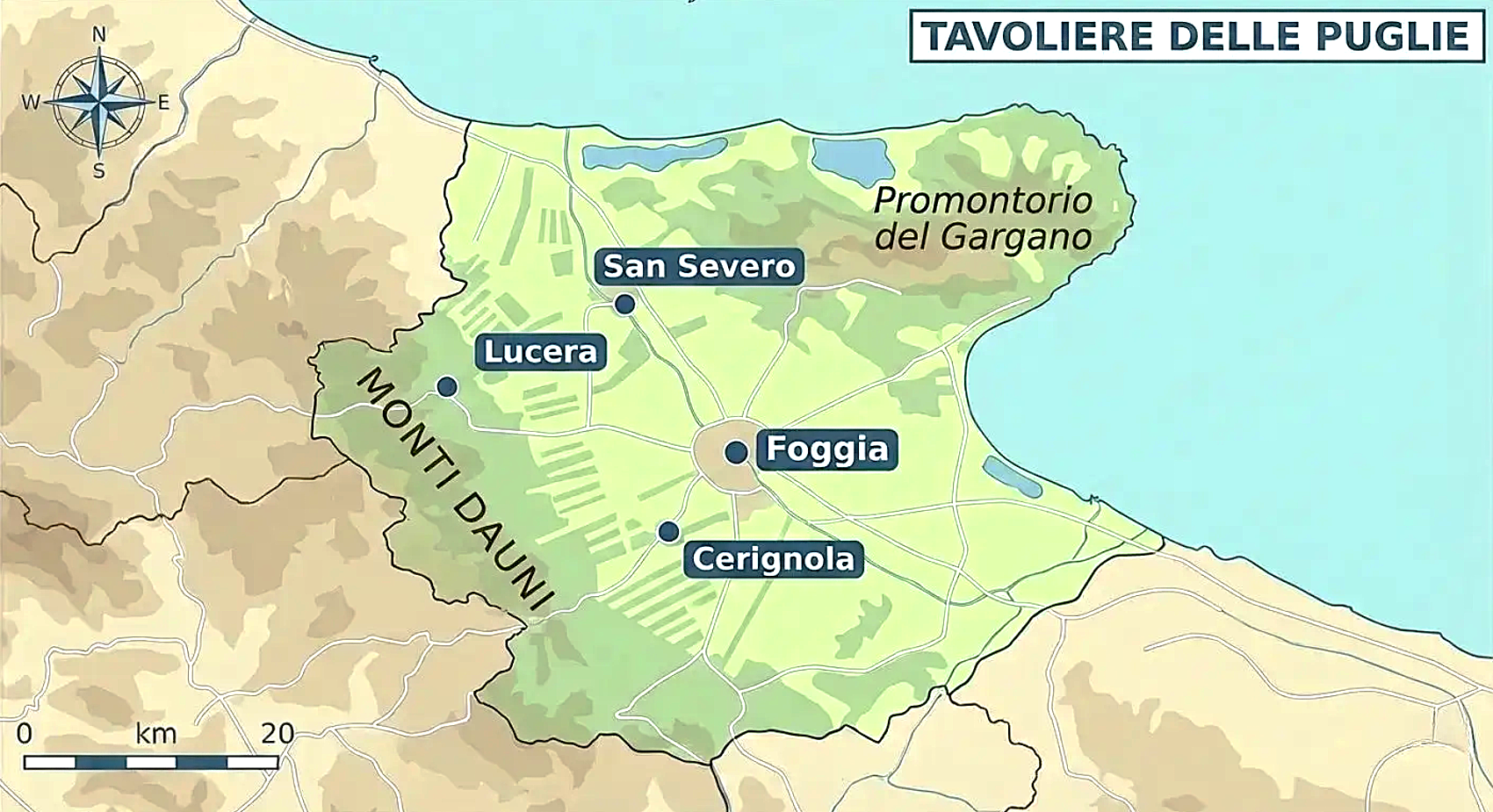
Cerignola sits today as a solid, workaday town on the plain of the Tavoliere delle Puglie, some thirty kilometres south of Foggia and eighty west of Bari — the sort of place British holidaymakers, hurrying towards the whitewashed charms of Ostuni or the beaches of the Gargano, tend to overlook entirely. Few pause to consider that they are driving through one of the genuine hinge points of European military history, a field where gunpowder first proved, decisively and irreversibly, that it had made the armoured lance obsolete.
El Gran Capitán’s Gambit
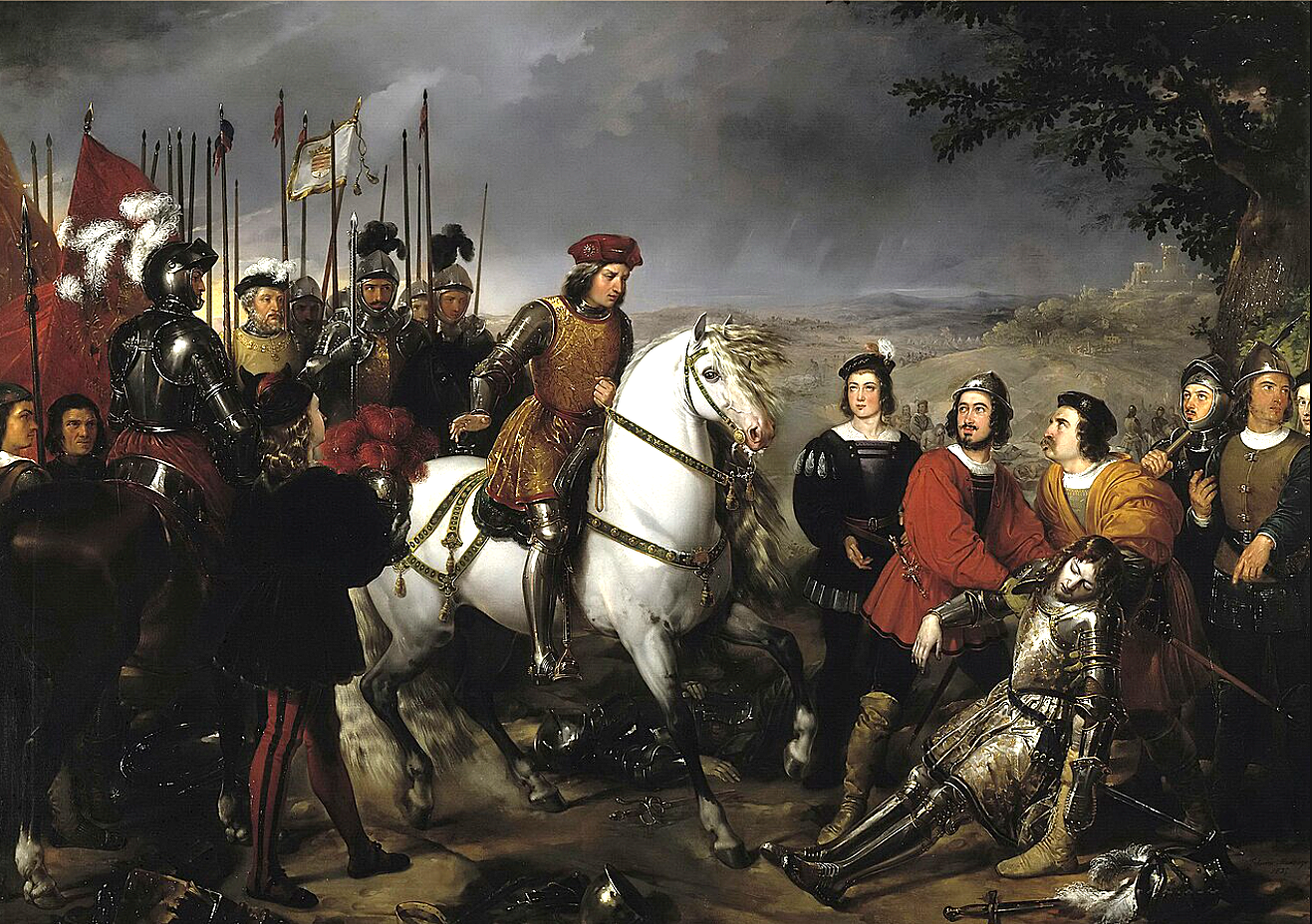
The architect of that afternoon was a Spanish nobleman already well acquainted with humiliation. Gonzalo Fernández de Córdoba had been thrashed by a Franco-Swiss army at Seminara in 1495, watching in dismay as disciplined Swiss pikemen swept aside his own more conventional forces. Rather than sulk, he studied. Over the following years Córdoba reorganised his infantry into new mixed formations — the coronelías that would evolve into the famous Spanish tercios — blending pikemen with a then-unfashionable quantity of arquebusiers, the handgunners whom more traditional commanders still regarded as a nuisance rather than a weapon of decision.
By the spring of 1503, with a French army under Louis d’Armagnac, Duke of Nemours, bearing down on him in the contest for the Kingdom of Naples, Córdoba chose his ground with the eye of a man who had learned his lesson thoroughly. He positioned his roughly nine thousand men on a gentle rise outside Cerignola, screened by vineyards, and had them dig a ditch and earthen rampart along the front of the position, staking the trench with sharpened poles. It was, in effect, a field fortification — inelegant, unchivalrous, and entirely deliberate.
An Evening on the Tavoliere
The French, some nine thousand strong themselves and built around the finest heavy cavalry and Swiss mercenary pikemen that Continental Europe could field, had every reason for confidence. Their commanders had spent a career watching such combinations sweep infantry from the field. What they had not reckoned with was arriving at dusk, their own formidable artillery train still labouring up behind them, to find a Spanish position already dug in and waiting.
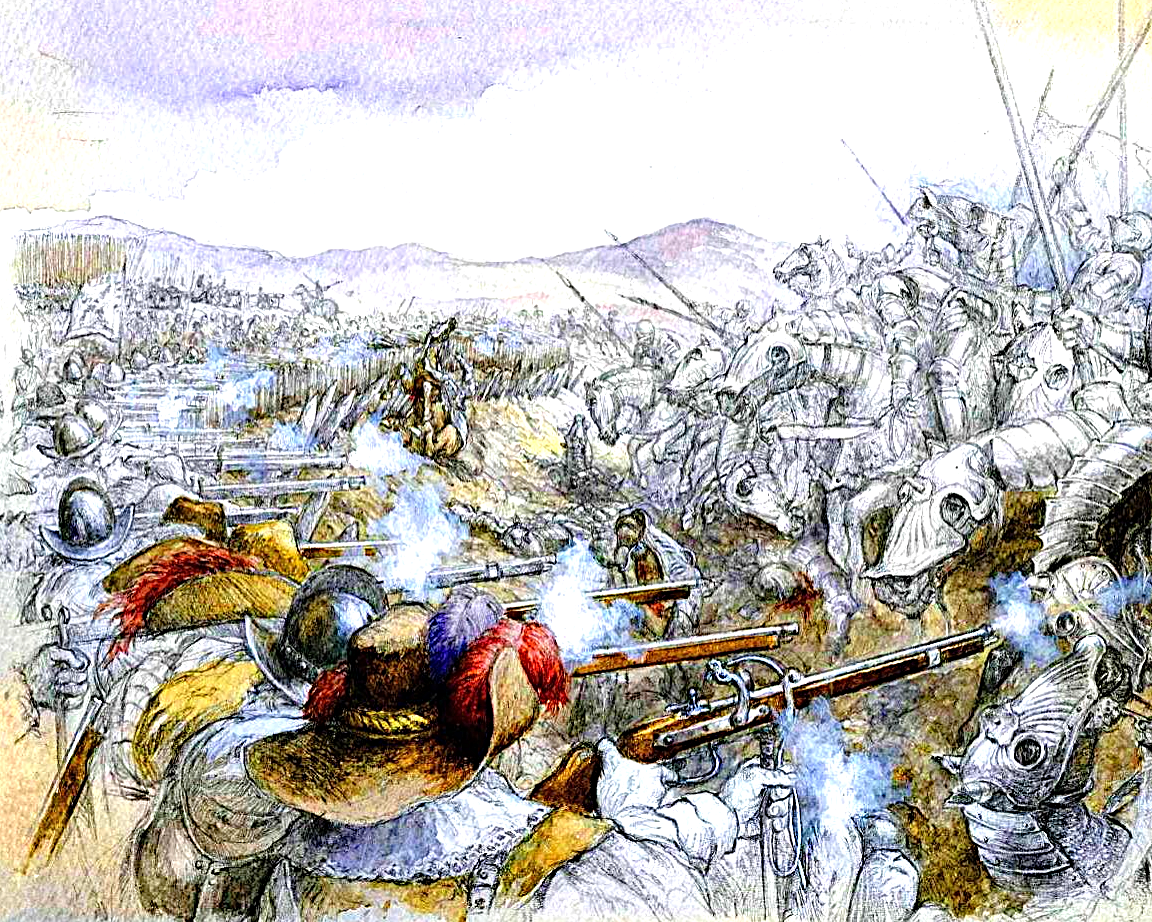
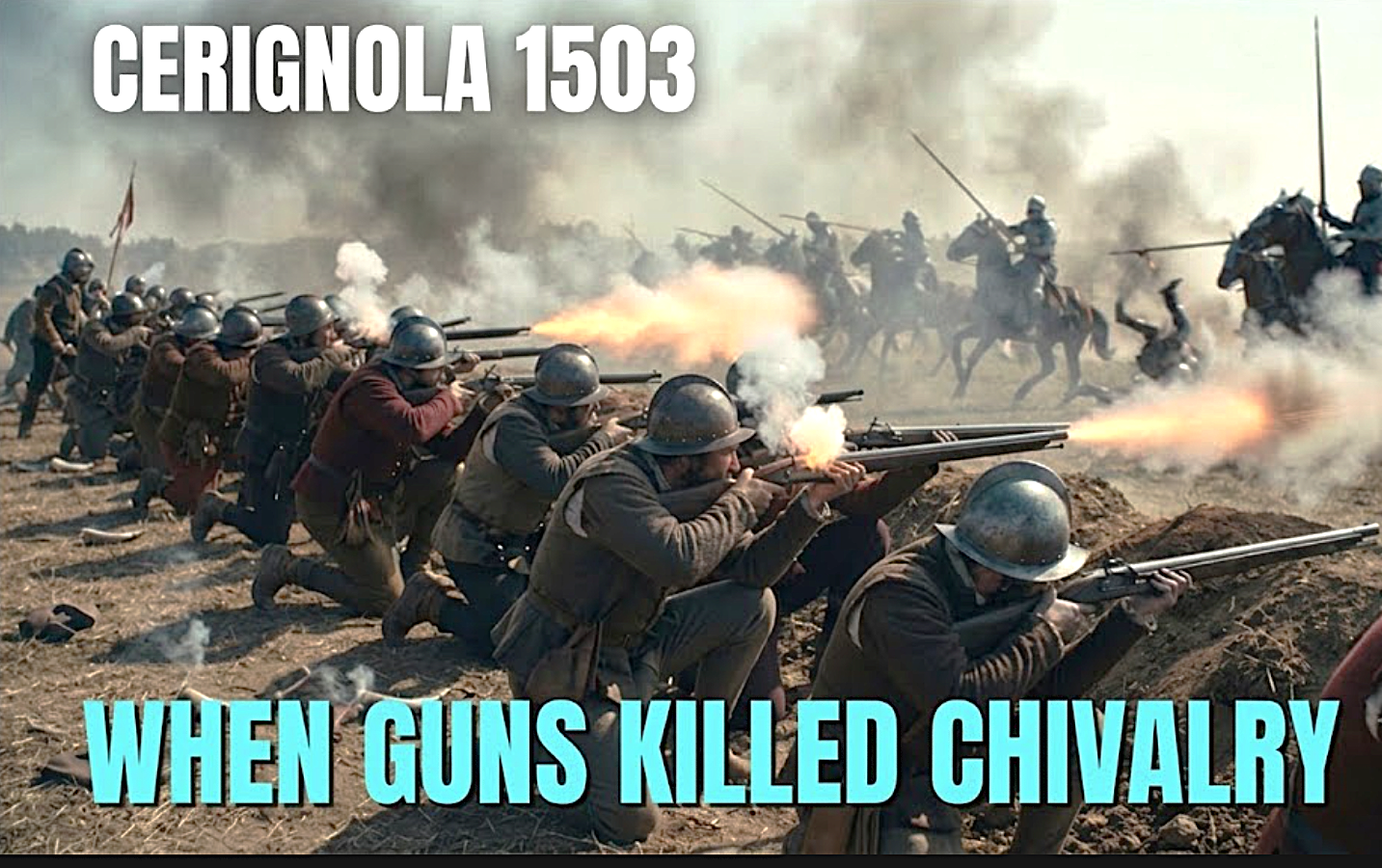
By one enduring account, Córdoba’s own gunpowder store caught fire that evening, sending a plume skyward that might have unnerved a lesser commander. He is said instead to have turned to his men and remarked, “Good sign, friends, those are the lights of victory.” Whether or not the line survives with perfect accuracy, the sentiment proved prophetic. Goaded by the explosion into attacking before their own guns could be brought to bear, the French gendarmes launched charge after charge at the Spanish centre, only to find their horses foundering in the ditch while Spanish arquebusiers poured fire into the confusion at close range. A third assault, swung towards the Spanish right, fared no better. When the Swiss infantry went in alongside the surviving cavalry, they too broke against a line of German landsknechts flanked on both sides by gunfire. Nemours himself was killed, almost certainly by an arquebus ball — one of the first senior commanders in European history to die that way — and with his fall the French assault collapsed into rout within the hour.
Why Historians Call It a Turning Point
The scale of the result is what earns Cerignola its place in the textbooks. Spanish losses were remarkably light, numbering only in the hundreds; the French, by contrast, lost perhaps two thousand men killed or taken, along with their entire artillery train and baggage. Naples itself fell to Córdoba barely a fortnight later, on 13 May, delivering Spain a hold on southern Italy that would endure, in one form or another, for two centuries.
What has kept military historians returning to Cerignola ever since is not merely the scoreline but the method. This was, by most serious accounts, the first major battle in European history in which the outcome was decided principally by small-arms fire rather than by cavalry, pikes, or the sword — a Spanish infantry crouched behind earthworks, using firepower and field fortification to dismantle the finest heavy cavalry on the Continent. The tercio system that Córdoba had been quietly assembling went on to dominate European battlefields for a century and a half; the ditch-and-rampart tactics he improvised at Cerignola anticipated, in miniature, the entrenched warfare that would define conflicts centuries later. It is not too much to say that the age of the armoured knight, already ailing, was given its most public death sentence on that Puglian hillside.
Exploring Puglia’s Battlefield Country
For British travellers already drawn to the Tavoliere delle Puglie for its wheat fields, its DOC wines and its handmade orecchiette, Cerignola offers a natural and largely unadvertised detour. The town itself, now known as much for its olive groves and its enormous fresh mozzarella as for its military past, sits within easy striking distance of Foggia and the Gargano promontory, and can be reached comfortably by hire car or regional train from either Bari Karol Wojtyła Airport or Gino Lisa Foggia Airport. There is, admittedly, no grand monument marking the exact ground on which Nemours fell — the precise site remains a matter of local tradition rather than signposted certainty — but the town’s museum and historical society can point curious visitors towards the terrain, and the broader countryside, largely unchanged in its contours since 1503, does the rest of the work of imagination.
As dusk settles over the Tavoliere and the wheat fields turn the colour of old gold, it is not difficult to picture the scene: a ditch, a line of nervous gunners, and a French army riding, unknowingly, into the future of warfare. Cerignola will not, on the strength of one afternoon five centuries past, displace Agincourt or Waterloo in the British imagination. But for a nation that prides itself on remembering its battles, it seems a modest injustice that this one — where the whole direction of European warfare quietly changed hands — remains so entirely unknown.
The Historian Who Gave Cerignola Back Its Past
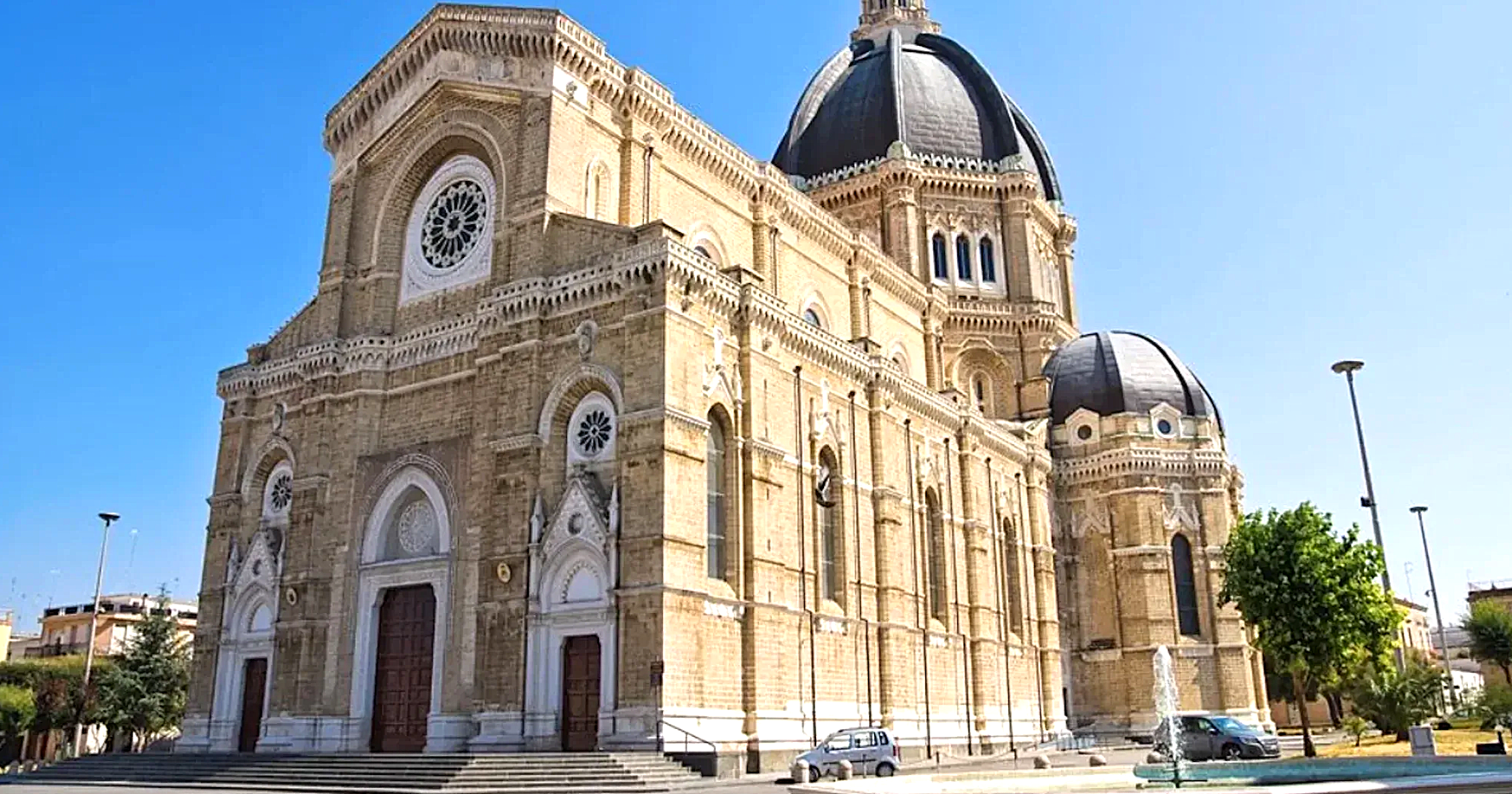
If there is one scholar to whom Cerignola owes the survival of its own memory, it is Professor Matteo Stuppiello. His engagement with the town’s past began while he was still a university student in the 1960s, and he was the first in Cerignola to direct sustained study toward the town’s principal church as a space in its own right — a container of history rather than a mere backdrop to it.
Matteo Stuppiello stands as one of the pivotal figures in Cerignola’s historical scholarship: a lecturer, cultural communicator, founder of key heritage institutions, and the driving force behind the city’s foremost initiatives devoted to the preservation of collective memory. His career weaves together archival research, heritage protection, museum curation, and historical re‑enactment, with a particular scholarly focus on the Battle of Cerignola of 1503.
From the 1970s, Professor Stuppiello emerged as a leading promoter of youth groups dedicated to exploring Cerignola’s past. Beginning in 1970, he cultivated a circle of students deeply interested in local history—an endeavour that would culminate in the establishment of the Centro Studi e Ricerche “Torre Alemanna” in 1976.

Over the three decades that followed, in research contemporaries have described as thorough, persistent, and at times downright obstinate, Stuppiello traced how the church’s frescoes and, in particular, three surviving graffiti served as a historical record spanning close to two centuries, from 1503 down to 1691. Read together, these marks on plaster and paint offer something few chronicles can match: a near-continuous, physically anchored testimony to how Cerignola’s own townspeople registered — and re-registered — the memory of the day French chivalry broke against Spanish earthworks.
It is thanks to this patient, unglamorous work — walls read as carefully as any paper archive — that the local memory of the battle survives in a form scholars can actually examine, rather than dissolving into the more comfortable haze of oral tradition. For a British reader accustomed to battlefield memory preserved in grand monuments and national collections, Stuppiello’s approach offers a useful corrective: sometimes the most durable record of a five-century-old battle turns out to be scratched into a church wall, waiting for someone patient enough to read it.