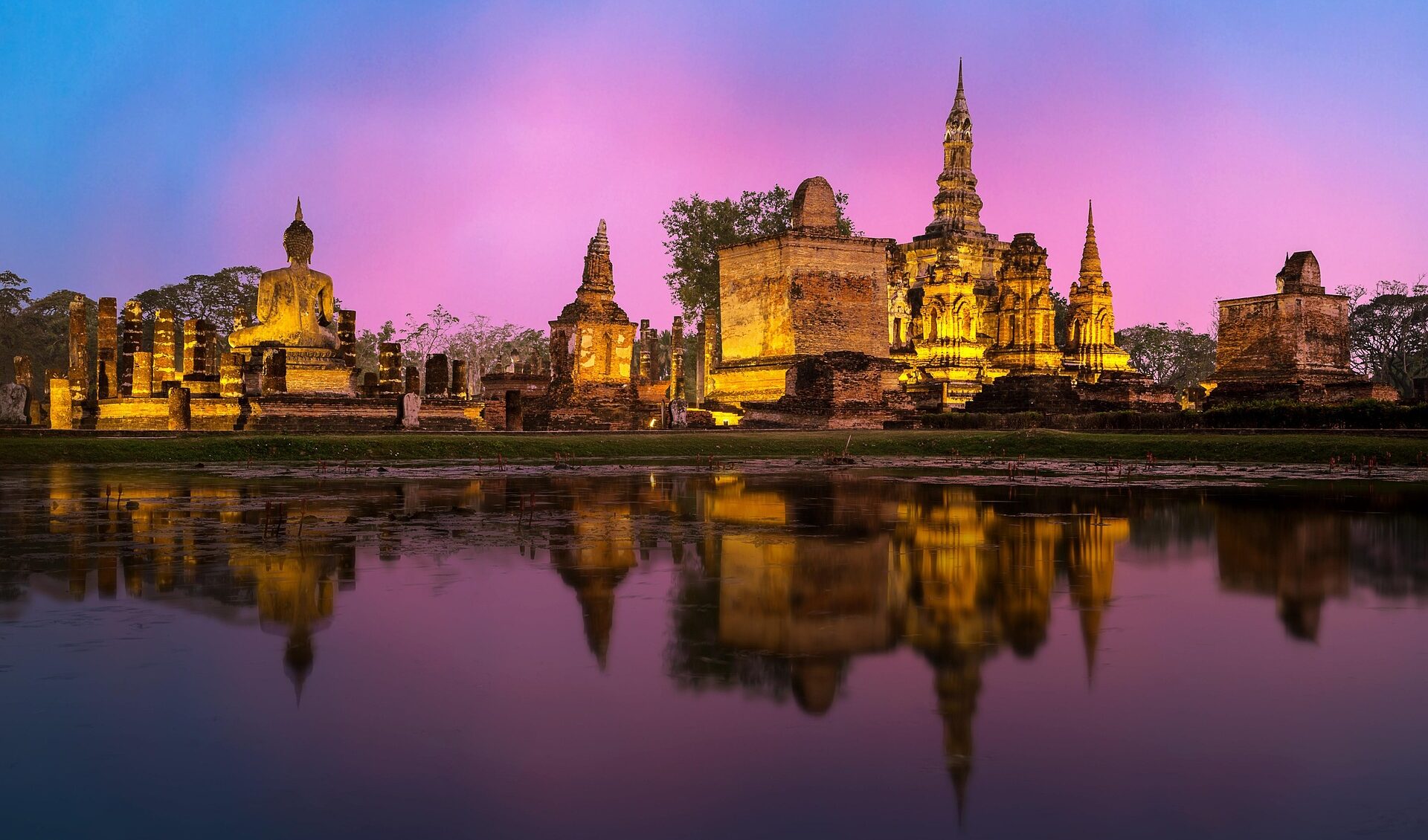

From the bustling street markets of Bangkok to misty northern peaks and idyllic southern islands, Thailand continues to captivate British travellers seeking rich culture, incredible food, and unforgettable adventures. Thanks to direct flights from London and visa-exempt entry for up to 30 days, diving into Southeast Asia’s most vibrant destination has never been easier.
Beyond the convenience of simple entry requirements, Thailand’s extensive transport network – spanning overnight sleeper trains, scenic ferries, and quick domestic flights – makes exploring its diverse regions remarkably seamless. Whether you are drawn to ancient temple ruins or dramatic coastal cliffs, navigating the Kingdom offers endless opportunities for discovery.
To help you craft the perfect itinerary, this guide highlights top destinations across the country, alongside practical travel tips on seasonal weather, journey times, and local transport routes.
Why the Ferry to Koh Samui Beats the Flight
Flying from Bangkok is the fastest way to reach Koh Samui, but the combined train, coach and ferry route allows visitors to include an overnight rail journey through southern Thailand. Long-distance trains depart from Krung Thep Aphiwat Central Terminal in Bangkok and travel to Surat Thani Railway Station, which is located in Phunphin district.
The overnight rail journey takes approximately 11 to 14 hours, depending on the service. From the station, connecting coaches continue to ferry terminals in Donsak. Ferries then cross the Gulf of Thailand to Koh Samui, arriving at piers such as Nathon or Lipa Noi. Crossing times range from approximately 90 minutes to two hours.
A combined ticket for the Bangkok to Koh Samui ferry route can cover the train, coach and boat stages within one itinerary. They should also confirm the departure and arrival piers, as both vary by ferry service. Taking this route removes the need for a domestic flight after arriving in Bangkok.
Chiang Mai’s Temple-Filled Hills Offer a Cooler Escape
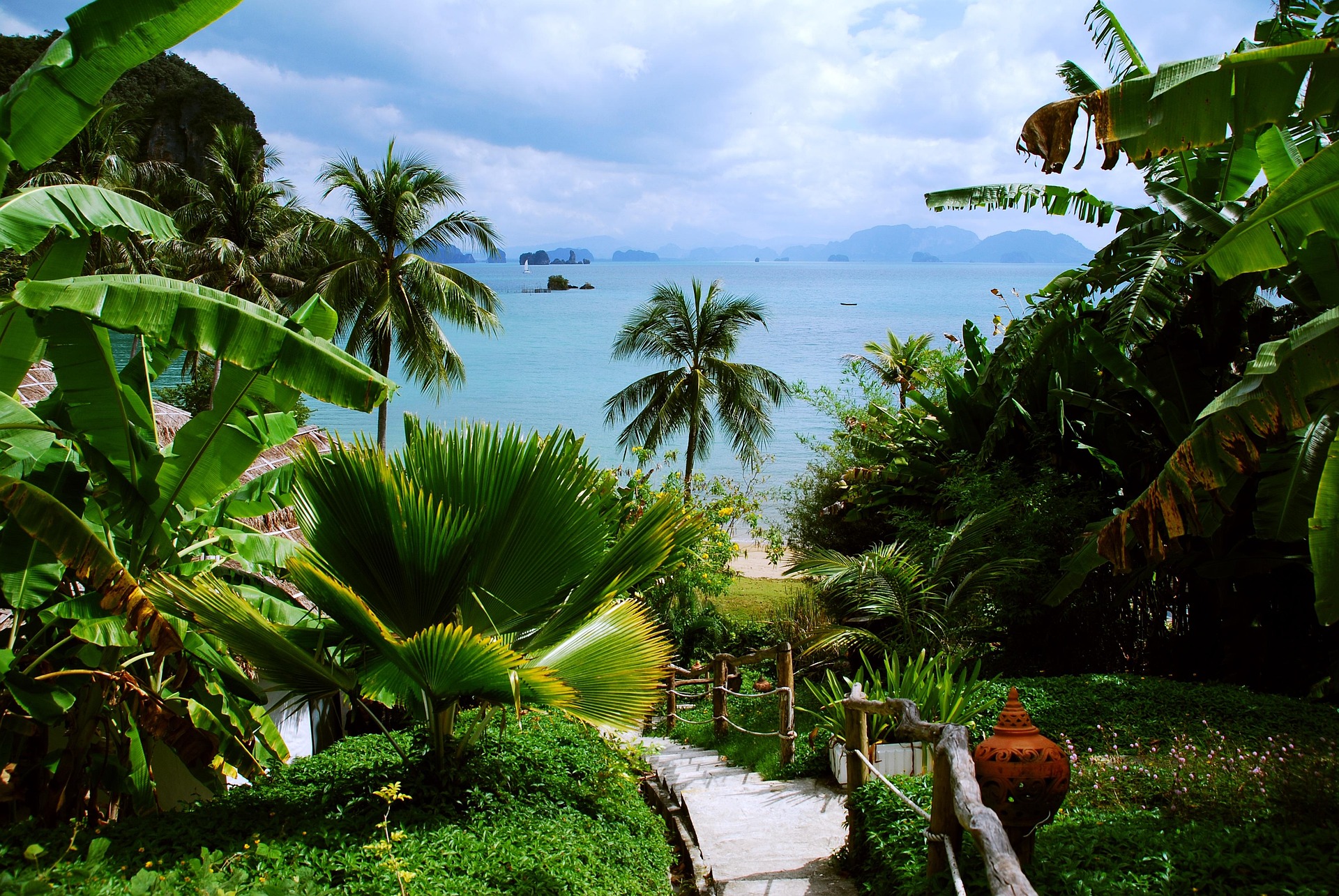
Chiang Mai lies roughly 700 kilometres north of Bangkok in the Ping River basin, surrounded by the mountains of northern Thailand. The city stands at an elevation of approximately 300 metres, with average night-time temperatures falling to around 15°C during December and January. Conditions become considerably colder at higher elevations.
Wat Phra That Doi Suthep stands more than 1,000 metres above sea level on Doi Suthep mountain. The temple traces its origins to the 14th-century Lanna Kingdom and contains a gilded central chedi. Visitors can reach its main courtyard by climbing a 306-step staircase bordered by carved naga serpents. The terrace provides incredible views across Chiang Mai and the Ping Valley when conditions are clear.
Around two hours from the city, Doi Inthanon National Park contains Thailand’s highest peak at 2,565 metres. Its higher trails pass through cool, damp cloud forest, and visitors should check current access information before travelling. Within Chiang Mai, the old city retains sections of its moat and walls. The reconstructed Tha Phae Gate marks the eastern entrance and forms the starting point for the Sunday market along Ratchadamnoen Road.
Krabi’s Cliffs Give Beach Trips a Dramatic Edge
Krabi’s Andaman coastline is marked by limestone karsts rising above the sea. These cliffs separate the Railay Peninsula from the road network, so visitors arrive by longtail boat from Ao Nang or Ao Nam Mao.
Railay and neighbouring Tonsai contain established sport-climbing routes across limestone walls, such as Muay Thai Wall and Tonsai Tower. Routes cover several difficulty levels, but first-time climbers should arrange instruction and confirm whether helmets and other safety equipment are included. Offshore, the Phi Phi and Hong island groups lie within protected marine areas where visitors may encounter blacktip reef sharks and sea turtles. Wildlife sightings aren’t guaranteed, and current access rules should be checked before departure.
Longtail boats from Ao Nang also reach Phra Nang Cave Beach, where limestone formations stand beside a shrine associated with a local sea spirit. Inland, the Emerald Pool lies within Thung Teao Forest Natural Park and is fed by freshwater flowing through the surrounding forest. Swimming access can vary, so visitors should follow posted guidance. The nearby Hot Spring Waterfall is a separate geothermal site, and visitors planning to see both attractions should allow for travel between them.
Ayutthaya Adds Centuries of History to the Trip
Located roughly 80 kilometres north of Bangkok, Ayutthaya served as the capital of the Kingdom of Siam from 1350 until its destruction in 1767. Train journeys from Bangkok to Ayutthaya take between one and two hours, depending on the departure station and chosen service.
The heart of the historic park is situated on an island ringed by three rivers: the Chao Phraya, Pa Sak, and Lopburi. Key sights include Wat Mahathat, founded in the 14th century and famous for the sandstone Buddha head embedded in tree roots, and Wat Phra Si Sanphet, a former royal palace complex distinguished by its three iconic restored chedis.
To the southeast of the island lies Wat Yai Chai Mongkhon, noted for its immense bell-shaped chedi linked to King Naresuan’s reign. Because it sits off the main island, accessing it requires navigating busier thoroughfares. While visitors can rent bicycles near the train station or around the central ruins, hiring a tuk-tuk is often more convenient for sights further afield. Those renting bikes should keep track of return times and leave sufficient leeway to cross the river prior to train departures.
Khao Sok’s 160-Million-Year-Old Rainforest Pulls In Nature Lovers
Khao Sok National Park covers approximately 739 square kilometres in Surat Thani Province. Its evergreen forest grows across limestone terrain and provides habitat for white-handed gibbons, hornbills and Asian elephants. Sightings depend on the location, weather and time of day, so visitors shouldn’t expect to see particular species during every excursion.
Cheow Lan Lake covers around 165 square kilometres behind Ratchaprapha Dam, which opened in 1987. When the dam was built, water flooded the surrounding valleys, leaving the limestone karsts rising above the lake. Boat trips depart from the lake pier, while floating raft houses are spread across different parts of the reservoir, including Khlong Long.
The lake and Khao Sok village lie in separate parts of the park, with roughly 60 kilometres of road between them. Visitors who want both lake trips and forest walks should arrange transport or divide their stay between the two areas. Rafflesia kerrii may flower during the cooler months, but individual blooms last only a few days. Current flowering reports and trail access should therefore be checked with park staff before setting out.
Which side of Thailand calls to you?
Thailand’s regions suit different types of holiday. Chiang Mai provides access to mountain temples and cooler conditions during the northern winter, while Ayutthaya can be reached from Bangkok for a day among the former capital’s temple ruins. Krabi and Koh Samui requires additional boat connections, whereas Khao Sok involves choosing between forest trails near the village and lake trips from Ratchaprapha Pier.
Visitors don’t need to include every region in one journey. Domestic trains, coaches, ferries and flights make longer routes possible, but each transfer reduces the time available at the destination. Checking seasonal weather, journey times and onward connections before departure helps travellers decide which areas fit comfortably into their holiday. A focused itinerary can cover Thailand’s historical sites, mountains or southern coast without turning the trip into a sequence of lengthy transfers.
Feature image by Sasin Tipchai from Pixabay