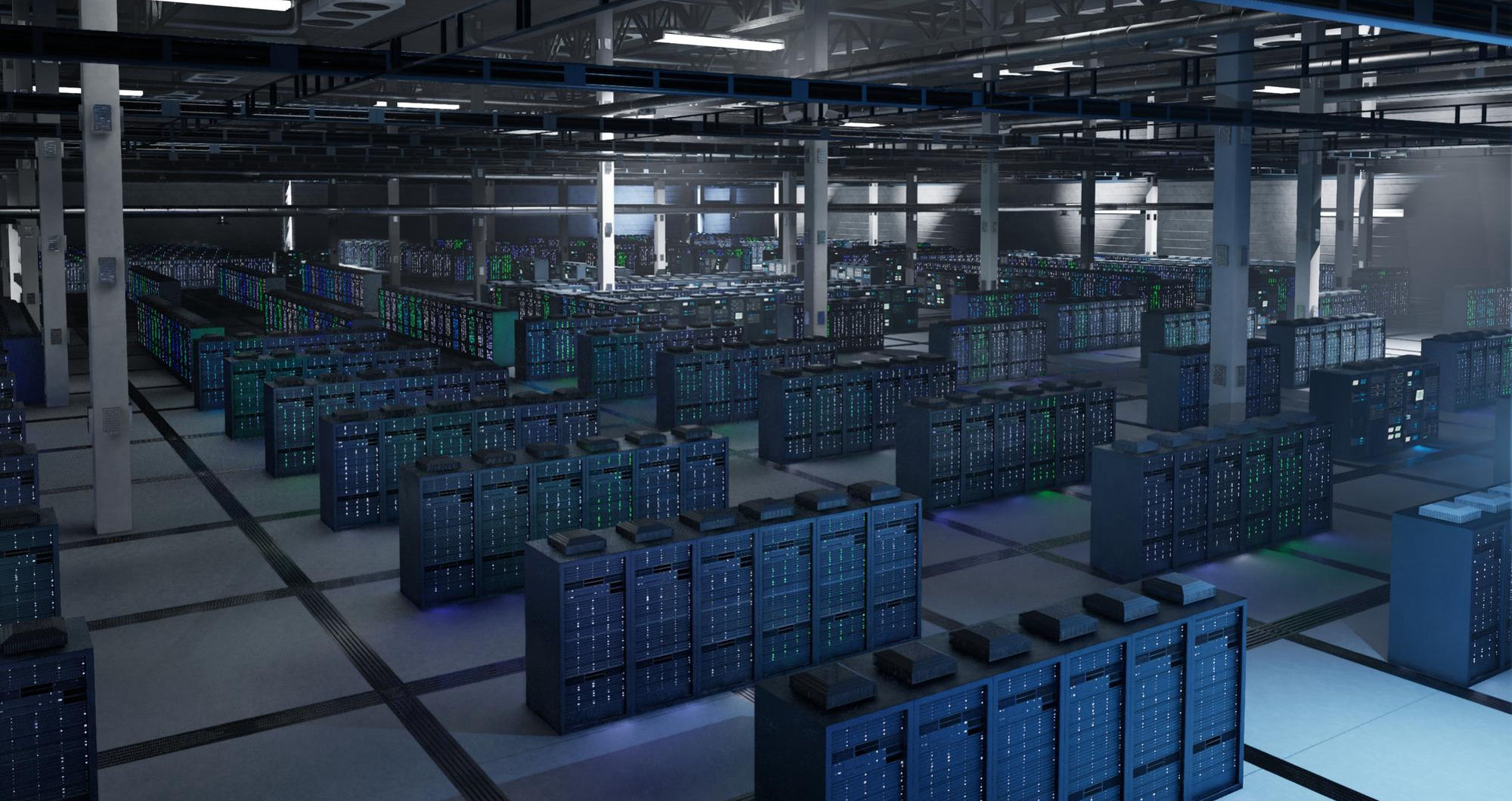

For the better part of two decades, the formula for expanding London’s data centre footprint was straightforward: secure a warehouse-sized plot somewhere along the M4 corridor, sign a grid connection agreement, and start pouring concrete. That formula has effectively expired. The capital remains Europe’s largest data centre market, but the conditions that made it easy to grow here, including abundant grid headroom, cheap suburban land and light-touch planning, have all tightened at once. What is emerging in their place is a different kind of market, one where physical expansion matters less than how efficiently each megawatt is used.
The numbers explain why something had to give. London’s installed data centre capacity sat at around 2.45 GW in 2025 and is forecast to climb past 5 GW by 2031, with mega-facilities above 40 MW growing fastest. At the same time, the London Assembly’s Planning and Regeneration Committee has warned that long-term electricity demand from data centres alone could rise by anywhere from 200% to 600%. In west London, across Brent, Ealing, Hillingdon, Hounslow, and the Old Oak and Park Royal corridor, that growth has already collided with reality. Roughly 29 facilities have been built or are in the pipeline across those boroughs, and in some pockets, there is no spare grid capacity for new connections until the mid-2030s. Local data centres are estimated to account for around 18% of west London’s electricity consumption, a figure that has begun to constrain not just rival operators but housing developers and other commercial schemes.
The familiar narrative is that this is a crisis of supply. The more interesting story is what operators, hyperscalers and colocation providers are now doing about it.
From sprawl to density
The first visible shift is architectural. New London approvals are no longer single-storey sheds wrapped around hot-aisle containment. The £1bn, 72MW Pure Data Centres and SEGRO scheme recently consented at Premier Park in Park Royal is a three-storey, liquid-cooled facility with nine data halls stacked vertically on a 22,365 sq m site, supported by its own dedicated substation. The design choice is not aesthetic. When land near the substations that still have spare capacity is scarce, the only way to extract more compute from a constrained plot is to go up and to push power density per rack much higher than the 5 to 8 kW that defined the previous generation of London colocation.
That, in turn, forces a cooling rethink. Air handling units running at conventional densities simply cannot keep pace with AI training racks drawing 30, 50 or 100 kW. Direct-to-chip liquid cooling and full immersion systems, once treated as exotic, are now becoming the default specification on new London builds and a growing line item in retrofits of existing space. Operators are finding that the same physical footprint can host two to four times the useful compute once liquid cooling replaces hot aisles, which effectively buys back capacity without needing a new grid connection. That is a critical advantage when waiting times for high-capacity connections in the UK now routinely exceed a year.
The rise of high-density colocation
Behind the headline-grabbing hyperscaler announcements, a quieter shift is happening in the colocation tier that serves enterprise customers, AI start-ups and GPU-heavy workloads. Specialist providers offering high-density colocation in London, built around liquid cooling, power-based pricing rather than per-rack pricing, and deployments scaling from a single rack to 100 kW+ pods, are absorbing demand that older facilities cannot physically support. A typical legacy London colo cabinet was provisioned for around 4 to 6 kW; an AI inference deployment can need ten to twenty times that in the same footprint. Customers who once treated colocation as a cost-driven utility decision are now treating it as an architectural one, choosing facilities specifically because the power envelope, cooling design and scalability match the hardware they actually plan to run.
This is reshaping the commercial model too. Charging by floor space made sense when every rack drew roughly the same amount of power. In a world where one immersion tank may consume more electricity than an entire row of traditional cabinets, billing for kilowatts rather than square metres is becoming the norm. It also aligns operator incentives with what the grid actually cares about: how much power is being drawn, not how the cabinets are arranged.
Planning catches up, slowly.
Policy is starting to follow the technical changes, although at its own pace. The London Assembly has recommended that data centres be given their own planning use class, separating them from the broad B8 storage and warehousing category they currently sit inside. The logic is simple. A 70 MW computing facility and a parcel depot have almost nothing in common from an infrastructure perspective, and treating them identically has made it harder for boroughs to plan power, water and transport allocations strategically. A dedicated use class would let local authorities weigh new applications against grid headroom, housing pipelines and heat-reuse opportunities, rather than reviewing each one in isolation.
Some operators are not waiting for the policy to land. Heat recovery schemes that pipe waste server heat into nearby residential blocks, district heating networks or public buildings are moving from pilot status into formal planning conditions on several London applications. Others are exploring on-site generation, battery storage and, in a handful of cases, hydrogen fuel cells to reduce reliance on a constrained grid. Each of these moves shifts the conversation away from “can we get more megawatts?” and towards “how much useful compute can we extract from the megawatts we already have?”
What it means for buyers
For organisations actually procuring data centre capacity in London, the practical implications are clearer than the policy debate sometimes suggests. Lead times for greenfield builds are long and getting longer. Available high-density space inside existing facilities is being absorbed quickly, with vacancy rates expected to fall below 8% even as new supply comes online. Power, not floor space, is the binding constraint, which means the relevant question for any deployment is no longer “how many racks do I need?” but “how many kilowatts, at what density, with what cooling profile?”
The London market is not running out of ambition or capital. Microsoft, Google, CoreWeave, Salesforce and others have collectively committed tens of billions of pounds to UK AI infrastructure over the next five years. What it is running out of is the easy version of growth. Operators that can deliver high-density, liquid-cooled, efficiently priced capacity inside London’s grid envelope are increasingly the ones with something to sell. Those still building to 2015 specifications are finding that the squeeze on power, planning and space is, paradoxically, less of a problem for the customer than for them.