
Heathrow will spend £1.3bn in 2026 on a revamp of Terminal 4, a dedicated baggage system for Terminal 2, new accessibility facilities and camera-based monitoring of aircraft stands, the airport said on 6 November.
The capital spending sits inside H7, the airport’s five-year investment programme. It covers work that will outlast the period, with the Terminal 4 scheme phased to completion by 2031, and it is funded from the charges airlines pay for using the airport.
Terminal 4 and Terminal 2
At Terminal 4 the programme includes a new multi-storey car park and an upgraded check-in hall, delivered in stages through to 2031. The check-in hall is being reworked rather than replaced, and the work is phased over five years instead of being concentrated into a single closure.
Work on that timescale means the terminal stays open while it is rebuilt in stages, with the car park and the check-in hall arriving as separate pieces rather than as a single reopening.
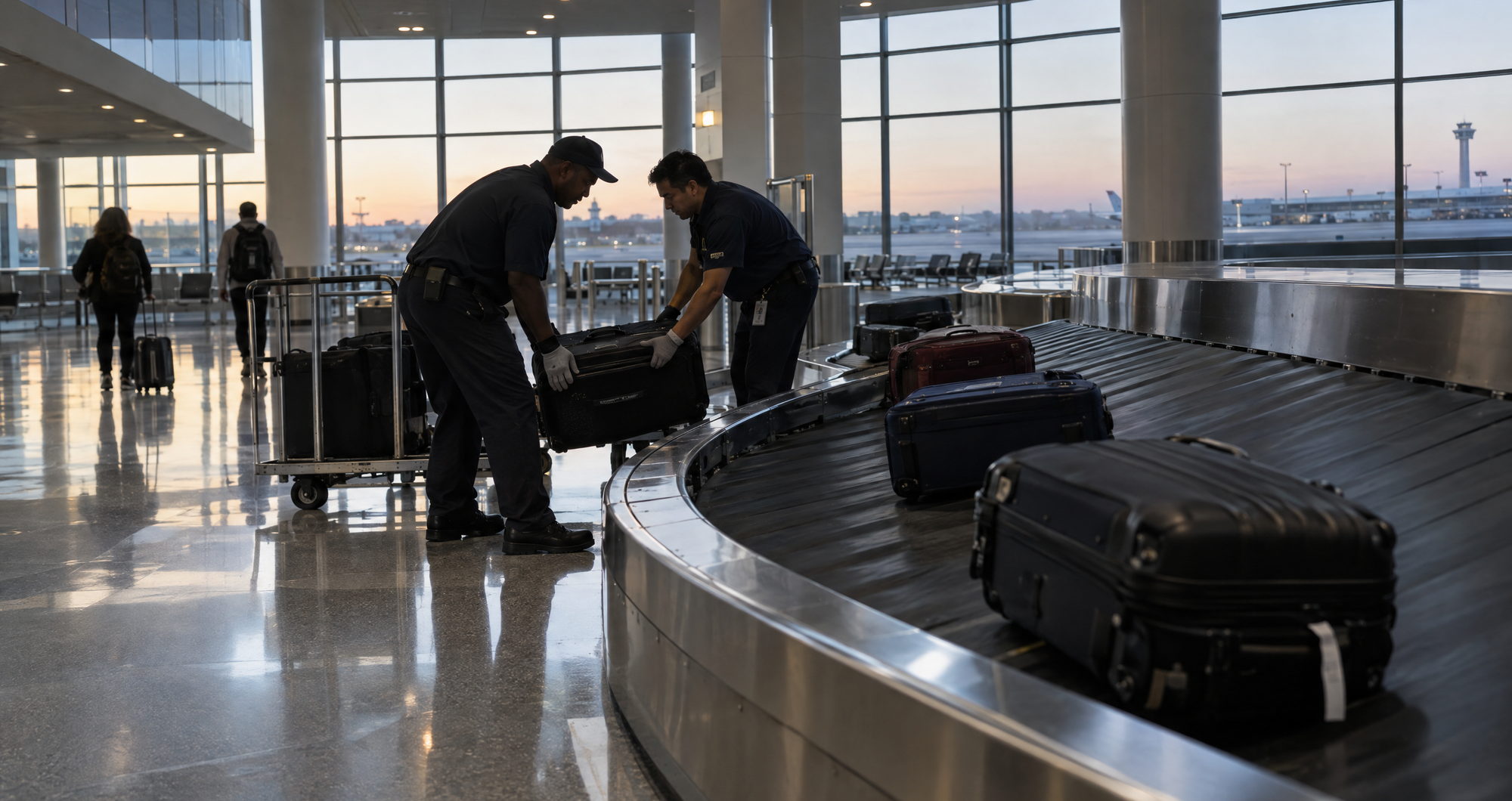
The Terminal 2 project is a baggage system dedicated to that terminal, designed to handle 31,000 bags a day. A dedicated system gives the terminal capacity of its own rather than a share of the wider airport system, so 31,000 bags a day is a limit for Terminal 2 alone.
Baggage is the part of the journey passengers judge most sharply. A wait at the carousel colours the recollection of a flight more than a smooth boarding does, and Heathrow reports bags against expected flights rather than against a general service standard.
Across the airport, a network of cameras using artificial intelligence will monitor aircraft stands to speed up turnarounds, with rollout across all terminals due to finish by the end of 2026. Faster turnarounds matter to airlines because the time an aircraft spends on the ground decides how many journeys it can make in a day, and to passengers because a late pushback carries through the rest of the schedule.
Access and performance
For passengers who need assistance, Terminal 2 will gain a purpose-built assistance area with direct access to security, along with a travel guide designed for people who need to plan the journey through the airport in advance. The intention is to remove the need to move between separate desks before reaching the security queue.
Heathrow said 97 per cent of security queue times were under five minutes, and that almost 99 per cent of bags travelled on expected flights. Thomas Woldbye, the airport’s chief executive, said it is now the most punctual hub in Europe, a claim that rests on the airport’s own data.
Those numbers are the commercial argument for the spending. An airport that publishes its queue times and baggage rates is inviting airlines and passengers to hold it to them, and the £1.3bn is presented as the means of keeping them at that level while the terminals are rebuilt around live operations.
The unanswered question
Two decisions sit outside this programme. The proposed third runway and the H8 investment period covering 2027 to 2031 both depend on frameworks set by the Government and the Civil Aviation Authority, so the scale of spending beyond next year is not settled by this announcement.
For passengers, the practical effects will arrive in stages: the new baggage system at Terminal 2, then the rebuilt check-in and car park at Terminal 4 over the following years, with the disruption of construction running alongside normal service throughout.